Ocean and Air Freight to Denmark from Houston and the Gulf Coast
You need to move wind energy components, industrial machinery, or project cargo from Texas to Denmark, the bridge between continental Europe and Scandinavia. Texas International Freight books ocean and air capacity from Houston to the Danish ports, prepares the export filing, and clears the cargo into the European Union so your equipment reaches the site. We handle the heavy and oversized freight standard carriers cannot move, and Denmark’s offshore wind and project-cargo work sits squarely in that lane.
What Drives Heavy Cargo to Denmark
Denmark is the home of the modern wind industry. Vestas builds turbines here, Ørsted develops offshore wind farms across the North Sea and beyond, and the components that feed those projects, nacelles, blades, towers, and monopiles, move as oversized project cargo. The country also runs a strong pharmaceutical sector led by Novo Nordisk, a large food and agricultural machinery base, and one of the world’s major shipping clusters around Maersk. For a freight forwarder, that means a steady flow of turbine parts, industrial machinery, and process equipment through Danish ports.
Where Your Cargo Lands
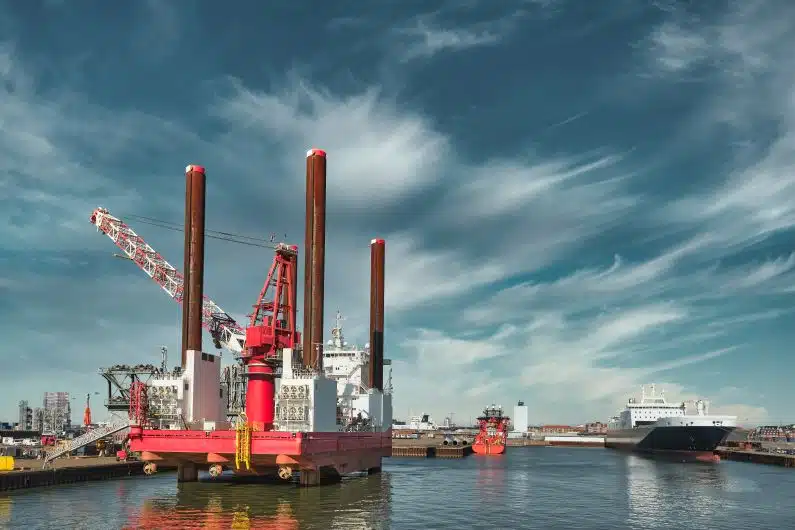
Aarhus, on the east coast of Jutland, is Denmark’s largest container port and the main entry point for boxed and general cargo. Esbjerg, on the North Sea, is the one that matters most for heavy freight: it is Europe’s leading offshore wind port, built for turbine components, project cargo, and roll-on roll-off, and it doubles as the base for North Sea oil and gas. Copenhagen, run jointly with Malmö across the Øresund as Copenhagen Malmö Port, anchors the capital region, and Fredericia and Aalborg handle bulk, oil, and project cargo. We match the port to your cargo, with Esbjerg the natural choice for wind and heavy-lift moves.
The Scandinavian Gateway
Denmark sits where continental Europe meets the Nordics. The Øresund Bridge ties Copenhagen to Sweden, and Danish ports with their road and rail links make the country a staging point for cargo moving on to the wider region. A shipment that lands at a Danish port clears customs once and then moves freely across the European Union or on into the Scandinavian market. The same desk runs cargo to Sweden, Finland, Germany, and Belgium, so the Danish leg can be part of a larger regional plan.
Ocean, RoRo, and Air Options
Crated machinery moves in containers through container shipping, full or as less-than-container part loads, while units that exceed container dimensions ship as breakbulk cargo on flat rack and open-top equipment, by roll-on roll-off for wheeled and self-propelled gear, or on a chartered vessel for a full wind or project move. Most sailings from the US Gulf transship through a North European hub onto a feeder for the North Sea or Baltic leg. Time-critical parts fly into Copenhagen through air freight. The same desk arranges the heavy equipment shipped overseas and the heavy-haul trucking that brings each unit to the Houston terminal.
EU Customs and Danish VAT
Denmark follows the Union Customs Code, so US-origin goods clear at the EU Common Customs Tariff, classified under the Combined Nomenclature and TARIC. Machinery often carries a low or zero duty rate, and with no US-EU free trade agreement, most-favored-nation rates apply on the CIF value. Danish VAT, known as moms, runs 25 percent on the duty-inclusive value and is recoverable by a registered importer, and Denmark applies no reduced rates. Your importer needs an EORI number and files on the Single Administrative Document. Steel and aluminium cargo, including the steel in towers and foundations, now falls under the Carbon Border Adjustment Mechanism, definitive since January 2026. Equipment imported for a project and re-exported can move under temporary admission or an ATA Carnet.
Packing, Insurance, and the US Gateway
Wind and project components are high-value and awkward, so sound export packing, blocking, and bracing protect them across the Atlantic, and cargo insurance covers the value in transit. As your Houston freight forwarder, we file the Automated Export System data, book the sailing, clear the cargo through our customs broker network, and plan the lift and route survey a heavy move needs. You can rely on us for the full freight forwarder responsibilities from pickup to delivery. Plan on roughly two to three weeks of ocean transit from the Gulf Coast to a Danish port.
Ready to ship to Denmark? Contact Texas International Freight with your dimensions, weight, and delivery point, and we return a routing and a quote. Call +1 877-489-9184 to reach our team.
Which Danish port should my equipment ship to?
Aarhus is the largest container port for general cargo. Esbjerg is the heavy-cargo choice, Europe’s leading offshore wind port and the North Sea oil and gas base. Copenhagen Malmö Port serves the capital region, and Fredericia and Aalborg handle bulk and project cargo. We route to whichever fits your cargo.
Do US machines pay duty in Denmark?
US-origin goods clear at the EU Common Customs Tariff, often low or zero for machinery, plus 25 percent Danish VAT (moms) on the duty-inclusive value, recoverable if your importer is registered. There is no US-EU free trade agreement, so MFN rates apply.
Can you ship offshore wind components?
Yes. Nacelles, blades, towers, and monopiles move as breakbulk, roll-on roll-off, or chartered project cargo, usually through Esbjerg, with the lift planning and route surveys a heavy-lift move requires.
How long is ocean transit from Houston to Denmark?
Plan on roughly two to three weeks, usually transshipped through a North European hub onto a North Sea or Baltic feeder. Air freight to Copenhagen moves urgent parts in a few days.
Can you deliver beyond Denmark into Scandinavia?
Yes. Once cargo clears customs in Denmark it circulates freely across the European Union, and we arrange on-carriage by road, rail, or short-sea to Sweden, Norway, and Finland.


