
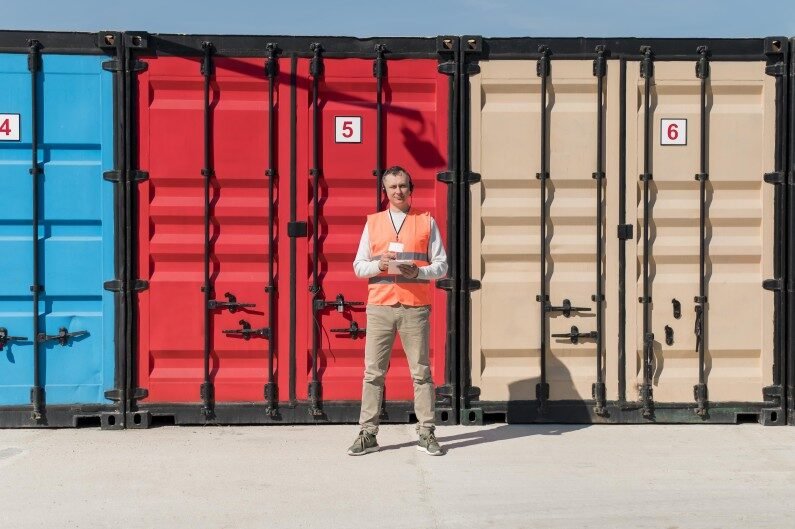
FCL means contracting an entire container for your cargo.
Understanding Full Container Load Shipping for Heavy Equipment
FCL stands for Full Container Load. You contract with an ocean carrier or freight forwarder for exclusive use of an entire shipping container. Your cargo occupies the complete container from origin to destination without sharing space with other shippers’ freight.
The term represents a core method for moving international freight. Companies shipping mining machinery, construction equipment, or oil field components choose FCL when cargo volume justifies a full container. Your drilling equipment, agricultural machinery, or energy sector materials travel in a sealed container you control exclusively.
FCL also fits shipments where predictability matters more than squeezing into shared space. Your project schedule depends on equipment arriving intact and on time. A dedicated container reduces handling steps and limits exposure to other shippers’ cargo. Less contact usually means fewer dents, fewer missing parts, and fewer arguments over who caused the damage.
Many industrial shippers choose FCL even before they “fill” the container. A $250,000 drilling skid might only occupy half the floor space, yet the risk profile pushes you toward exclusive use. One container. One seal. One set of documents. That simplicity pays off when your cargo cannot afford delays at consolidation facilities.
How FCL Shipping Works
You load your cargo into a container at your facility or a nearby container freight station. The container gets sealed and remains closed until reaching the final destination. Your construction equipment, mining machinery, or breakbulk components stay protected throughout the journey.
Loading starts with planning, not with a forklift. You confirm dimensions, weight, lifting points, and the method of restraint needed to keep equipment stable in transit. Heavy machinery often requires timber blocking, chocks, and rated lashings. Loose parts should be boxed or crated, then secured so nothing shifts when the vessel rolls in heavy seas.
Once cargo is loaded, a seal is applied. That seal number is recorded on documents and becomes part of the shipment’s chain of custody. If the seal number changes at destination without explanation, you know something happened during transit or at the terminal. For high-value equipment, that traceability supports faster exception handling.
Ocean carriers transport containers on massive vessels holding thousands of units. Your 40-foot container filled with drilling equipment sits alongside containers carrying electronics, textiles, and consumer goods. Each container moves as a single unit from port to port.
Rail and truck carriers handle inland transportation. Your container arrives at the origin port by truck, crosses the ocean by ship, then reaches the destination by rail or truck. The intermodal system keeps cargo in the same container throughout multiple transportation modes.
Intermodal moves rely on terminal execution. Containers get lifted by cranes and reach stackers, then staged in stacks until the next mode is ready. A forwarder manages timing so your container does not sit idle beyond free time. Proper planning can prevent storage and demurrage surprises that turn a good rate into a painful invoice.
Standard container sizes include 20-foot and 40-foot units. A 20-foot container measures 20 feet long, 8 feet wide, and 8.5 feet tall internally. The 40-foot standard container doubles the length while maintaining width and height. High-cube containers add one foot of vertical space.
Equipment selection depends on what you ship. A 20-foot container can be a smart choice for heavy, dense freight like gearboxes, drilling tools, and metal components because weight limits arrive before you run out of floor space. A 40-foot high cube works better for lighter but bulky cargo such as crated agricultural parts, hoses, and packaged project materials.
FCL vs LCL Shipping
FCL differs from LCL (Less than Container Load) shipping. LCL combines multiple shippers’ cargo in one container. You share container space and transportation costs with other companies.
Your choice depends on cargo volume. Shipping three pallets of agricultural equipment makes LCL economical. Filling 75% or more of a container often justifies FCL rates. The break-even point varies by trade lane and current market rates.
Volume is only part of the decision. Handling sensitivity matters just as much. LCL freight gets moved through consolidation and deconsolidation facilities, then separated and staged with other cargo. That extra handling can be fine for low-risk freight. It can be costly for equipment with exposed hydraulic fittings, fragile instrumentation, or irregular shapes that do not stack well.
FCL provides faster transit times. Your container moves directly from origin port to destination port without stopping for consolidation or deconsolidation. LCL shipments require extra handling at container freight stations in both countries.
Security favors FCL shipping. Your sealed container protects mining machinery or construction equipment from damage and theft. LCL handling exposes cargo to additional touchpoints where damage can occur.
Claims handling can also be cleaner with FCL. When damage occurs in a shared container, multiple parties may be involved, and liability discussions get messy. With FCL, you control loading, and the container remains sealed. That documentation trail helps identify where an issue occurred, especially when you document loading with photos and seal verification.
Benefits of FCL for Heavy Equipment
Dedicated container space gives you complete control over loading and securing cargo. Your team positions drilling components or agricultural machinery exactly as needed. Custom blocking and bracing protect equipment during ocean transit.
Control matters for heavy equipment because improper load distribution can damage the container and your cargo. A skid loaded too far forward can shift weight and create instability. Incorrect bracing can allow equipment to “walk” during transit. FCL lets you engineer the load plan based on your equipment’s center of gravity and attachment points.
Cost predictability helps budget international shipments. You receive a single rate covering the entire container regardless of how much space your cargo occupies. Shipping 15 tons or 25 tons in a 40-foot container costs the same.
Predictability also shows up in accessorial exposure. LCL often involves multiple warehouse handling fees and documentation line items. FCL tends to be simpler, though it still involves origin and destination charges, inland drayage, and potential port fees. A forwarder can forecast these better when the shipment moves as one controlled unit.
Reduced handling minimizes damage risk. Your oil field equipment loads once at origin and unloads once at destination. LCL cargo gets handled at origin consolidation, destination deconsolidation, and multiple transfer points between.
Faster customs clearance often occurs with FCL shipments. Customs officials examine your single shipment rather than sorting through mixed cargo from multiple shippers. Your mining equipment clears customs and reaches your job site quicker.
FCL can also support better planning for specialized delivery. If your destination requires heavy-haul trucking, cranes, or rigging, you can align the container release with the equipment arrival schedule. That reduces the risk of your cargo sitting at the terminal while your job site waits for a truck slot.
Historical Context: Full Carload Rail Shipping
FCL originally stood for Full Carload in railroad terminology. Railroads revolutionized freight transportation by moving entire railcars of goods under single contracts. Your manufacturing facility shipped coal, grain, or lumber in dedicated railcars.
Railroads built their business model around carload shipping. Shippers contracted for complete railcar capacity. The railroad equivalent of modern truckload shipping, carload service dominated North American freight transportation for 150 years.
Container shipping adopted FCL terminology from railroad practice. When containerization emerged in the 1950s and 1960s, industry professionals applied familiar railroad terms to ocean freight. Full container load mirrored the full carload concept railroad shippers understood.
Modern railroads still connect ports to inland markets through intermodal container moves. Your project cargo may arrive at a coastal gateway, then move inland by rail to reduce long-haul trucking costs and avoid capacity constraints during peak periods.
FCL in Intermodal Transportation
Intermodal freight combines multiple transportation modes under a single contract. Your container moves by truck from your Houston facility to the port, crosses the ocean by ship, then travels by rail to the Canadian destination.
Containers enable intermodal efficiency. Your drilling equipment stays in the same 40-foot container throughout the journey. Cranes transfer containers between trucks, ships, and railcars without touching your cargo inside.
Railroads dominate North American intermodal transportation. Trains move containers thousands of miles inland from coastal ports. Your mining machinery arriving at Vancouver port travels by rail to Alberta oil fields.
Double-stack rail service carries containers stacked two high on specialized railcars. Trains haul 200 or more containers on a single route. Your agricultural equipment shares the train with automotive parts, manufactured goods, and consumer products.
Intermodal works best when each handoff is planned. Drayage appointments at origin and destination should match rail cutoffs and terminal operating hours. If your container misses a rail cutoff, it can sit, and that delay can ripple into free time risk at destination.
Container Types for Different Cargo
Standard dry containers work for most machinery and equipment shipments. Your construction materials, mining components, or oil field equipment fits in enclosed 20-foot or 40-foot units. Dry containers protect cargo from weather and theft.
Flat rack containers accommodate oversized equipment exceeding standard container dimensions. Your excavator or drilling rig will not fit in an enclosed container. Flat racks provide open platforms with collapsible end walls for breakbulk cargo.
Flat racks also support overwidth and overheight loads when you need crane loading and professional lashing. Shipping a boom, mast, or long structural component often requires engineered securing so the load survives vessel motion and port handling.
Open-top containers handle tall machinery requiring vertical loading. Your mining equipment or agricultural machinery gets loaded by crane from above. Removable tarpaulins cover cargo during transit while allowing oversized height.
Platform containers offer maximum flexibility for irregular cargo shapes. Your oil field components, construction beams, or energy sector equipment rest on container platforms without side or end walls. Lashing and securing equipment requires expertise in breakbulk shipping practices.
Choosing the correct container type reduces risk and cost. If your cargo barely fits in a dry container but requires awkward bracing, the safer answer might be an open-top or flat rack. A forwarder evaluates dimensions, handling requirements, and destination restrictions before locking equipment type.
FCL Contract Terms and Responsibilities
Carrier responsibility begins when you deliver your loaded container to the carrier or when the carrier picks up the container from your facility. You maintain responsibility for proper loading, weight distribution, and cargo securing inside the container.
Loading responsibility is a common misunderstanding. A carrier can transport a container and still reject liability for damage caused by poor bracing. Documenting the load plan, using rated securing materials, and following accepted blocking and bracing practices protects both the shipment and your claim position.
Container weight limits apply regardless of volume. A 40-foot container holds roughly 27-28 tons of cargo maximum. Your mining equipment might fill only half the container length but exceed weight capacity. Accurate weight declarations prevent port authority fines and shipping delays.
Cargo securing follows international standards. Your construction equipment needs proper blocking, bracing, and lashing to prevent shifting during ocean transit. Improperly secured cargo damages itself and the container during rough seas.
Demurrage charges accrue when containers sit at ports beyond free time allowances. Your drilling equipment arrives at the destination port. You have 3-5 days free time to pick up the container. Each day beyond free time costs $100-$300 in demurrage fees.
Detention can also apply when the container leaves the terminal but is not returned within the allowed timeframe. If your site needs extra days to unload heavy equipment, you should plan for that up front. A forwarder can often negotiate terms or propose alternative solutions such as live unload scheduling or chassis strategies.
FCL Shipping to Canada and Mexico
Cross-border FCL shipments to Canada and Mexico follow similar procedures as overseas shipping. Your container moves from Texas to Canadian destinations by rail or truck. Mexican shipments travel by truck through border crossings or by rail to inland terminals.
USMCA trade agreement simplifies customs procedures for qualifying cargo. Your construction equipment manufactured in the United States ships to Canadian job sites duty-free when properly documented. Mexican oil field components benefit from preferential duty rates.
Border crossing procedures differ from ocean port operations. Your container faces inspection at land border crossings. CBP and Mexican customs officials examine containers based on risk assessment algorithms. Proper documentation speeds clearance for your mining machinery or agricultural equipment.
Rail service connects major cities throughout North America. Your equipment ships by train from Houston to Toronto or Mexico City. Intermodal rail offers cost advantages over long-haul trucking for distances exceeding 500 miles.
Cross-border success depends on document discipline. Serial numbers for machinery, accurate values, and correct origin declarations prevent holds. If your cargo includes batteries, engines, or regulated components, you should flag it early so compliance checks do not show up as last-minute surprises.
Documentation Requirements for FCL Shipments
Commercial invoices describe your cargo value, contents, and parties involved. Customs officials use commercial invoices to assess duties on your construction equipment or mining machinery. Accurate descriptions prevent clearance delays.
Packing lists detail how you loaded cargo inside the container. Your list specifies piece counts, weights, and dimensions for each item. Customs and port officials verify packing lists against physical cargo during inspections.
Bills of lading serve as receipts for your cargo and contracts with carriers. Ocean bills of lading transfer cargo ownership and provide legal title to goods. Your drilling equipment cannot be released without presenting the original bill of lading or proper authorization.
Certificates of origin prove where you manufactured or substantially transformed cargo. Free trade agreements require origin certificates to qualify for reduced duty rates. Your agricultural equipment made in the United States needs certification for USMCA benefits.
Some shipments also require export filings, import permits, or special certificates depending on commodity and destination. If you ship oilfield equipment with controlled technology, or machinery destined for sensitive end users, compliance screening becomes part of the documentation workflow.
Cost Factors in FCL Shipping
Base ocean freight rates vary by trade lane, season, and market conditions. Shipping from Houston to Rotterdam costs differently than Houston to Shanghai. Your mining equipment faces higher rates during peak shipping seasons.
Port charges add to total costs. Origin port handling, destination port handling, and terminal fees apply to every container. Your construction equipment pays these fees regardless of contract terms with ocean carriers.
Inland transportation from your facility to the port and from destination port to final delivery location adds cost. Your drilling components in rural Texas require trucking to Houston port. Destination delivery from Vancouver port to Alberta job sites needs rail or truck service.
Customs duties and import taxes apply based on cargo classification and value. Your oil field equipment faces tariffs determined by HTS codes. Countries assess value-added taxes or goods and services taxes on imports.
Insurance, chassis fees, and documentation charges can also shape the final landed cost. A low ocean rate can still produce a high total if destination port charges are heavy or if customs clearance requires exams. Comparing options means reviewing the full door-to-door cost, not only the ocean line item.
Choosing Between FCL and Other Shipping Methods
Cargo volume determines whether FCL makes economic sense. Filling 50% or more of a container often justifies FCL rates. Your three excavators and related equipment occupy 22 cubic meters in a 40-foot container providing 67 cubic meters capacity.
Transit time requirements influence the decision. Your construction project in Mexico starts in three weeks. FCL provides the fastest option for moving equipment from Texas to the Mexican job site. LCL adds extra time for consolidation and deconsolidation.
Cargo value affects security considerations. Your $400,000 in mining equipment needs maximum protection. FCL keeps cargo sealed in a dedicated container. Breakbulk shipping exposes high-value cargo to more handling and theft opportunities.
Destination capabilities matter for container delivery. Your remote Canadian mining site lacks container unloading equipment. Breakbulk shipping might work better than FCL when final destinations cannot handle containers.
Ask one practical question before choosing. Can your destination receive a container with the right unloading plan. If the answer is uncertain, you might need transloading, a nearby terminal delivery, or an alternative mode. A forwarder can design the last-mile solution so the container choice fits the reality on the ground.
Working with Experienced FCL Providers
Professional freight forwarders manage FCL shipping complexity for heavy equipment and machinery. Your drilling components, construction materials, or agricultural equipment require specialized handling knowledge. Experts prevent costly mistakes in container loading, documentation, and customs compliance.
Texas International Freight specializes in FCL shipping for machinery, equipment, and breakbulk cargo. Our team handles container bookings, documentation preparation, and customs clearance for shipments to destinations worldwide.
We coordinate container delivery to your facility, supervise loading when requested, and arrange inland transportation. Your mining equipment moves from Texas to Canadian operations or Mexican job sites with complete door-to-door service.
Our experience with energy sector equipment, construction machinery, and agricultural equipment supports cargo integrity and schedule performance. We manage relationships with ocean carriers, rail providers, and trucking companies to secure competitive rates and dependable execution.
Expert FCL Shipping Services for Heavy Equipment
Texas International Freight provides comprehensive FCL shipping services for companies moving machinery, equipment, and cargo internationally. Our team ensures your containers are properly booked, loaded, documented, and delivered to destinations throughout North America and worldwide.
Contact Information
- Phone: +1 877-489-9184
- Email: sh**@***********ht.com
- Address: 11511 Katy Fwy #320, Houston, TX 77079
- Request FCL Shipping Quote
Connect With Us
FAQ
When does FCL cost less than LCL shipping?
FCL often becomes more economical when your cargo fills around 50 to 60 percent of a container, though the break-even point varies by lane and season. If your shipment includes multiple pallets of heavy equipment parts plus crated components, FCL can also reduce handling risk and shorten transit time compared to LCL.
Can oversized equipment fit in FCL containers?
Standard containers have fixed internal dimensions, so oversized machinery may require flat racks, open-top containers, or platform containers. Excavators, long drilling assemblies, and tall mining components often ship on flat racks or open-tops with engineered lashing and blocking.
How long does FCL shipping take from Texas to Mexico?
Transit time depends on destination and the inland mode used. Truck moves from Texas to northern Mexico can take a few days including border clearance. Rail moves to interior points typically take longer. Documentation quality and border congestion can add time.
What weight limits apply to FCL containers?
Container payload is limited by maximum gross weight rules and inland road limits. A 40-foot container often carries roughly 26 to 28 metric tons of cargo depending on tare weight and routing. Accurate weights prevent port rejections, fines, and delays.
Does FCL shipping require special insurance?
Carrier liability is limited, so marine cargo insurance is recommended for high-value equipment. Coverage can be structured from pickup through final delivery, protecting against loss or damage during ocean transit, terminal handling, and inland transportation.