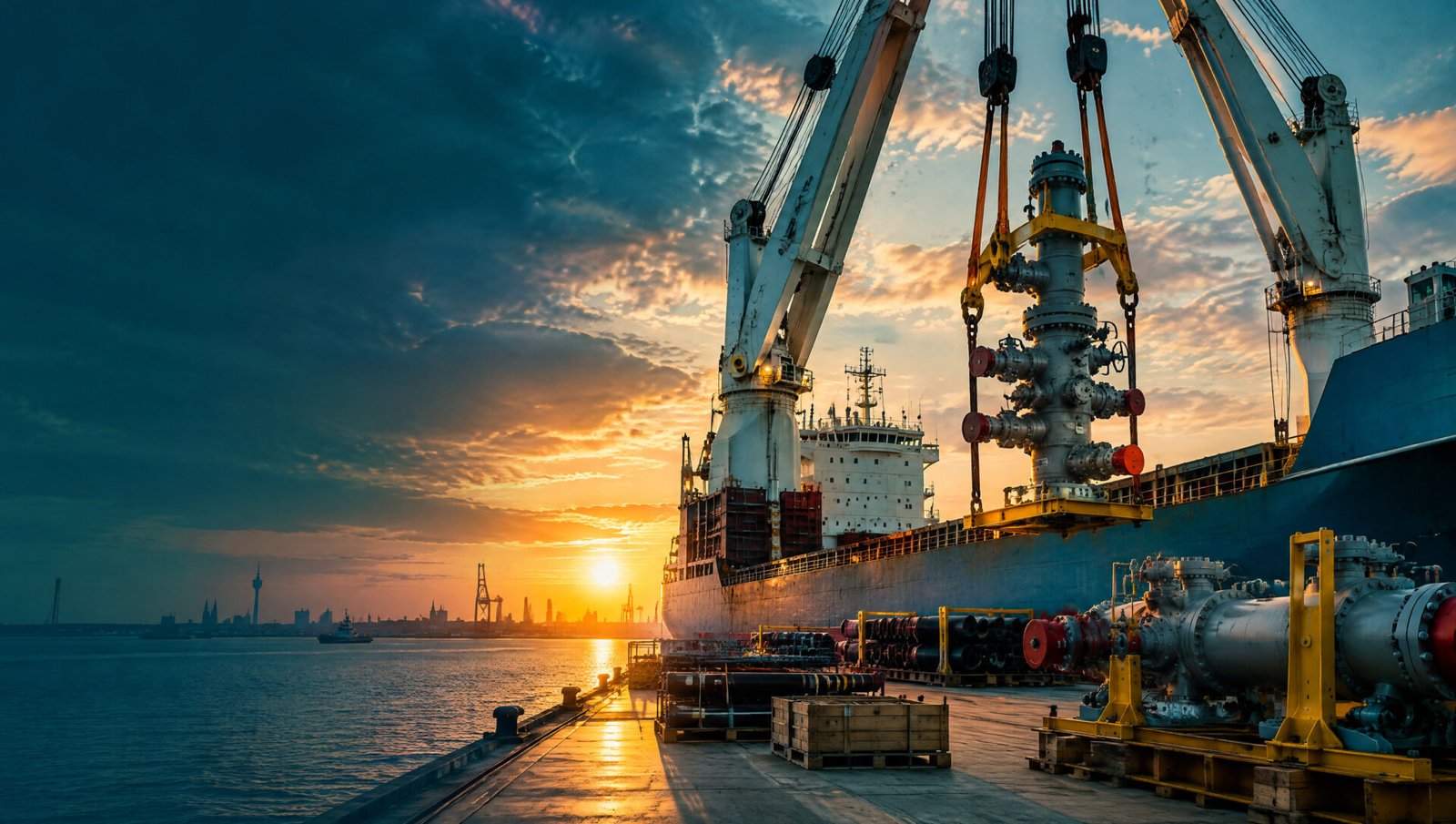
Ocean and Air Freight to Germany from Houston and the Gulf Coast
You need to move heavy machinery, oil and gas equipment, or project cargo from Texas to Germany, Europe’s largest economy and its industrial core. Texas International Freight books ocean and air capacity from Houston to the German ports, prepares the export filing, and clears the cargo into the European Union so your equipment reaches the plant or job site. We focus on the heavy and oversized freight standard carriers cannot move.
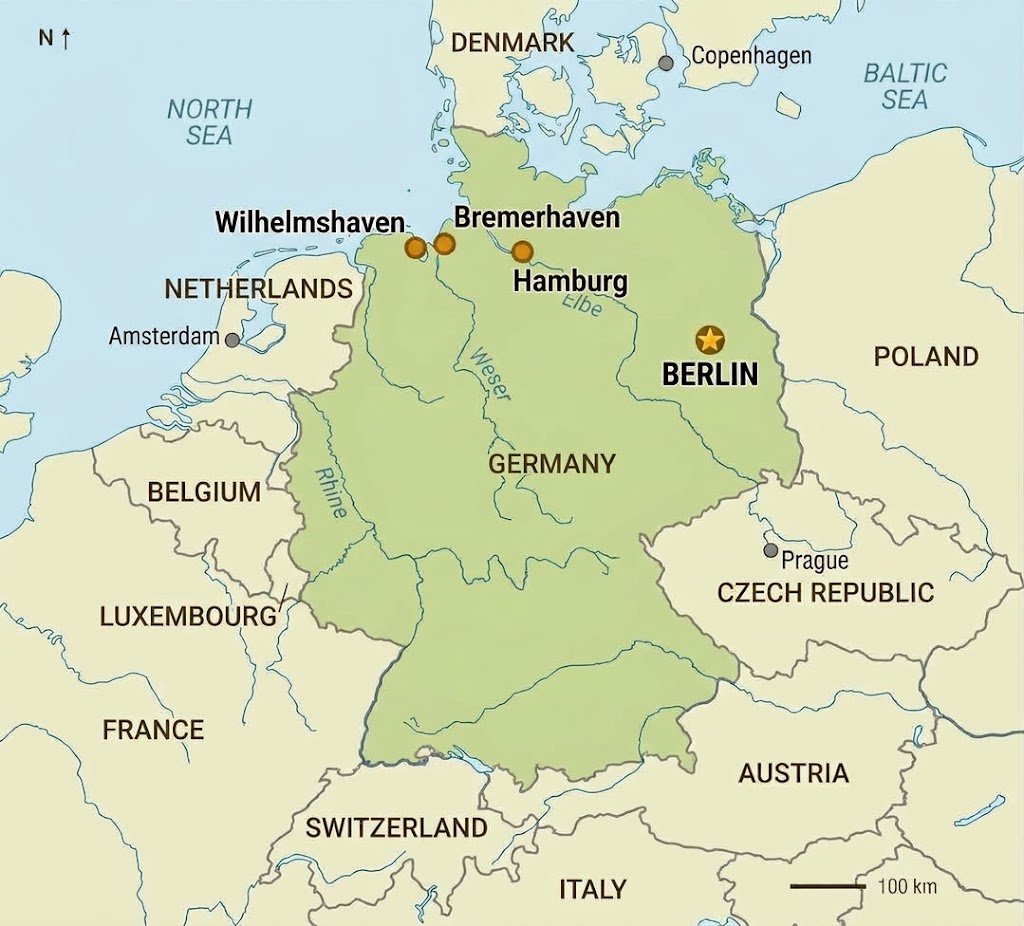
Where Your Cargo Lands
- Hamburg – Germany’s largest port and its main container and project-cargo gateway, with breakbulk berths and heavy-lift capacity on the Elbe and barge and rail links inland to the Ruhr industrial belt
- Bremerhaven – adds major roll-on roll-off and container capacity and is a key entry point for high-and-heavy and wheeled equipment
- Wilhelmshaven – the deepwater JadeWeserPort, which takes the largest vessels
Once cargo clears in Germany it circulates freely across the European Union, so the right port can shorten the inland leg to your site.
EU Customs and the Common External Tariff
Germany follows the Union Customs Code, so US-origin goods clear at the EU Common Customs Tariff, classified under the Combined Nomenclature and TARIC. Machinery often carries a low or zero rate, and with no US-EU free trade agreement, most-favored-nation rates apply on the CIF value. German import VAT, the Einfuhrumsatzsteuer, runs 19 percent and is recoverable by a registered importer. Your importer needs an EORI number and files on the Single Administrative Document. Steel, aluminium, and other carbon-intensive goods now fall under the Carbon Border Adjustment Mechanism, definitive since January 2026.
Emissions and Equipment Certification
Germany enforces the EU rules tightly. Non-road mobile machinery such as excavators, loaders, and generator sets must meet EU Stage V engine emissions standards, and equipment placed on the EU market needs CE marking under the EU Machinery Directive (the new Machinery Regulation applies from January 2027). We flag these requirements before booking, because a used machine that does not meet Stage V can be blocked or restricted at destination. Confirming compliance early keeps your shipment from stalling at the port.
Documentation Requirements
Your document set for Germany covers:
✔ Commercial invoice with accurate values, Incoterms, and full legal entity names
✔ Packing list
✔ Bill of lading or air waybill
✔ Certificate of origin, where the importer or customs requires proof of origin
✔ EORI registration for the importer
✔ Customs declaration on the Single Administrative Document, with the HS or Combined Nomenclature code
✔ CE marking documentation and Stage V emissions evidence for machinery
✔ Carbon Border Adjustment Mechanism reporting for steel, aluminium, and other covered goods
On the US side, shipments above 2,500 dollars file Electronic Export Information in the Automated Export System before departure. Our customs broker team reviews the full set before booking so clearance holds at both ends.
Ocean, Air, and Inland Options
Crated machinery moves in containers, full or as consolidated part loads, while oversized units ship as breakbulk cargo or project cargo on flat rack, open-top, and heavy-lift equipment through ocean freight. Time-critical parts fly in through air freight. From the port we arrange trucking and rail to the final German site, and we coordinate the heavy equipment hauling and the domestic move that brings each unit to the US terminal.
Packing, Insurance, and Customs Support
Sound export packing and bracing protect machinery across the Atlantic, and cargo insurance covers the value in transit. Our customs broker team prepares the German entry and the documentation so clearance holds, and we carry the full freight forwarder responsibilities from pickup to delivery. Plan on roughly two to three weeks of ocean transit from the Gulf Coast to Hamburg or Bremerhaven.
Onward Across Europe
From Germany we carry cargo onward across Central Europe, including heavy equipment lanes to the Czech Republic routed through the same northern gateways.
Germany sits at the center of the European network. The same desk runs cargo to Belgium, France, Denmark, and Sweden, and routes Black Sea project cargo through Constanta, Romania. One forwarder coordinates every leg from Texas to the final site.
Request Your Germany Shipping Quote
Move heavy machinery, oil and gas equipment, or project cargo to Hamburg, Bremerhaven, or Wilhelmshaven with confidence. Texas International Freight handles every step, from export filing and EORI validation to customs clearance and final delivery.
Phone: +1 877-489-9184
Email: ship@txintlfreight.com
Explore our related services:
Breakbulk · Container Shipping · Air Freight · Air Charter
Frequently Asked Questions About Shipping to Germany
Which German port suits heavy equipment?
Hamburg handles containers, breakbulk, and project cargo, Bremerhaven adds roll-on roll-off and high-and-heavy capacity, and the deepwater JadeWeserPort at Wilhelmshaven takes the largest vessels. We route to whichever fits your cargo and inland destination.
Do US machines pay duty in Germany?
US-origin goods clear at the EU Common Customs Tariff, often low or zero for machinery, plus 19 percent German import VAT on the duty-inclusive value, recoverable if your importer is registered. There is no US-EU free trade agreement, so MFN rates apply.
Does my used machine need to meet emissions rules?
Yes. Non-road mobile machinery must meet EU Stage V engine emissions standards, and equipment sold on the EU market needs CE marking. We confirm compliance before shipping so the machine is not held at the border.
How long is ocean transit from Houston to Germany?
Plan on roughly two to three weeks to Hamburg or Bremerhaven depending on a direct service or transshipment, plus export filing and clearance. Air freight moves urgent parts in a few days.
Can you deliver beyond Germany into the EU?
Yes. Once cargo clears customs in Germany it circulates freely across the European Union, and we arrange on-carriage by truck, rail, or barge to neighboring markets.