Ocean and Air Freight to Syria from Houston and the Gulf Coast
You need to move construction machinery, power equipment, or breakbulk cargo from Texas to Syria as the country rebuilds. What can you legally ship, where does it land, and how do you keep the move compliant? The answers shape your timeline and your budget.
Texas International Freight books export shipments from Houston to Latakia and Tartus. Our team screens the transaction, prepares export filings and license checks, arranges ocean and air capacity, and coordinates inland delivery to your Syrian site. We handle the heavy and oversized cargo standard parcel carriers cannot move.
Compliance First: Screening Before Booking
The regulatory picture changed sharply in 2025. The United States removed its comprehensive Syria sanctions program that year, and the Caesar Act was repealed at the end of 2025, so general trade is no longer broadly prohibited. That does not mean controls are gone. A number of individuals and entities remain designated, and many commodities still require a US export license through the Bureau of Industry and Security.
We treat every Syria booking as a screening exercise first. We check each party against the current restricted lists, confirm the commodity’s export-control status, and arrange any license the cargo needs before we move it. That keeps your shipment on a compliant footing and protects your business.
Latakia and Tartus
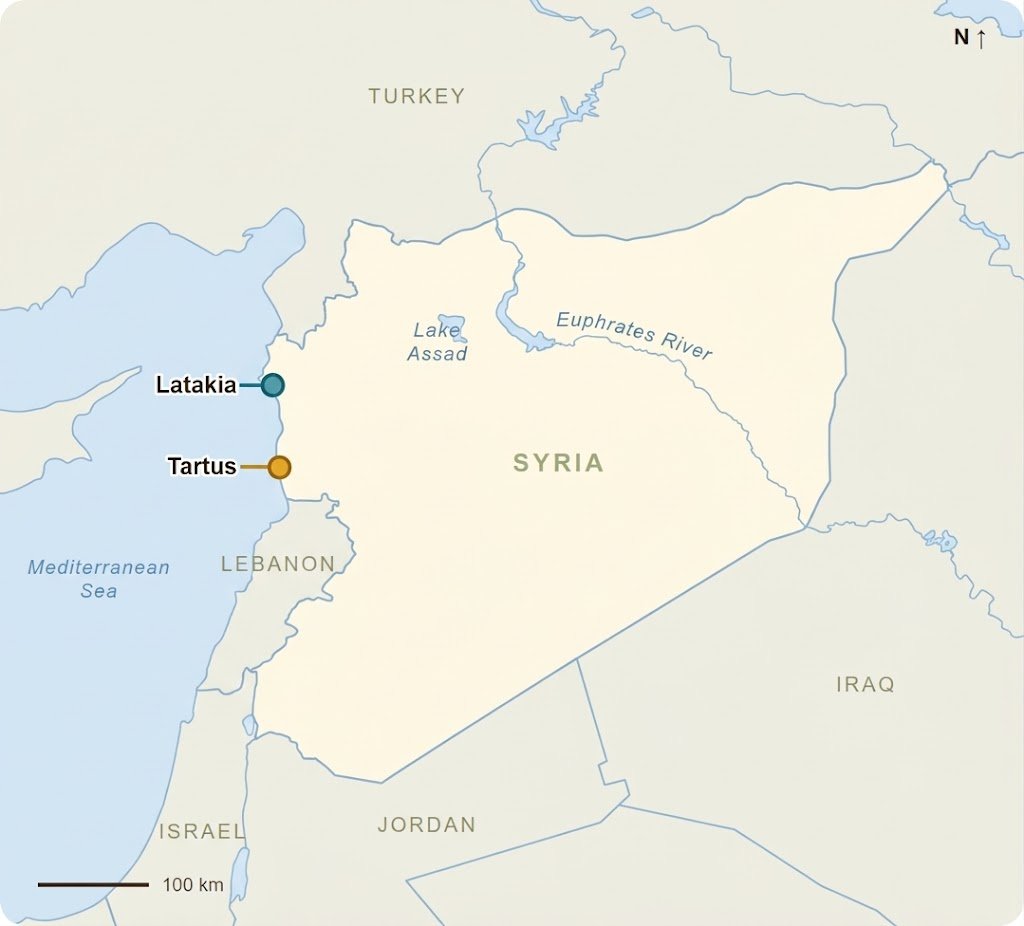
- Latakia – Syria’s main commercial port, handling containers and general cargo
- Tartus – to the south, taking bulk, breakbulk, and project cargo with the room for heavy lifts, which suits reconstruction equipment
Both sit on the Mediterranean coast and serve as the primary entry points for construction and infrastructure cargo. We match the port to your cargo and your delivery point.
How Your Equipment Reaches Syria
Cargo leaving Houston crosses the Atlantic, passes the Strait of Gibraltar, and enters the Mediterranean to reach Latakia or Tartus. The route never touches the Red Sea or the Bab el-Mandeb Strait, so the disruption that rerouted Asian-origin cargo around Africa does not apply to your US Gulf sailings.
Plan on roughly three to four weeks of ocean freight from the Gulf Coast, depending on a direct service or transshipment through a Mediterranean hub such as Piraeus or Mersin. Breakbulk moves on a multipurpose or chartered vessel can run longer because of load and discharge windows.
Reconstruction and Heavy Equipment Demand
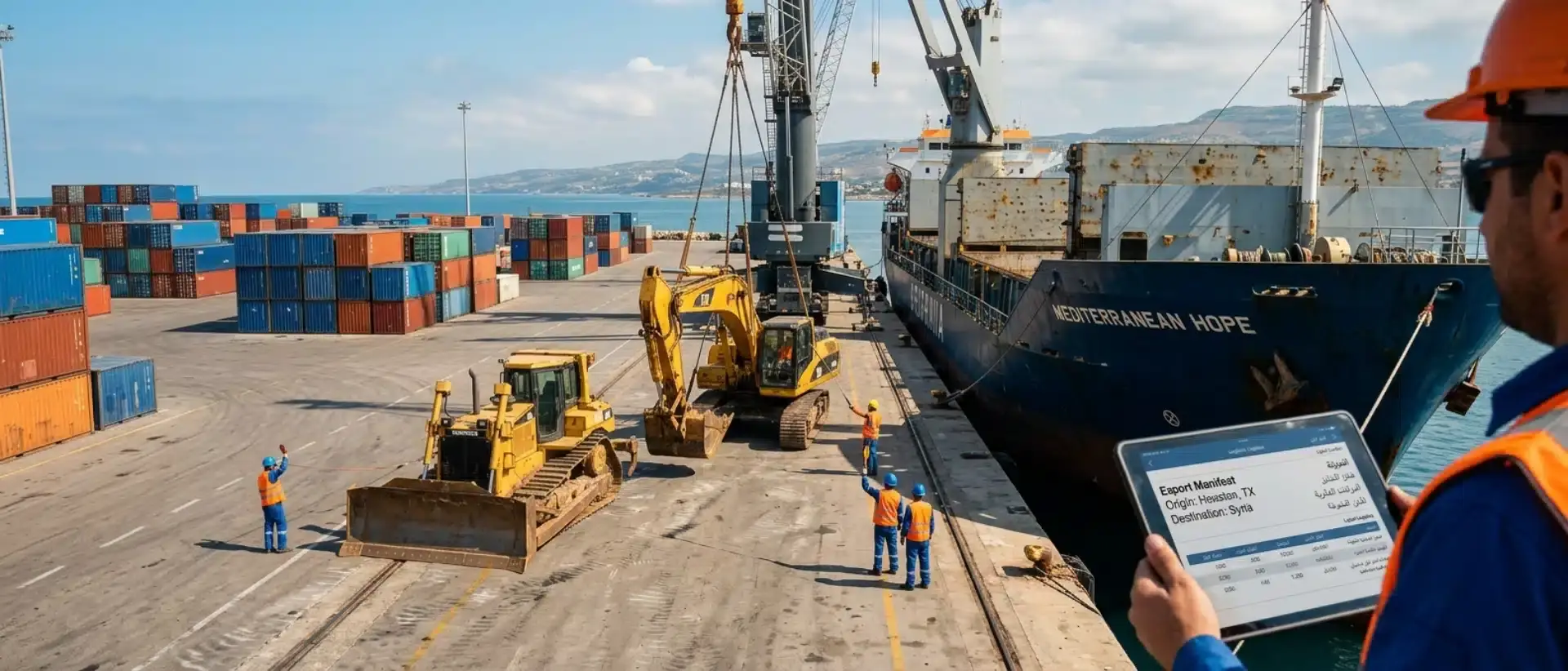
Rebuilding a damaged power grid, water system, housing stock, and transport network calls for construction machinery, generators and transformers, cranes, earth-moving equipment, and process modules. International estimates put Syria’s reconstruction need in the hundreds of billions of dollars, which points to sustained demand for heavy equipment over years, not months. Energy and infrastructure work moves as breakbulk and project cargo, often in multi-unit lots.
Export Paperwork and Licensing on the US Side
Shipments valued above 2,500 dollars or carrying a license requirement need Electronic Export Information filed in the Automated Export System before departure, under the right Schedule B classification. Because many goods bound for Syria still fall under Bureau of Industry and Security jurisdiction, license determination happens before booking, not after.
Your document set covers:
✔ Commercial invoice
✔ Packing list
✔ Bill of lading or air waybill
✔ Any license or authorization the commodity requires
Accurate values and full legal entity names prevent holds and support the screening. Proper export packing and crating protects the machine and satisfies marking rules.
Moving Oversized and Heavy Cargo
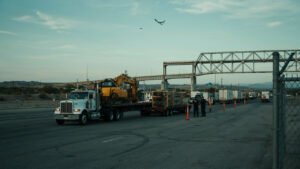
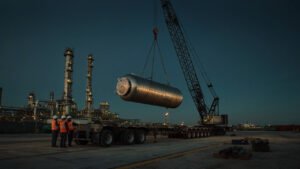
Equipment that exceeds container dimensions ships as breakbulk cargo, on flat rack and open-top units, by roll-on roll-off, or on a chartered vessel for a full project. Transformers, generators, crane components, and crushers travel this way, and Tartus has the room for heavy lifts. For a multi-unit move, project logistics and vessel charter keep the whole shipment on one plan. The same desk arranges heavy equipment shipped overseas and the domestic heavy haul to the Houston terminal.
Working With a Houston Freight Forwarder
Texas International Freight screens the transaction, prepares your AES filing and any export license, books vessel and aircraft space, coordinates with Syrian customs agents, and arranges inland trucking from Latakia or Tartus to your site. You work with one team from pickup in Texas to delivery in Syria.
The same desk runs your wider Eastern Mediterranean lanes. We move freight to Turkey, Lebanon, and Egypt, route cargo through the wider Middle East, and keep your North American freight moving on the trucking lanes to Mexico and the heavy equipment lanes to Canada. One forwarder, one point of contact, every leg of the move.
Get Your Syria Shipment Booked
Texas International Freight handles construction machinery, power and infrastructure equipment, breakbulk cargo, and oversized freight bound for Syria, with party and commodity screening on every move. Send us the dimensions, weight, and delivery point, and we return a routing and a quote.
Phone: +1 877-489-9184
Email: ship@txintlfreight.com
Explore our related services:
Breakbulk · Container Shipping · Air Freight · Air Charter
Frequently Asked Questions About Shipping to Syria
Can US companies legally ship to Syria now?
The picture changed in 2025. The United States removed its comprehensive Syria sanctions program that year, and the Caesar Act was repealed at the end of 2025, so general trade is no longer broadly prohibited. Controls remain: a number of individuals and entities are still designated, and many commodities still need a US export license through the Bureau of Industry and Security. We screen every party against the current restricted lists and check every commodity for licensing before we book, so your shipment moves on a compliant footing.
Which Syrian port receives your cargo?
Latakia is Syria’s main commercial port and handles containers and general cargo, while Tartus to the south takes bulk, breakbulk, and project cargo and has the room for heavy lifts. Both sit on the Mediterranean coast. As reconstruction ramps up, these two ports are the primary entry points for construction and infrastructure equipment, and we match the port to your cargo and delivery point.
Does shipping from Houston to Syria touch the Red Sea?
No. Cargo leaving Houston crosses the Atlantic, passes the Strait of Gibraltar, and enters the Mediterranean to reach Latakia or Tartus. The route never touches the Red Sea or the Bab el-Mandeb Strait, so the Houthi disruption that rerouted Asian-origin cargo around Africa does not apply to your US Gulf sailings. Plan on roughly three to four weeks of sailing time, depending on direct service or transshipment through a Mediterranean hub.
What equipment is in demand for Syria’s reconstruction?
Rebuilding a damaged power grid, water system, housing stock, and transport network calls for construction machinery, generators and transformers, cranes, earth-moving equipment, and process modules. Energy and infrastructure projects move as breakbulk and project cargo, often in multi-unit lots. We handle the export filing, the licensing checks, the booking, and the destination clearance so the equipment lands ready to work.
How do you ship an oversized item that will not fit in a container?
Oversized cargo moves as breakbulk, on flat rack and open-top equipment, by roll-on roll-off, or on a chartered multipurpose vessel for full project moves. A transformer, a generator, or a crane component ships on breakbulk berths rather than in a standard box, and Tartus has the room for heavy lifts. Our team handles export crating, blocking and bracing, and lashing so the unit arrives intact. For an energy or infrastructure project with several heavy pieces, vessel charter and project logistics keep the whole move on one plan.