Freight Forwarding for Wide-Format and Flatbed Printers
You bought a flatbed UV printer at auction, or you are relocating a grand-format press to a plant in another country. The machine is heavy, the printheads and gantry are fragile, and a knock in transit turns a six-figure asset into a repair bill. How do you move it so it prints on day one at the new site? Preparation and packing carry the load.
What Large-Format Printer Freight Covers
This freight covers wide-format roll-to-roll machines, flatbed UV printers, dye-sublimation and latex printers, and grand-format presses that can weigh a ton or more. The footprint, the rigid gantry, and the precision carriage put these machines in the crated-machinery class, not on a pallet under shrink wrap. Treat them like the calibrated equipment they are.
Decommissioning Before the Move
A printer ships drained and locked, not powered down and rolled onto a truck. The fluids come out, the carriage and gantry get locked or braced, and loose covers come off. Some UV and solvent inks carry a dangerous goods classification, so we drain, declare, and document them correctly. A printer that moves with fluid in the lines and a free-moving carriage arrives misaligned.
Crating and Shock Protection
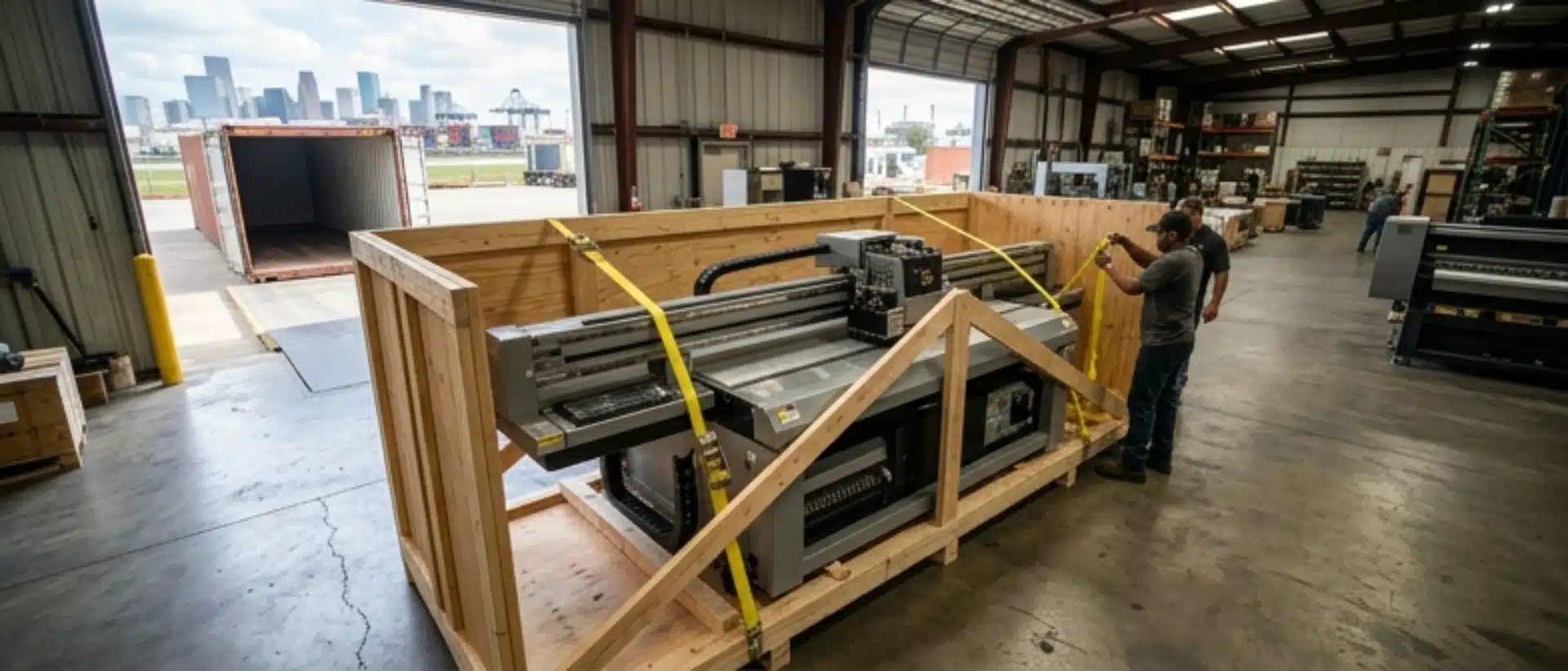
The machine rides in an engineered crate with a bolted base, foam cradles at the contact points, and shock and tilt indicators that reveal mishandling on arrival. Sensitive heads get extra cushioning and a moisture barrier with desiccant. Our export packing and crating matches the crate to the weight and the fragility, so the press survives forklift handling and a sea passage.
Container, Air, or Truck
Most printers ship inside a container, palletized and braced, on regular ocean freight at the lowest cost. A urgent or very high-value machine can move by air freight when downtime outweighs the premium. Inside North America, an air-ride trailer cushions the ride to the destination plant. We pick the mode that fits your timeline and budget.
Export Documents and Customs
A printer above 2,500 dollars in value needs Electronic Export Information filed in the Automated Export System, with a Schedule B number that matches the machine. The commercial invoice, packing list, and bill of lading carry the serial number, the value, and full legal entity names. Our customs clearance desk keeps the entry ready so the machine clears without storage charges.
Recommissioning and Cross-Border Lanes
We deliver the crate to the receiving plant and coordinate the uncrate so an OEM technician can level, refill, and calibrate the machine. The same desk runs the cross-border lanes south to Mexico and north to Canada, where printing and packaging plants take delivery by truck. One team books the move end to end.
Book Your Printer Shipment
Texas International Freight ships wide-format, flatbed, and grand-format printers to buyers and plants worldwide. Send us the make, model, weight, and crated dimensions, and we return a routing and a quote.
Contact Information:
- Phone: +1 877-489-9184
- Email: ship@txintlfreight.com
- Address: 11511 Katy Fwy #320, Houston, TX 77079
- Web Form: Request a Quote
Connect With Us:
How do you prepare a wide-format printer for shipping?
You drain the ink and cleaning fluids, lock or brace the carriage and gantry, remove loose covers and the media spindle, and power the machine down through its proper shutdown. Then it goes into an engineered crate on a bolted base. A flatbed UV printer that ships with fluid in the lines and a free carriage almost always needs realignment on arrival, so the prep work pays for itself.
Should a printer ship by sea or by air?
Sea fits most moves. A crated printer travels inside a container on ocean freight at the lowest cost, which suits a planned relocation or a resale. Air freight makes sense when a print shop cannot lose weeks of production or when the machine is high enough in value that the freight premium is small against downtime. We price both so you can choose.
Are printer inks considered dangerous goods?
Some are. Many UV-curable and solvent inks carry a UN classification as flammable or environmentally hazardous, while most water-based and latex inks do not. We check the safety data sheet for each fluid, drain what must come out, and declare and pack any regulated ink to the dangerous goods rules. Getting this right keeps the shipment off hold at the airline or the port.
How do you protect printheads and the gantry in transit?
The carriage is locked so the heads cannot travel, the gantry is braced against the frame, and shock and tilt indicators ride on the crate to flag rough handling. Foam cradles and a moisture barrier with desiccant guard the electronics and the heads against vibration and condensation. The crate is marked for upright orientation and lift points so handlers keep it level.
Do you handle install or recommissioning at destination?
We deliver the crate to the plant and coordinate the uncrate and placement so your OEM technician or dealer can level, refill, and calibrate the machine. We do not perform the OEM recommissioning ourselves, but we time the delivery to the technician’s schedule so the printer is ready to commission the day it arrives rather than sitting crated on the floor.


