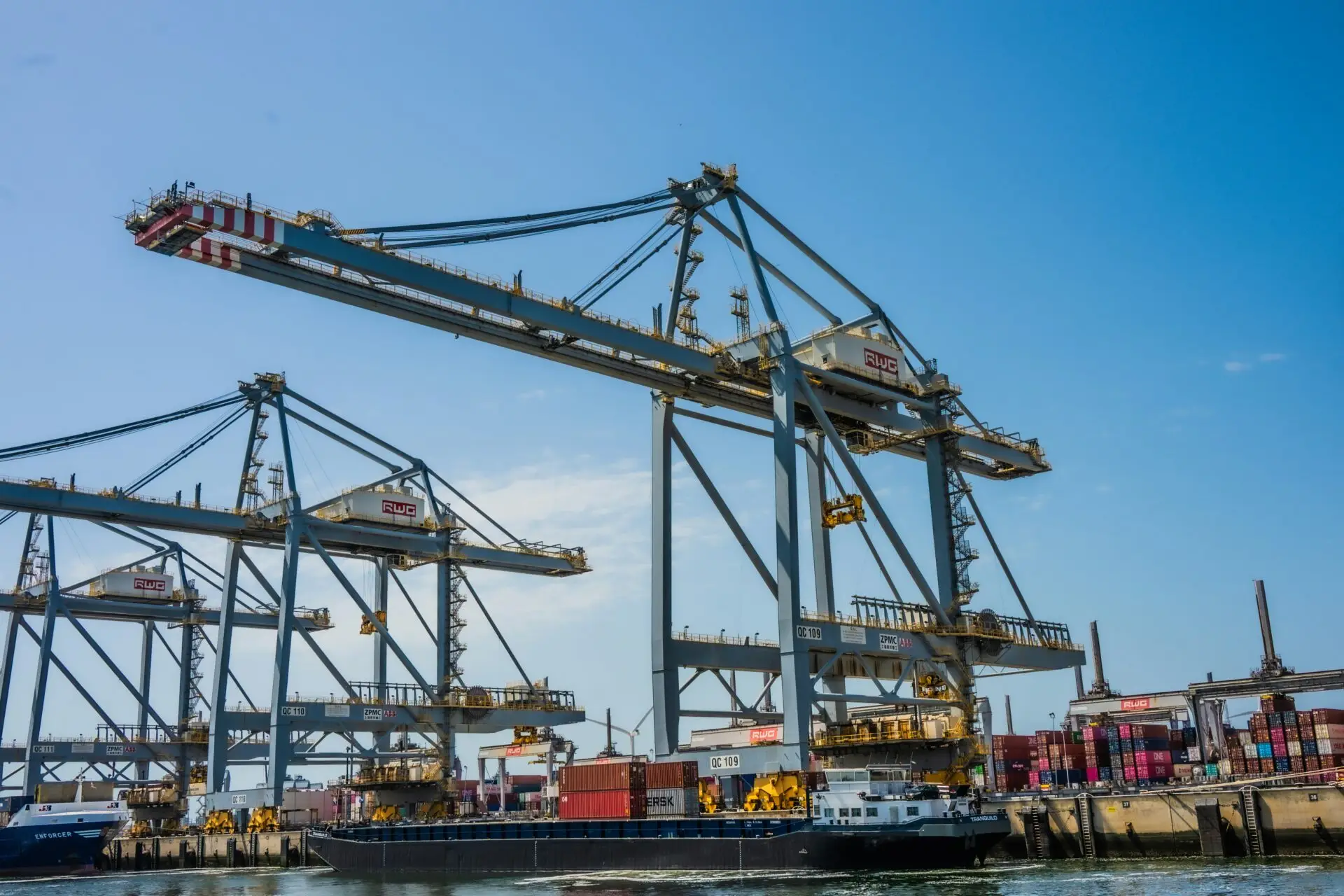
Shipping Ship Loaders and Bulk Terminal Equipment
Ship loaders transfer coal, grain, fertilizer, cement, and ore from a terminal onto a waiting vessel, often at several thousand tons per hour. They combine long booms, travelling gantries, loading chutes, and conveyor lines into one heavy machine. Texas International Freight ships ship loaders worldwide from the US Gulf as breakbulk and project cargo. Are you exporting a new loader for a bulk terminal, or relocating one to another port?
Ship Loaders We Ship
We handle the loading machines and sub-assemblies that make up a bulk terminal berth, from the boom down to the chute.
- Travelling, radial, and linear ship loaders
- Fixed and quadrant loaders
- Luffing and slewing booms
- Telescopic loading chutes and trimming spouts
- Travel bogies, gantry rails, and portal legs
- Conveyor sections, drive units, gearboxes, and control houses
A ship loader is too large to ship whole, so the boom, portal, chute, and travel gear move as separate oversize units and reassemble on the quay.
How Ship Loaders Ship
Booms and portal structures move as breakbulk or on a chartered vessel, since their length and weight exceed container dimensions. Telescopic chutes, drive units, gearboxes, and control houses ship on flat rack and open-top equipment or in containers with full blocking and bracing. We plan the lift points and mode for each module by length, width, and weight.
Our team handles export packing, corrosion protection for slew bearings and machined faces, and custom crating for drives and electrical houses. We block, brace, and lash every module for ocean transit and support long booms against bending. Because a loader ships as a set of oversize modules, we run the project logistics from factory collection through heavy-lift port handling to quayside delivery. The feed conveyors that supply a loader often move in the same program as mining conveyor systems. Ship loaders move as general cargo, so dangerous goods handling is not normally required.
Documentation and Customs
Each shipment travels with a commercial invoice, packing list, and ocean bill of lading. We prepare a certificate of origin where the destination requires one and assign the correct Harmonized System code to the structural modules, mechanical drives, and electrical gear so duties are assessed accurately. Acting as your customs broker, we manage clearance at origin and destination and keep documents matched to each module.
Texas International Freight ships ship loaders worldwide from our Houston base at 11511 Katy Fwy #320, Houston, TX 77079. Call +1 877-489-9184, email ship@txintlfreight.com, or use our contact page for a quote.
How is a ship loader transported overseas?
It is broken into modules. Booms and portal structures move as breakbulk or on a chartered vessel, while chutes, drives, and control houses ship on flat rack, open-top, or in containers, then reassemble on the quay.
Can you relocate a used ship loader to another port?
Yes. We plan the dismantling sequence, lift points, and mode for each module, then handle export packing, ocean transport, and quayside delivery at the new terminal.
How do you protect the boom and chute in transit?
We support the boom against bending, block and brace each module, and lash it for ocean transit, with corrosion protection on slew bearings and machined surfaces.
What documents are needed to ship a ship loader?
A commercial invoice, packing list, and bill of lading, plus a certificate of origin where required and the correct Harmonized System code for each module.
Where does Texas International Freight ship ship loaders from?
From the US Gulf, handled through our Houston base, to bulk terminals and ports worldwide.


