Ocean and Air Freight to Thailand from Houston and the Gulf Coast
You need to move construction machinery, oil and gas modules, petrochemical cargo, or containerized freight from Texas to Thailand. Where does it land, what duty applies, and how do you keep oversized equipment moving through Thai ports? The answers shape your timeline and your budget.
Texas International Freight books export shipments from Houston to Laem Chabang, Bangkok, and Map Ta Phut. Our team arranges ocean and air capacity, prepares export filings, and coordinates inland delivery to your Thai site. We focus on the heavy and oversized cargo that standard parcel carriers cannot move.
Which Thai Port Receives Your Cargo
Laem Chabang in Chonburi province runs as Thailand’s largest deepwater port and handles most of the country’s container and breakbulk volume. It sits about 110 kilometers southeast of Bangkok and takes the larger vessels that carry project cargo and heavy lifts. A shipment of six 40-foot containers of aluminum routes through Laem Chabang without trouble.
Bangkok Port at Khlong Toei sits on the Chao Phraya River and serves cargo bound for the capital, but draft and vessel-size limits make it a secondary option for heavy freight. Map Ta Phut in Rayong is the industrial and petrochemical port, the right gateway for tank cargo, chemicals, and energy project modules feeding the Eastern Economic Corridor. Which port sits closest to your delivery point?
How Your Equipment Reaches Thailand
Cargo leaving Houston crosses to Asia and reaches Thailand through Southeast Asian hubs such as Singapore or Port Klang before a feeder run to Laem Chabang. Most Gulf Coast services to Thailand transship rather than sail direct, so transit runs longer than a single-leg lane.
Plan on roughly five to seven weeks of ocean freight from the Gulf Coast, depending on the hub and the feeder schedule. Breakbulk moves on a multipurpose or chartered vessel can run longer because of load and discharge windows.
Duties, VAT, and Thai Customs
Thailand has no free trade agreement with the United States, so US-origin goods enter under most-favored-nation tariff rates that vary by Harmonized System code. Machinery often carries a moderate rate, while some categories run higher. Thailand also charges 7 percent VAT on the import value, calculated on the CIF value plus duty. Equipment imported under a Board of Investment promotion can qualify for duty exemption, which matters for project and manufacturing cargo.
The Thai Customs Department clears imports through its e-Customs system on the National Single Window. Your Thai consignee needs valid importer registration and the document set in order before the vessel arrives. Our destination partners keep customs clearance moving so your cargo does not sit at the port.
Export Paperwork on the US Side
Shipments valued above 2,500 dollars or carrying a license requirement need Electronic Export Information filed in the Automated Export System before departure. Your cargo gets a Schedule B classification that matches the commodity. Energy, petrochemical, and technology equipment can fall under export controls administered by the Bureau of Industry and Security, so screening happens before booking.
Your document set covers the commercial invoice, the packing list, the bill of lading or air waybill, and any certificate the commodity requires. Accurate values and full legal entity names prevent holds at both ends. Proper export packing and crating protects the cargo and satisfies marking rules.
Moving Oversized and Heavy Cargo
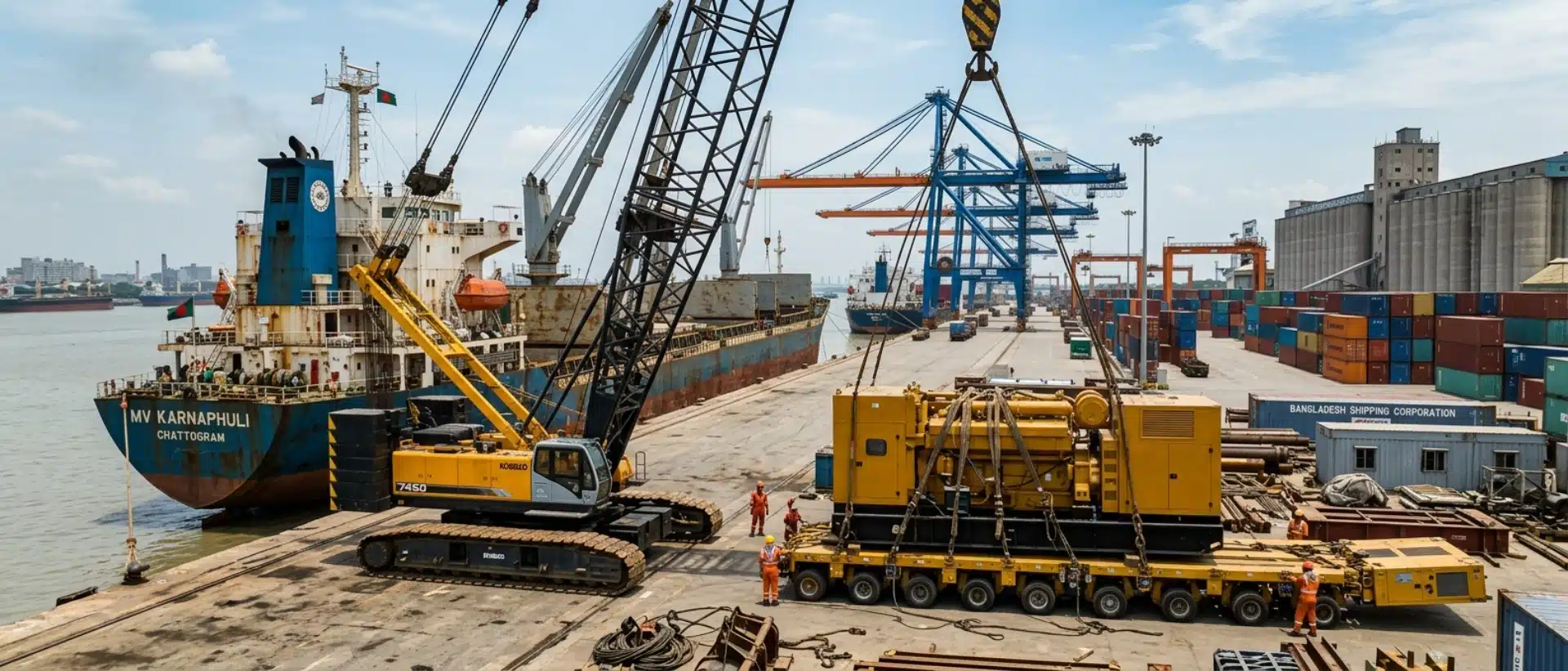
Equipment that exceeds container dimensions ships as breakbulk cargo, on flat rack and open-top units, by roll-on roll-off, or on a chartered vessel for a full project. Drilling modules, transformers, generators, and crushers travel this way. Self-propelled units such as wheel loaders and harvesters often roll on and roll off under their own power.
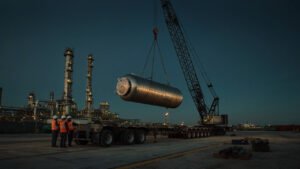
Construction, mining, oil and gas, and energy projects rarely move one piece at a time. For a multi-unit move, project logistics and vessel charter keep the whole shipment on one plan and one schedule. Our crews handle blocking and bracing, lashing, and the survey work that heavy lifts require. The same desk arranges heavy equipment shipped overseas and the domestic heavy haul that brings the unit to the Houston terminal.
Bulk Liquids and Petrochemical Cargo to Thailand
Thailand draws steady volumes of fuel, base oil, and petrochemical product through Map Ta Phut and the Eastern Economic Corridor. A bulk parcel of diesel or a tank-storage requirement at a transshipment hub calls for charter tonnage and terminal coordination rather than a container booking. We scope the vessel, the storage, and the discharge plan as one move.
Ocean or Air to Thailand
Ocean freight carries the weight and the bulk at the lowest cost per ton, so it fits machinery, agricultural equipment, and oil and gas components. Air freight to Suvarnabhumi Airport earns its premium when a project stalls for want of a part. A failed gearbox on a Rayong site cannot wait weeks at sea, so the replacement flies while the main shipment sails.
Working With a Houston Freight Forwarder
Texas International Freight books vessel and aircraft space, prepares your AES filing and commercial documents, coordinates with Thai customs agents, and arranges inland trucking from Laem Chabang or Map Ta Phut to your site. You work with one team from pickup in Texas to delivery in Thailand.
The same desk runs your other Asian lanes. We move heavy equipment to Sri Lanka, Vietnam, Malaysia, Singapore, and Indonesia, and we keep your North American freight moving on the trucking lanes to Mexico and the heavy equipment lanes to Canada. One forwarder, one point of contact, every leg of the move.
Get Your Thailand Shipment Booked
Texas International Freight handles machinery, breakbulk cargo, petrochemical parcels, and oversized freight bound for Thailand. Send us the dimensions, weight, and delivery point, and we return a routing and a quote.
Contact Information:
- Phone: +1 877-489-9184
- Email: ship@txintlfreight.com
- Address: 11511 Katy Fwy #320, Houston, TX 77079
- Web Form: Request a Quote
Which Thai port should you ship heavy equipment to?
Match the port to your cargo and delivery point. Laem Chabang in Chonburi is Thailand’s largest deepwater port and handles most container and breakbulk volume, so a load of 40-foot boxes or a project lift routes through there. Map Ta Phut in Rayong is the petrochemical and industrial port for tank cargo, chemicals, and energy modules feeding the Eastern Economic Corridor. Bangkok Port at Khlong Toei works for lighter cargo bound for the capital but limits vessel size on the river.
Do US-origin machines pay import duty in Thailand?
Thailand has no free trade agreement with the United States, so US-origin goods enter under most-favored-nation tariff rates that vary by Harmonized System code. Machinery often carries a moderate rate, while some categories run higher. Thailand also charges 7 percent VAT on the CIF value plus duty. Equipment brought in under a Board of Investment promotion can qualify for duty exemption, which matters for project and manufacturing cargo.
How long does ocean freight from Houston to Thailand take?
Plan on roughly five to seven weeks from the Gulf Coast, because most services transship through a Southeast Asian hub such as Singapore or Port Klang before a feeder run to Laem Chabang rather than sailing direct. Breakbulk and project cargo on a chartered or multipurpose vessel can run longer because of load and discharge windows. Add time for export filing, customs clearance, and inland trucking to your Thai site. Air freight to Suvarnabhumi Airport moves urgent spares in a few days.
How do you ship an oversized item that will not fit in a container?
Oversized cargo moves as breakbulk, on flat rack and open-top equipment, by roll-on roll-off, or on a chartered multipurpose vessel for full project moves. A drilling module, a transformer, or a self-propelled harvester ships on breakbulk berths rather than in a standard box. Our team handles export crating, blocking and bracing, and lashing so the unit arrives intact. For an oil and gas or mining project with several heavy pieces, vessel charter and project logistics keep the whole move on one plan.
Can you handle bulk fuel or petrochemical shipments to Thailand?
Yes. Thailand draws steady volumes of fuel, base oil, and petrochemical product through Map Ta Phut and the Eastern Economic Corridor. A bulk parcel of diesel or a tank-storage requirement at a transshipment hub calls for charter tonnage and terminal coordination rather than a container booking. We scope the vessel, the storage, and the discharge plan as one move so the cargo and the paperwork stay on one schedule.