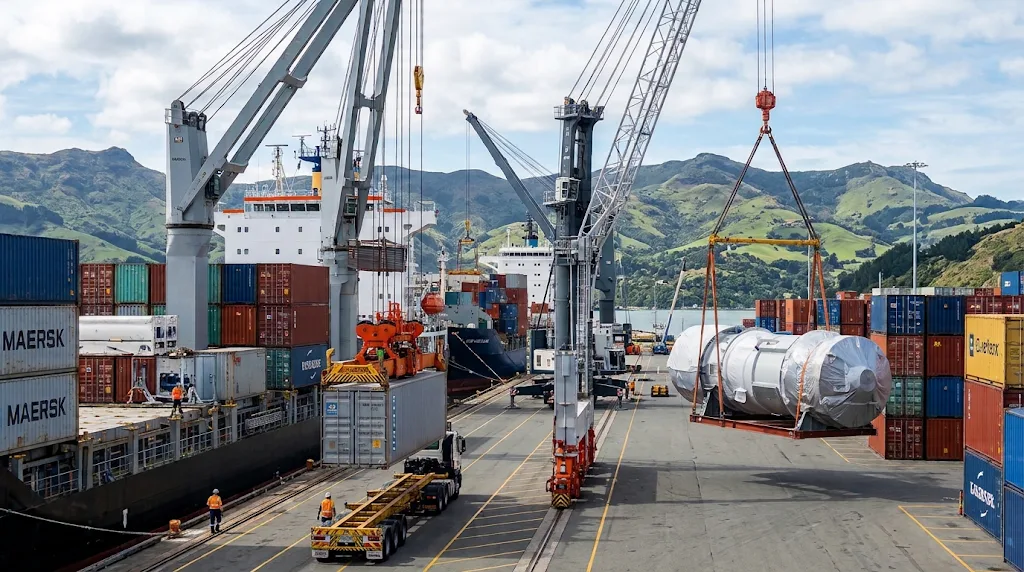
Shipping to New Zealand: Heavy Equipment and Machinery from Houston
Do you need to move a drilling rig, a harvester or a processing line from Texas to a site in New Zealand? Texas International Freight handles shipping to New Zealand for heavy equipment, machinery, breakbulk and project cargo from Houston and other US ports. We book the ocean leg, file the US export, coordinate biosecurity clearance and plan the inland move to your site.
New Zealand is an island nation at the end of a long ocean run, so every shipment clears both customs and the country’s strict biosecurity checks before it reaches the road. The port and the condition of your equipment on arrival both shape how fast that happens.
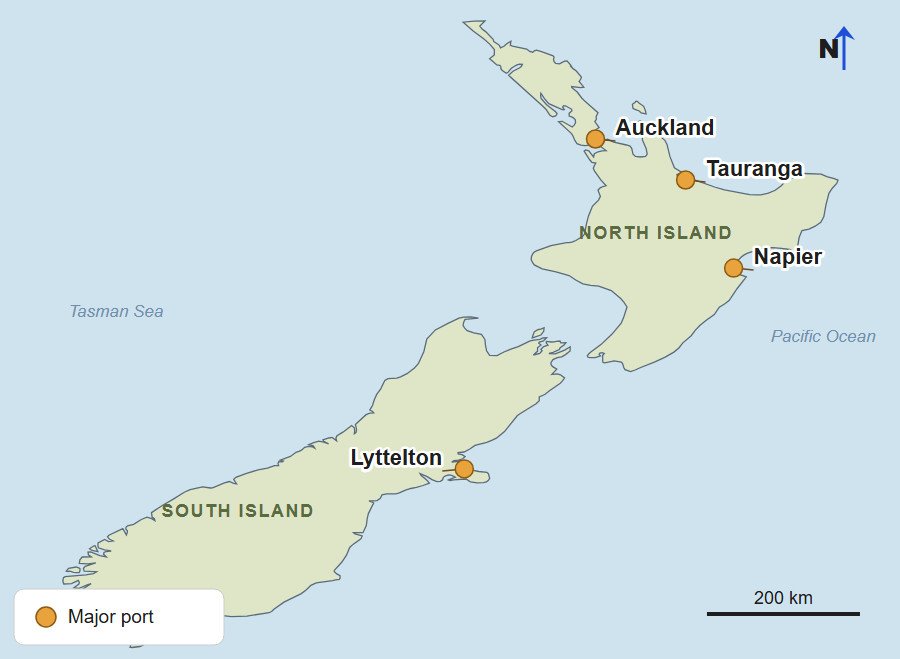
No scheduled service runs directly from the US Gulf to New Zealand. Cargo typically transships through a Pacific or Asian hub, or routes via the US West Coast, before a connecting service completes the leg to Auckland or Tauranga. We plan the rotation that balances transit time against the number of transshipments your cargo goes through.
New Zealand Customs, GST and Biosecurity
New Zealand Customs clears the import declaration, but the Ministry for Primary Industries (MPI) biosecurity check is the step that catches most heavy equipment shipments by surprise.
- GST: New Zealand charges 15 percent GST on most imports, in addition to any Working Tariff duty that applies to the HS code.
- Biosecurity cleaning: used machinery, earthmoving equipment and anything that has touched soil must arrive visibly clean of soil, plant material, seeds and insects. MPI inspects on arrival, and a failed inspection means offshore or local treatment at the importer’s cost and schedule.
- MPI permits: certain categories need a biosecurity permit before the shipment even leaves origin; we flag this during booking so it is not a surprise at the wharf.
- Declaration and levies: Customs and MPI both charge goods-clearance levies on top of GST and duty, and the current rates apply from April 2026.
- Entry: most commercial shipments move through the Trade Single Window, New Zealand’s electronic import declaration system.
Our customs broker team checks your document set, and we arrange export cleaning before the vessel sails wherever we can, since a clean machine at origin clears faster than one held for treatment in New Zealand:
✔ Commercial invoice
✔ Packing list
✔ Bill of lading
✔ Steam-clean or biosecurity certificate for used equipment
Industries Shipping Machinery to New Zealand
Agriculture and Dairy
Dairy processing, orchards and vineyards across the North Island and Canterbury order tractors, harvesters, irrigation equipment and processing lines. Our breakbulk cargo team handles units too large for a standard container.
Forestry
Plantation forestry in the central North Island calls for harvesters, skidders and log-handling equipment, much of it moving through Tauranga, the country’s main log export port.
Geothermal and Energy
The Taupo Volcanic Zone hosts one of the world’s larger concentrations of geothermal power stations, which need turbines, well equipment and plant machinery delivered on a fixed outage schedule. Wind farms and grid projects add transformers and tower sections to the same lanes.
Construction and Mining
Infrastructure and roading projects on both islands need cranes, pavers and drilling rigs, and South Island mining and quarrying operations order crushing and processing equipment. Our project logistics team coordinates the full move from booking to final delivery.
Oversize Road Permits and Final Delivery
In New Zealand, the NZ Transport Agency (NZTA) issues overweight and over-dimension permits for State Highways, and the relevant local council issues permits for local roads your route crosses. A load that exceeds standard Class 1 limits under the Land Transport Rule needs a permit before it moves, and some bridges carry their own crossing conditions. Heavy Haulage Association guidance covers signage, lighting and pilot vehicle requirements for larger moves. Export packing and bracing protect your equipment over several modes, and cargo insurance covers it from Houston to the site.
Ship Your Equipment to New Zealand
Ready to move equipment to New Zealand? Talk to a project cargo specialist in Houston and we return a plan and a quote.
Phone: +1 877-489-9184
Email: ship@txintlfreight.com
Address: 11511 Katy Fwy #320, Houston, TX 77079
Explore our related services:
Breakbulk · Container Shipping · Air Freight · Vessel Charter
Frequently Asked Questions About Shipping to New Zealand
Which New Zealand port should I use for heavy equipment?
Auckland and Tauranga handle most North Island machinery, with Tauranga the main gateway for forestry and bulk cargo. Napier suits the lower North Island, and Lyttelton is the main entry point for the South Island and Christchurch. We compare routing and inland distance to your site before booking.
Why does used equipment get held up at New Zealand customs?
The Ministry for Primary Industries inspects imported machinery for soil, plant material, seeds and insects. Equipment that is not visibly clean on arrival needs treatment before it is released, which costs time and money. We arrange export cleaning before the vessel sails wherever possible to avoid that delay.
Is there direct ocean service from the US to New Zealand?
No scheduled service sails directly from the US Gulf to New Zealand. Cargo generally transships through a Pacific or Asian hub, or connects via the US West Coast, before completing the final leg to Auckland or Tauranga. We select the routing that balances transit time against the number of transshipments.
What GST and duty applies to machinery shipped to New Zealand?
New Zealand charges 15 percent GST on most imports, plus any duty set out in the Working Tariff of New Zealand for the HS code, along with Customs and MPI goods-clearance levies. We confirm the applicable codes and levies before booking so there are no surprises at clearance.
Do I need a permit to truck an oversized machine in New Zealand?
Yes. NZTA issues overweight and over-dimension permits for State Highways, and local councils issue permits for local roads on your route. Loads over the standard Class 1 limits need a permit before moving, and some bridges carry additional crossing conditions.