

Shipping terms define who pays, assumes risk, and handles customs clearance in international transactions.
Introduction to INCOTERMS and Their Role in Global Shipping
International trade relies on clear agreements between buyers and sellers, especially when machinery, heavy equipment, breakbulk cargo, or industrial components move across multiple borders. INCOTERMS provide a universal language that defines responsibility for transportation, insurance, export and import procedures, and financial risk.
Understanding these terms helps companies avoid disputes, reduce unexpected charges, and build predictable logistics strategies.
Understanding INCOTERMS in International Transactions
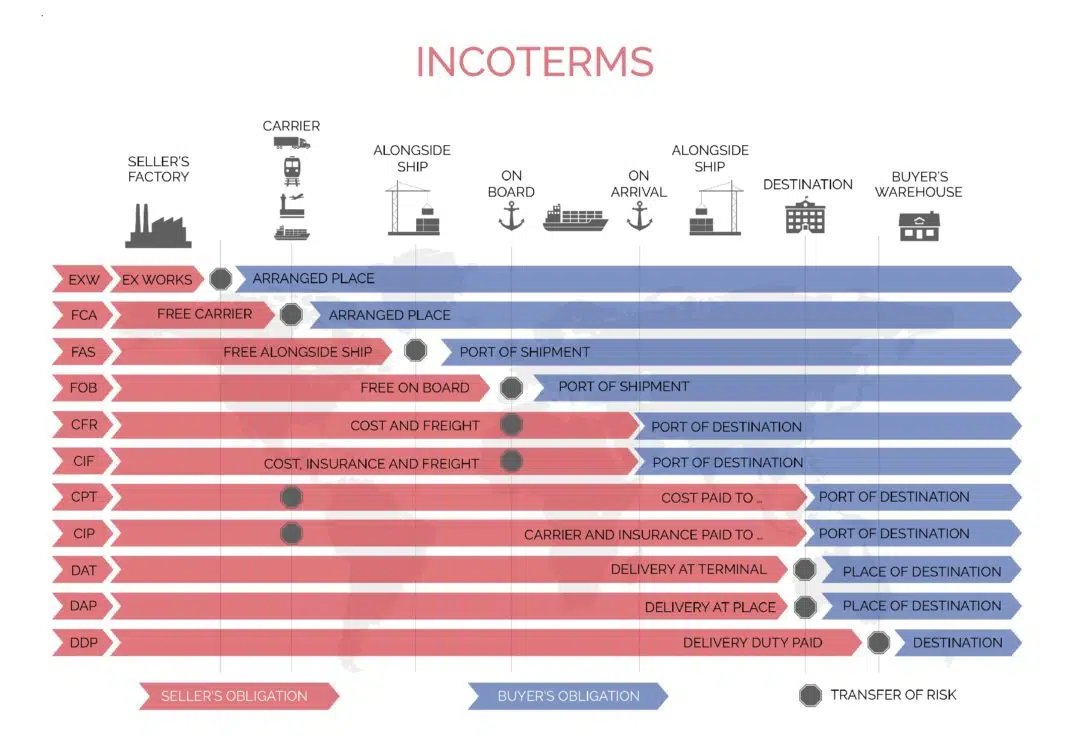
Shipping terms, also known as INCOTERMS (International Commercial Terms), are standardized three-letter abbreviations recognized globally. These terms define how responsibilities and costs are divided between the shipper and the consignee in any international shipment.
INCOTERMS help both parties understand who books transportation, who selects the carrier, who pays for freight, and where the transfer of risk occurs. For businesses moving heavy machinery, drilling equipment, agricultural units, or high-value project cargo, the correct INCOTERM can materially change total landed cost and execution risk. If your shipment includes oversized pieces or non-containerized cargo, align the INCOTERM early with your handling plan for breakbulk cargo and port requirements at facilities like the Port of Houston.
For example, under DDP, the seller pays transportation and customs-related costs up to the buyer’s delivery point. Under EXW, the buyer controls the logistics chain starting at the seller’s facility. Other terms such as FOB, CFR, CIF, CPT, and DAP set specific transfer points for cost and risk, which directly affects carrier selection, customs planning, and timing at terminals.
Key Aspects of INCOTERMS
INCOTERMS answer three core questions in every shipment.
- Who arranges and books transportation?
- Who pays for freight, handling, and logistics services?
- Where does responsibility and risk transfer from seller to buyer?
These terms guide cost allocation and liability expectations. When INCOTERMS are unclear or misapplied, companies often face customs delays, port holds, unexpected terminal invoices, and disputes over who should pay accessorials. If your contract terms place customs responsibility on your side, align your process with a qualified customs broker and confirm documentation requirements before cargo reaches the port.
Why You Should Pay Attention to INCOTERMS
Incorrect INCOTERMS create real operational consequences, including demurrage exposure, detention charges, insurance gaps, and cargo claims disputes. These risks increase with heavy equipment and project shipments because loading, lifting, stowage, and terminal handling are higher-risk events. If you are planning specialized moves, pair your INCOTERM decision with your execution plan for project logistics and route selection through the best ports of call for heavy equipment.
If you are unsure which INCOTERM fits your transaction, or you are reviewing terms proposed by overseas suppliers, professional guidance helps you avoid costly surprises. The goal is simple. Match the INCOTERM to the real-world flow of your cargo, the handoff points at terminals, and the party that can actually manage export and import compliance.
Need help with INCOTERMS? Texas International Freight supports importers and exporters with term selection, documentation alignment, and execution planning for machinery shipments, project cargo, and international freight movements.
Call to Action. Get Expert Support on INCOTERMS
Choosing the right INCOTERM helps control cost, reduce risk, and keep deliveries predictable. Whether you are planning a one-time shipment or managing recurring industrial lanes, our team helps you confirm correct terms and avoid preventable mistakes that show up later as terminal holds, rework, or unexpected charges.
- Clarify cost and risk responsibilities before you sign a contract.
- Select the best INCOTERM for heavy machinery, container shipping, or breakbulk moves.
- Align customs, insurance, and transportation obligations with your operational workflow.
- Reduce exceptions at the port and improve delivery reliability.
Contact Texas International Freight to receive guidance tailored to your shipment.
Phone: +1 877-489-9184
Email: sh**@***********ht.com
Request Assistance: Contact Form
Using INCOTERMS With Confidence
INCOTERMS are more than abbreviations. They define handoff points, documentation ownership, and who must act when something changes mid-move. When used correctly, they reduce misunderstandings, protect both buyer and seller, and streamline complex logistics. Whether you are shipping oversized machinery, high-value equipment, or containerized cargo, choosing the right term supports cleaner execution and fewer claims. If your cargo moves in containers, align the contract terms with how carriers and terminals operate under container shipping.
A well-selected INCOTERM supports predictable delivery chains, avoids surprise invoices, and strengthens trading relationships. As global trade gets more complex, understanding these terms becomes a baseline skill for procurement, logistics, and operations teams.
Frequently Asked Questions (FAQ)
What are INCOTERMS?
INCOTERMS are standardized international commercial terms that define how buyers and sellers split responsibilities for transportation, costs, and risk during shipping. They also clarify who handles key tasks such as export processes, carrier booking, and delivery handoffs.
Why are INCOTERMS important?
They reduce disputes by clarifying who pays which costs and where risk transfers. When the term matches the real operational flow, shipments move with fewer exceptions at ports, terminals, and border crossings.
How many INCOTERMS are there?
There are 11 INCOTERMS in the current set used in global trade. Each term defines a different handoff point for risk and a different allocation of responsibilities between buyer and seller.
Can INCOTERMS be ignored in a contract?
No. If parties do not specify a clear INCOTERM and named place, responsibility gaps appear. Those gaps typically show up as unexpected charges, delays, and disputes when the cargo reaches a terminal or a customs checkpoint.
Where can I get help understanding INCOTERMS?
You can work with a freight forwarder that manages industrial cargo end to end. If you need help aligning contract terms with customs planning and execution at origin and destination, contact Texas International Freight or submit your details via the contact form.