International Freight Forwarding From Texas: Forwarders vs Brokers
Many shippers confuse freight brokers with international freight forwarders, and the difference decides who actually controls your cargo. Texas International Freight is a Texas-based international freight forwarding company licensed by the Federal Maritime Commission. We are not freight brokers, and the distinction matters to your shipment. Which one does your cargo need?
What Is a Freight Broker?
A freight broker is an intermediary that matches a customer’s freight needs with freight services. Their main characteristics:
- Primarily operate within the US
- Focus mainly on truck freight
- Do not manage international shipments or multiple transport modes
Do Freight Brokers Add Costs?
Freight brokers make money as intermediaries. At their best, they apply their market knowledge to provide competitive pricing, carrier availability that end customers cannot reach directly, and simplified coordination within the domestic US market. The model works for straightforward domestic truckloads. It stops working the moment cargo crosses a border or changes modes.
What Is an International Freight Forwarder?
An international freight forwarder manages the complete shipping process across borders and modes of transport:
- Coordinating ocean freight such as breakbulk cargo, container shipping, and vessel charters
- Arranging air freight and air charters
- Managing heavy haul trucking and inland logistics
- Handling customs paperwork with licensed customs brokers
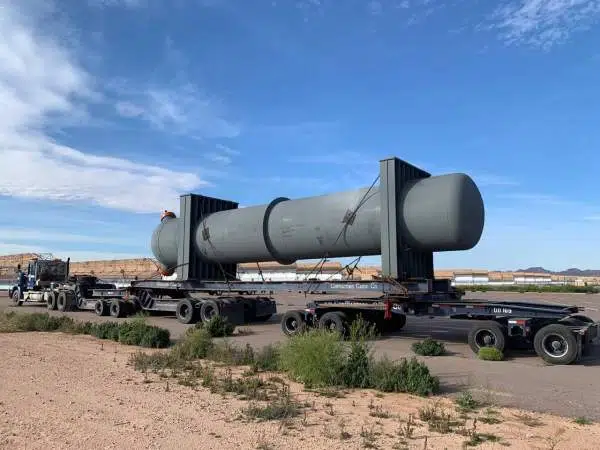
Forwarders like Texas International Freight handle the heavy and oversized equipment that brokers cannot touch:
- Excavators
- Agricultural machinery
- Oil rigs and drilling equipment, such as our drill rig move to the Congo
- Mining and construction equipment
- Energy and power generation machinery
What Makes a Good International Freight Forwarder?
Strong forwarders invest in trained staff, often recruiting from the logistics programs listed in our directory of logistics schools.
International shipping involves many moving parts, and interruptions happen. A reliable freight forwarder protects your cargo with contingency plans for delays, strong relationships with carriers and warehouses, and fast resolution of service interruptions before they reach your delivery date. A poor forwarder shows repeated breakdowns, excuses, and little added value. At that point, they are no better than freight brokers in disguise.
How to Find a Good Freight Forwarder
A few tests separate the professionals from the rest:
- Be cautious of companies promising zero delays
- Look for proven project logistics experience
- Check their record in your target country, on lanes such as shipping to Israel, Sweden, or Libya
- Review case studies of complex heavy equipment moves
Why Texas International Freight
We manage international shipments for construction, oil and gas, mining, and energy companies. From export packing and cargo insurance to multi-country project moves, one Houston desk runs the shipment from pickup to delivery, and an FMC license stands behind the booking.
Move Your Cargo With a Licensed Forwarder
Texas International Freight forwards heavy equipment, breakbulk cargo, and project shipments from Texas to the world by ocean, air, and heavy haul. Send us the cargo details and destination, and we return a routing and a quote.
Contact Information:
- Phone: +1 877-489-9184
- Email: ship@txintlfreight.com
- Address: 11511 Katy Fwy #320, Houston, TX 77079
- Web Form: Request a Quote
Connect With Us:
What is the difference between a freight broker and a freight forwarder?
A broker is a domestic intermediary, mostly for US truck freight, that matches shippers with carriers. A forwarder manages the entire international move across ocean, air, and land, including customs, and takes responsibility for the cargo end to end.
Why does an FMC license matter?
The Federal Maritime Commission licenses and bonds ocean transportation intermediaries. An FMC-licensed forwarder operates under federal oversight and financial responsibility requirements that an unlicensed broker does not carry.
Does using a freight forwarder cost more?
Usually the opposite on international moves. A forwarder’s carrier contracts, consolidation options, and customs work prevent the storage days, re-handling, and clearance penalties that cost far more than the service fee.
What cargo needs a forwarder rather than a broker?
Anything crossing a border or exceeding standard dimensions: excavators, agricultural machinery, oil rigs, mining and construction equipment, and power generation machinery all move on forwarder-managed breakbulk, RoRo, or charter capacity.
How do you evaluate a freight forwarder?
Check the FMC license, ask for case studies of heavy equipment moves on your lane, look for project logistics experience, and treat zero-delay promises as a warning sign rather than a selling point.