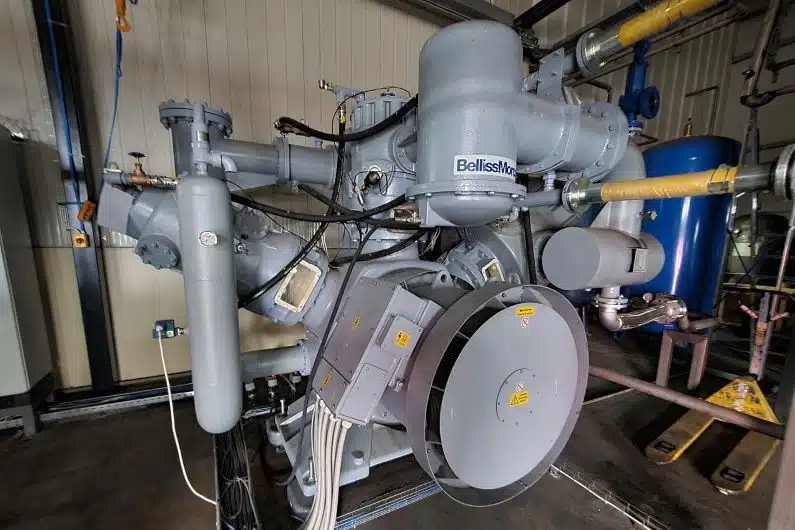
Shipping Compressors Worldwide for Oil and Gas
A compressor bound for a gas plant, a pipeline, or an oil field has to travel from Houston to a site that may sit on another continent. It is heavy, sensitive, and may hold residual gas and fluids that make preparation a safety job, not just a packing one. How do you ship a compressor safely and clear it through customs? Careful prep, the right mode, and clean paperwork get it there ready to run.
Texas International Freight ships compressors from Houston to oil and gas operations worldwide. We handle the prep, the mode, the customs, the packaging, and the delivery as one job.
What Compressors Do
Compressors compress and move gases, sending natural gas to processing facilities and distribution networks. They drive gas injection for reservoir pressure maintenance and enhanced oil recovery, and they handle the CO2 compression behind carbon capture and storage, pressurizing emissions for underground storage. Getting them on site reliably keeps these operations running.
Preparing the Compressor for Shipment
Preparation protects the machine and the people around it. We inspect the compressor to assess its condition, secure loose components, and protect the vulnerable parts. Electrical and fluid connections are disconnected, fluids drained, and any residual gas purged from the system, the steps that take the hazard out of the move before the unit is loaded.
Choosing the Shipping Mode
The mode follows the size, value, and destination of the unit:
- Air freight: fast and secure for urgent or high-value units, crated to airline size and weight limits, at a premium. Air cargo gets the compressor there on a tight timeline.
- Ocean freight: cost-effective for larger, bulkier compressors over long distances, packed in containers or shipped breakbulk. Ocean freight trades time for a lower cost.
- Land freight: convenient for Mexico and Canada by truck or rail, on specialized trailers secured against road and rail vibration.
Customs and Compliance
Customs is a core part of an international move. Meeting the import and export requirements, the licenses, permits, and documentation, prevents delays and penalties. Our customs broker team and freight forwarders work the paperwork, the tariff classifications, and the country-specific rules for the route.
Packaging, Labeling, and Insurance
Proper packaging protects the compressor in transit. Our export packing uses sturdy wooden crates or metal containers, shock-absorbing cushioning, and immobilizing to stop movement, with labels for fragility, handling, and hazardous materials where they apply. High-value units carry cargo insurance matched to the compressor’s value and the shipping route, so a loss or damage does not become a financial one.
Tracking, Receiving, and Installation
We track and monitor the shipment in real time, so you can follow the compressor’s location, condition, and progress across the move. On arrival, a thorough inspection confirms the unit came through in good condition, and we coordinate with local contractors for installation to the safety regulations and manufacturer guidelines. Technicians run post-shipping inspections, maintenance, and operational tests before the compressor goes into service. We also arrange return logistics when a unit comes back.
Working With Texas International Freight
Compressors are heavy, high-value, sensitive cargo, and that is our lane. We run the prep, the mode, the customs, the packing, and the delivery on one desk from Houston to the site. For a full skid, our gas compressor package service moves the compressor, driver, and auxiliaries together, and the same team handles the broader oil and gas machinery on a project, including air compressor skids for industrial and field sites. Tell us the unit and the destination, and we map the move.
Ship Your Compressor
Texas International Freight moves compressors from Houston worldwide by air, ocean, and land, with preparation, customs, packaging, and insurance handled in house. Send us the unit, dimensions, and destination, and we return a plan and a quote.
Contact Information:
- Phone: +1 877-489-9184
- Email: ship@txintlfreight.com
- Address: 11511 Katy Fwy #320, Houston, TX 77079
- Web Form: Request a Quote
Connect With Us:
How do you prepare a compressor for shipping?
We inspect the unit, secure loose components, disconnect the electrical and fluid connections, drain the fluids, and purge any residual gas from the system. Those steps take the hazard out of the move.
What shipping methods are used for compressors?
Air freight for urgent or high-value units, ocean freight for large or bulky compressors over long distances, and land freight by truck or rail for Mexico and Canada.
How are compressors packaged?
In sturdy wooden crates or metal containers with shock-absorbing cushioning, immobilized against movement, and labeled for fragility, handling, and hazardous materials where they apply.
Do compressor shipments need customs paperwork?
Yes. International moves need licenses, permits, tariff classifications, and country-specific documentation. Our customs broker handles the filings to prevent delays and penalties.
What happens when the compressor arrives?
We inspect the unit, coordinate local installation to the safety and manufacturer guidelines, and run post-shipping inspections, maintenance, and operational tests before it goes into service.


