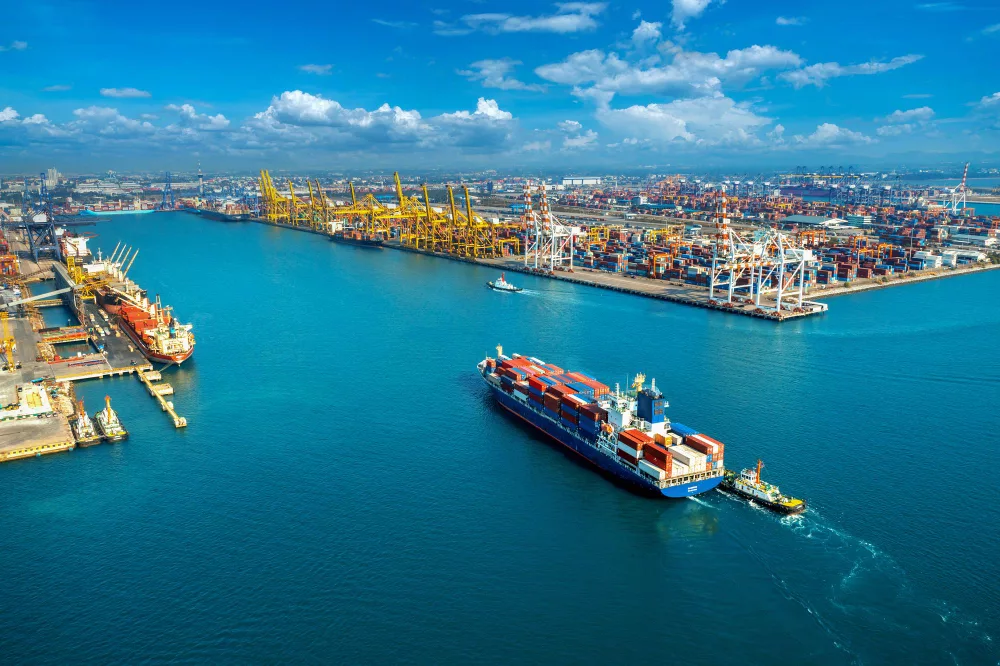
Shipping Heavy Equipment to South Korea from Houston
You need to move machinery, oil and gas equipment, or breakbulk cargo from Houston to South Korea. Which port takes it, what does customs charge, and how long is the Pacific haul? South Korea runs some of the world’s largest shipyards, semiconductor fabs, and petrochemical complexes, so industrial cargo flows through its ports around the clock.
Texas International Freight books export shipments from Houston to South Korea by ocean and air, prepares the export filing, and coordinates inland delivery to your site. We move the heavy and oversized cargo that parcel carriers cannot touch.
Which Korean Port Receives Your Cargo
Four ports carry most of the country’s freight:
- Busan on the southeastern tip, one of the busiest container ports in the world and the main transshipment hub for Northeast Asia
- Incheon on the west coast, serving Seoul and the capital region
- Gwangyang in the south, handling containers, steel, and petrochemical cargo
- Ulsan, the heavy-industry port beside the Hyundai shipyards and the petrochemical complex, built for project and breakbulk cargo
Which port sits closest to your delivery point?
How Your Equipment Reaches South Korea
The haul from the Gulf runs long, roughly four to six weeks depending on a Pacific routing or transshipment through Busan itself. Cargo moves in standard boxes, on flat-rack and open-top units, by roll-on roll-off, or as breakbulk for oversized pieces. Air freight into Incheon International Airport, one of the world’s leading cargo airports, earns its premium for urgent spares and high-value parts.
Duties, VAT, and the KORUS Free Trade Agreement
Most qualifying US-origin industrial goods enter South Korea duty-free under the US-Korea Free Trade Agreement, KORUS, in force since 2012. You support the claim with origin documentation. The duty saving does not erase every cost: South Korea charges 10 percent VAT on the import value regardless of origin. The Korea Customs Service runs clearance, and regulated categories need certification before import, so screening happens before booking.
Documentation Requirements
Your document set for South Korea covers the commercial invoice, the packing list, the bill of lading or air waybill, and the certificate of origin to support the KORUS claim, plus any certification a regulated commodity requires. Accurate values and full legal entity names keep clearance moving at both ends.
Moving Oversized and Heavy Cargo
Korea’s shipbuilding, energy, and manufacturing sectors rarely move one piece at a time. Oil and gas modules, turbines, compressors, press and forging equipment, and generator sets ship as breakbulk, on flat-rack and open-top units, by roll-on roll-off, or on a chartered vessel for a full project, with Ulsan a frequent gateway for heavy lifts. Our crews handle export packing to ISPM 15, blocking and bracing, and lashing, with cargo insurance placed on every move. For a multi-unit shipment, project logistics and vessel charter keep the whole job on one plan.
Working With a Houston Freight Forwarder
Texas International Freight books vessel and aircraft space, prepares your AES export filing and KORUS origin documentation, coordinates with the Korea Customs Service and the destination agents, and arranges inland delivery from Busan, Incheon, or Ulsan to your site. The same desk runs your wider East Asian lanes, including Japan, Hong Kong, and the export hubs covered in our China trade lane coverage. One forwarder, one point of contact, every leg of the move.
Get Your South Korea Shipment Booked
Texas International Freight handles machinery, oil and gas equipment, breakbulk cargo, and oversized freight bound for South Korea. Send us the dimensions, weight, and delivery point, and we return a routing and a quote.
Contact Information:
- Phone: +1 877-489-9184
- Email: ship@txintlfreight.com
- Address: 11511 Katy Fwy #320, Houston, TX 77079
- Web Form: Request a Quote
Connect With Us:
Which Korean port should you ship heavy equipment to?
Busan is the main container and transshipment hub, Incheon serves Seoul and the capital region, Gwangyang handles steel and petrochemical cargo, and Ulsan takes project and breakbulk cargo for the heavy-industry belt. Match the port to your delivery point.
Do US-origin machines pay import duty in South Korea?
Most qualifying US-origin industrial goods enter duty-free under the KORUS Free Trade Agreement with origin documentation. You still pay 10 percent VAT on the import value through the Korea Customs Service.
How long does ocean freight from Houston to South Korea take?
Plan on roughly four to six weeks of sailing time depending on routing and transshipment, plus export filing, customs clearance, and inland delivery. Air freight to Incheon moves urgent parts in days.
How do you ship an oversized item that will not fit in a container?
Oversized cargo moves as breakbulk, on flat-rack and open-top equipment, by roll-on roll-off, or on a chartered vessel for full project moves, often through Ulsan. We handle crating, blocking and bracing, and lashing so the unit arrives intact.
What documents do you need to ship to South Korea?
A commercial invoice, packing list, bill of lading or air waybill, and certificate of origin for the KORUS claim, plus any certification a regulated commodity requires.


