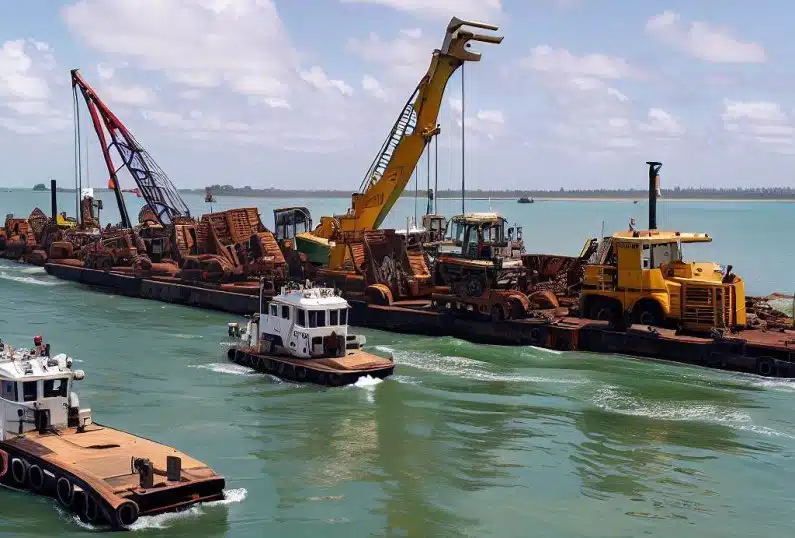
Heavy Equipment Freight from Houston to Kenya
Texas International Freight moves heavy equipment overseas from Houston to Kenya for contractors, oilfield operators, and machinery dealers supplying the East African market. Excavators, generators, drilling rigs, agricultural tractors, and mobile cranes each carry their own weight, dimension, and compliance demands, and our team handles the booking, packing, ocean or air carriage, and customs coordination as one chain of custody from Texas to the final site.
Ocean and Air Routing from Houston to Kenya
Almost all heavy cargo bound for Kenya enters through the Port of Mombasa, the largest deep-water port in East Africa and the gateway for the Northern Corridor that feeds Uganda, Rwanda, South Sudan, and the eastern DRC. The Kenya Ports Authority (KPA) operates Mombasa, which moves well over 35 million tonnes of cargo a year across conventional, container, and bulk terminals. From the quay, the Standard Gauge Railway (SGR) hauls containers inland to the Nairobi Inland Container Depot at Embakasi, which shortens the road leg for machinery headed to the capital or the Rift Valley. We book breakbulk and roll-on roll-off sailings for wheeled and tracked units, and containerized service through ocean freight for crated equipment and parts. Time-critical components move by air freight into Jomo Kenyatta International Airport in Nairobi. The newer Port of Lamu, built under the LAPSSET corridor program, adds transshipment capacity for the wider region, while Kisumu on Lake Victoria links onward trade toward Tanzania and Uganda.
KEBS PVoC and the Certificate of Conformity
Kenya enforces a Pre-Export Verification of Conformity (PVoC) program through the Kenya Bureau of Standards (KEBS). Used and mobile equipment, including trailers, bulldozers, excavators, graders, and mobile cranes, falls squarely within the program, so most machinery must be inspected before it leaves the United States. KEBS appoints agents such as SGS, Bureau Veritas, and Intertek to inspect and test goods in the country of origin and issue a Certificate of Conformity (CoC). Without a valid CoC, cargo faces destination inspection fees and possible rejection at the port, so we build the inspection booking into the shipment schedule rather than treating it as an afterthought. Raw materials and machinery imported by registered Kenyan manufacturers can qualify for a PVoC exemption, and we confirm which route applies before your equipment ships.
Customs Documentation and Duties
Every consignment needs an Import Declaration Form (IDF) lodged through the KRA iCMS portal on the Kenya TradeNet single window before arrival, alongside the commercial invoice, packing list, and bill of lading. Since October 2025, a valid Certificate of Origin is mandatory on every consignment. Kenyan charges typically include an Import Declaration Fee of roughly 2 to 2.25 percent of CIF value, a Railway Development Levy of 2 percent that funds the SGR, import duty under the East African Community Common External Tariff, and 16 percent VAT. A KRA-licensed clearing agent is a legal requirement, not an option, and our customs broker network coordinates clearance at Mombasa so your equipment leaves the quay without avoidable demurrage.
Equipment Handling and Export Packing
Heavy and out-of-gauge units demand the right gear and the right preparation. We load on flat racks, low loaders, and flatbeds, and call in cranes for lifts that exceed standard equipment. Sound export packing, bracing, and corrosion protection keep machinery intact through ocean transit and the humid coastal climate at Mombasa. For oversized project cargo, our project logistics team plans lift points, route surveys, and on-site handling with local partners.
How We Manage Your Shipment
We start by confirming the machine type, weight, and dimensions, then quote the method that fits, whether roll-on roll-off, breakbulk, container, or air. From there we arrange PVoC inspection, book the sailing, prepare and check the documentation, and track the cargo to Mombasa and on to its final destination. You work with one point of contact who knows the file, not a call center.
Ready to move heavy equipment from Houston to Kenya? Contact Texas International Freight for a routing plan and quote built around your machinery and timeline. Call +1 877-489-9184 to speak with our team.
Which port should my equipment ship to in Kenya?
Mombasa handles the large majority of heavy and project cargo and connects to the SGR for inland delivery to Nairobi. Lamu adds regional transshipment capacity, and we route to whichever port fits your final destination.
Do I need a KEBS inspection before shipping used machinery?
Yes. Used and mobile equipment is covered by the PVoC program, so a KEBS-appointed agent must inspect it in the United States and issue a Certificate of Conformity before it ships, unless a manufacturer exemption applies.
What taxes apply to imported equipment in Kenya?
Expect import duty under the EAC Common External Tariff, 16 percent VAT, an Import Declaration Fee near 2 to 2.25 percent of CIF value, and a 2 percent Railway Development Levy. A licensed clearing agent files and settles these through KRA.
How long does shipping from Houston to Kenya take?
Ocean transit to Mombasa generally runs several weeks depending on routing and transshipment, plus inspection and clearance time. We provide a realistic schedule with the quote so you can plan site work.