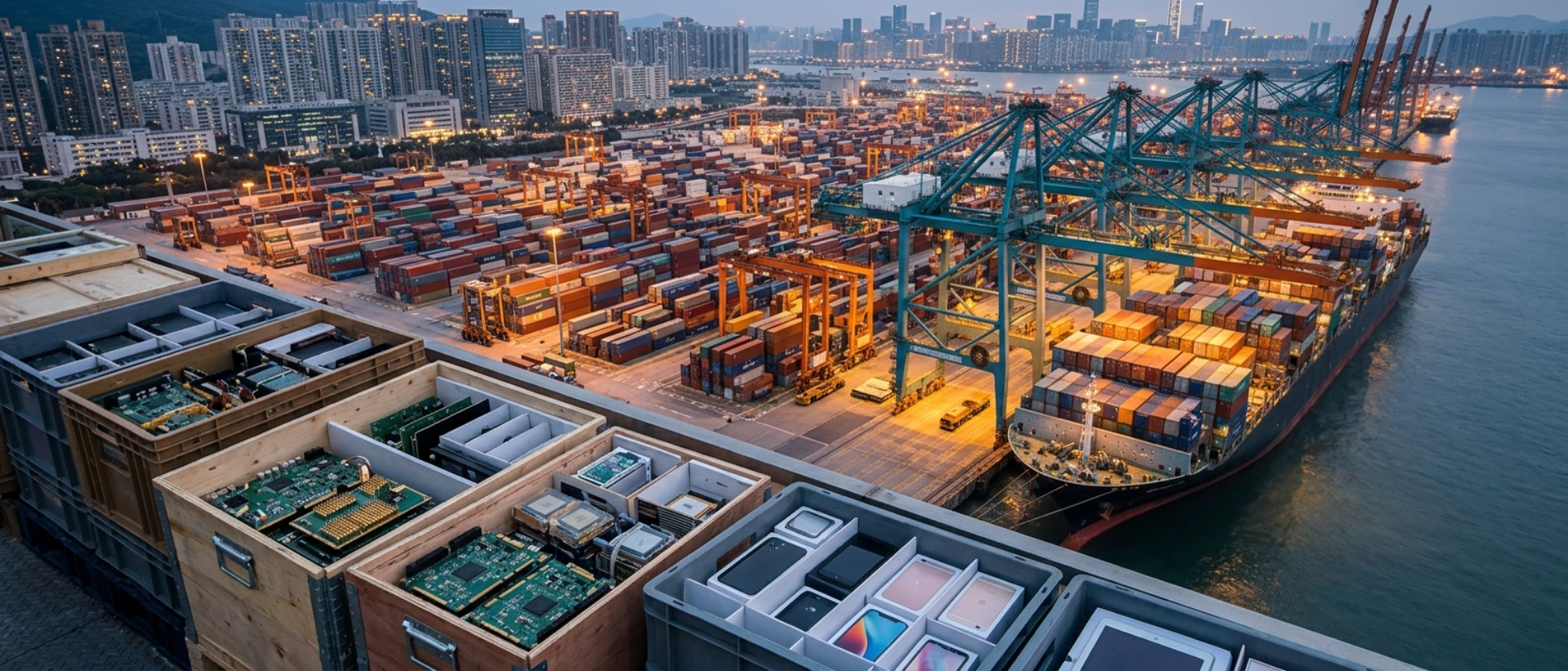
Exporting Electronics From Shenzhen to the United States
Exporting electronics from Shenzhen anchors one of the largest trade flows between China and the US. The city in southeastern China grew from a fishing town into the place where much of the world’s consumer electronics gets built, home to Huawei, DJI, Foxconn, and thousands of smaller manufacturers feeding the same supply chain. If your business buys from Shenzhen, the question is not what the city can make. It is how the cargo crosses the Pacific and clears US customs without losing weeks.
Why Shenzhen Leads in Electronics Manufacturing
Three structural advantages built the position:
- Location: proximity to Hong Kong puts Shenzhen on the main global shipping routes for both inbound components and outbound finished goods
- Special Economic Zone status: designated China’s first SEZ in 1980, with the tax incentives, foreign investment access, and relaxed trade rules that drew manufacturing in
- The ecosystem: manufacturers, component suppliers, and research institutions sit within the same city, which compresses prototyping and scaling from months into weeks
US Demand for Shenzhen Electronics

The US ranks among Shenzhen’s largest export destinations, led by smartphones, laptops, and wearable tech. In 2023, China’s electronics exports to the US passed 150 billion dollars, with Shenzhen supplying a large share, and US businesses depend on the city’s components for products from phones to electric vehicles.
The Ports Behind the Volume
Shenzhen’s own ports, Yantian and Shekou, rank among the busiest container ports in the world. They work alongside Hong Kong and Shanghai in the network of Chinese export cities that move goods to the US on regular transpacific services.
What Ships From Shenzhen

The export mix runs from finished consumer devices, smartphones, laptops, tablets, and wearables, through networking equipment, drones, and medical devices, down to the boards, displays, and components US manufacturers build into their own products.
Challenges on the US Lane, and How to Handle Them
Three problems recur on the Shenzhen-to-US lane:
- Tariffs and trade rules: US-China trade measures shift, and the duty bill on the same product can change between quarters, so classification and origin work decide the landed cost
- Customs clearance: high-tech electronics draw scrutiny, and a delayed customs clearance stalls the whole supply chain behind it
- Shipping costs: fuel prices and transpacific capacity swings move rates, and the cheap quote is not always the cheap shipment once delays are priced in
The answer to all three is the same: file accurately, book with carriers that hold space, and keep ocean freight for the volume while air cargo covers the launches and the shortages.
Texas International Freight on the China Lane
Texas International Freight handles import and export between China and the US, by air and by sea, with customs clearance and compliance built into the booking. One desk quotes the lane, tracks the container, and clears the entry, so goods from Shenzhen reach their US destination on schedule.
Ship Your Shenzhen Cargo
Texas International Freight moves electronics and other goods between Shenzhen and the United States, with ocean and air options and US customs handled. Send us the commodity, volume, and destination, and we return a routing and a quote.
Contact Information:
- Phone: +1 877-489-9184
- Email: ship@txintlfreight.com
- Address: 11511 Katy Fwy #320, Houston, TX 77079
- Web Form: Request a Quote
Connect With Us:
Why is Shenzhen called the electronics capital of the world?
The city concentrates manufacturers, component suppliers, and research institutions in one place, backed by Special Economic Zone policies since 1980 and direct access to global shipping through its own ports and Hong Kong.
Which ports handle Shenzhen’s exports?
Yantian and Shekou, both among the world’s busiest container ports, with Hong Kong next door and Shanghai serving the wider Chinese export network on the same transpacific services.
How do tariffs affect electronics from Shenzhen?
US-China trade measures change, and the duty on the same product can shift between quarters. Correct HTS classification and origin documentation decide the landed cost, so the paperwork deserves as much attention as the freight rate.
Ocean or air for electronics shipments?
Ocean carries the volume at the lowest cost per unit. Air earns its premium for product launches, restocks against a shortage, and high-value, low-weight goods where speed beats the rate difference.
What does a US freight forwarder add on this lane?
Carrier space, accurate customs filing, and one point of contact on US hours. Delays on the Shenzhen lane usually happen at the entry, not at sea, and a prepared clearance is what prevents them.