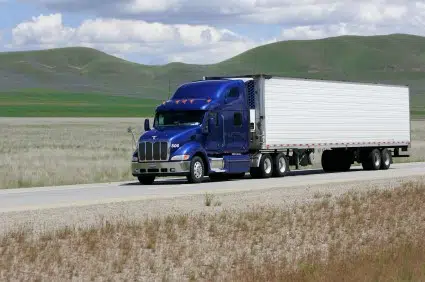
LTL Trucking for Crates, Pallets, and Skids Across North America
Your shipment is too big for a parcel carrier and too small to justify a full trailer. That gap is exactly what LTL trucking exists for. Less-than-truckload service consolidates freight from several shippers into one truck, so you pay only for the space your crates, pallets, or skids occupy. Texas International Freight books LTL nationwide and across the borders to Canada and Mexico. How does your freight fit the model?
FTL vs LTL: Which One Fits Your Shipment
Full truckload, FTL, dedicates an entire trailer to one customer. It moves faster and the cargo is handled less, because the truck runs point to point with no consolidation stops. LTL trades some speed for a much lower bill: shipments from multiple customers share the trailer, route through distribution hubs, and each shipper pays for their fraction of the space. The practical band for LTL runs from about 150 to 10,000 pounds, a single pallet up to a handful of skids. Above that, the math usually flips back to a dedicated truck through our truck transportation desk.
How LTL Pricing Works
LTL rates ride on freight class. The NMFC system grades commodities from class 50 to class 500 based on density, stowability, handling, and liability: dense, durable freight earns a low class and a low rate, while light, bulky, or fragile freight climbs the scale. Distance, lane, and accessorials such as liftgate delivery or inside pickup finish the price. Accurate dimensions and weight on the quote prevent the reclassification fees that surprise shippers after delivery, and our team classifies the freight before it ships so the invoice matches the quote.
What Ships Well by LTL
Crated machinery parts, palletized components, drums, skidded equipment, and production spares all ride LTL every day. Proper crating and packing matters more in LTL than in any other trucking mode, because the freight crosses docks and shares trailers at each hub. Cargo that should not ride LTL: oversized machinery, ultra-fragile single pieces, and anything over the weight band, which belongs on a dedicated flatbed or with our heavy haul trucking team.
LTL to Canada and Mexico
Cross-border LTL runs on the same consolidation model plus a customs entry. We book LTL lanes into Canada and Mexico with the paperwork prepared before the truck reaches the border, so the shipment clears instead of sitting. Coverage spans the lower 48, Alaska, and both neighbors, with delivery in days on most lanes.
Going International: LCL Is LTL’s Ocean Sibling
The same consolidation logic crosses the ocean as less-than-container-load shipping: your crate shares a container the way your pallet shares a trailer. For shipments that start on a US dock and end overseas, we run the LTL leg to the port and the LCL leg beyond it on one booking.
Why Book LTL Through Texas International Freight
We hold volume discount contracts with the major consolidated carriers in the US, which prices our LTL below standard public tariffs. One desk quotes the lane, classes the freight, books the carrier, and tracks the shipment, and the same desk escalates to dedicated trucks, cost comparisons, or ocean service when the freight outgrows LTL.
Book Your LTL Shipment
Texas International Freight books LTL trucking for crates, pallets, and skids across the United States, Canada, and Mexico, with freight classification and customs handled. Send us the dimensions, weight, and lane, and we return a rate.
Contact Information:
- Phone: +1 877-489-9184
- Email: ship@txintlfreight.com
- Address: 11511 Katy Fwy #320, Houston, TX 77079
- Web Form: Request a Quote
Connect With Us:
What is LTL trucking?
Less-than-truckload service consolidates freight from several shippers into one trailer, routed through distribution hubs, so each shipper pays only for the space their cargo uses. It covers the gap between parcel carriers and full truckloads.
What weight range fits LTL?
Roughly 150 to 10,000 pounds, from a single pallet to several skids. Below that, parcel carriers win on price; above it, a dedicated truck usually beats the consolidated rate.
What is freight class and why does it change the price?
The NMFC system grades freight from class 50 to 500 on density, stowability, handling, and liability. Dense, sturdy cargo rates low and ships cheap; light, bulky, or fragile cargo rates high. Misdeclared class triggers reclassification fees after delivery.
How long does LTL take compared with a full truckload?
Longer, because the freight passes through one or more hubs en route. Most domestic lanes still deliver in days, and the savings over a dedicated truck usually outweigh the extra transit time for non-urgent freight.
Can LTL ship to Canada and Mexico?
Yes. Cross-border LTL adds a customs entry to the same consolidation model. We prepare the paperwork before the truck reaches the border so the freight clears without sitting at the crossing.