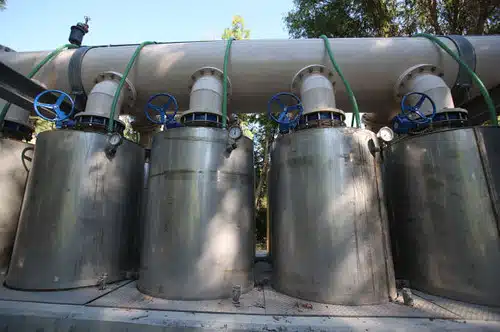
Shipping Degassers for Oil and Gas Operations Across the Globe

Shipping Degassers

Degassers are essential oilfield machines used to remove unwanted gases—such as hydrogen sulfide and methane—from drilling fluids. Ensuring safe and efficient oilfield vacuum degasser transport is crucial for global oil and gas projects.

Shipping degassers from Houston, a major energy hub, requires meticulous planning, strict adherence to international regulations, and collaboration with specialized logistics providers.

Texas International Freight offers comprehensive international shipping services for degassers to markets worldwide, including Saudi Arabia, Dubai, and Nigeria, using transport modes ranging from air freight to heavy-haul ocean cargo.

For example, properly shipping a skid-mounted degasser from Houston to Nigeria might involve heavy haul trucking to a Gulf Coast port followed by ocean freight under project cargo terms.

Regardless of destination, every shipment must balance cost, safety, and speed while meeting all import/export requirements.

Why Shipping Degassers Is Important

Shipping degassers globally supports safety, environmental stewardship, and the development of global energy infrastructure. Key benefits include:

Safety

Degassers remove toxic gases from drilling fluids, significantly reducing the risk of explosions and hazardous exposure. Proper shipping ensures that remote drilling sites receive up-to-date equipment to maintain safe operations.

Environmental Impact

By stripping harmful gases before fluid discharge, degassers help minimize atmospheric emissions of volatile compounds. Transporting modern oilfield vacuum degassers globally enables operators to comply with environmental regulations in every jurisdiction.

Energy Infrastructure

As global demand for oil and gas continues to rise, shipping degassers enables safe and efficient resource extraction in both established and emerging fields.

Well-placed degassers form a critical part of the energy infrastructure that keeps global markets supplied.

Technological Collaboration

Moving advanced units—such as KOSUN vacuum degassers—across borders fosters the sharing of innovations and technical expertise. For instance, a project may involve crating and securing a KOSUN ZCQ-250 vacuum degasser for export to an international partner.

Global Partnership

International oil and gas projects often involve multiple stakeholders. Shipping degassers strengthens industry collaboration and builds networks of experienced freight forwarders, customs brokers, and heavy equipment logistics specialists.

Ready to Ship Your Degasser?

Get expert support for oilfield vacuum degasser transport, from crating and documentation to ocean or air freight worldwide. We’ll handle the heavy lifting.📦

Request Your Freight Quote

Key Steps in the Shipping Process

Shipping degassers involves a series of coordinated actions to ensure compliance, safety, and efficiency:

Understand Regulations and Documentation

  • Research international trade regulations and import/export rules for your destination.
  • Classify the degasser under the correct HTS (Harmonized Tariff Schedule) code.
  • Prepare essential documents:
  • For shipments to regions like Dubai or Saudi Arabia, verify if government permits are needed.
  • Ensure ISPM 15 compliance for wood packaging (i.e., use heat-treated timber to meet international phytosanitary standards) — USDA APHIS Guidelines.

Choose an Experienced Freight Forwarder

Select a logistics partner with proven expertise in heavy oilfield equipment. An experienced freight forwarder for Derrick MD-3 degassers or similar models understands:

  • Special handling requirements
  • Local port regulations
  • Permitting and escort needs

Texas International Freight, for example, provides project logistics for multi-unit degasser shipments. You can request a project logistics bid to compare options. Look for providers offering:

  • Heavy lift degasser logistics (cranes, rigging)
  • Customs brokerage
  • Cargo insurance
  • Multimodal transport coordination

Packaging and Crating

  • Ship degassers on sturdy skids or in heavy timber crates.
  • Follow manufacturer guidelines (e.g., for crating a KOSUN ZCQ-250).
  • Use ISPM 15-certified wood packaging to avoid quarantine delays.
  • Apply hazmat labels if residual fluids are present.
  • Attach lifting points and include technical documentation (e.g., export declaration, datasheet) for smooth customs clearance.

Transport Modes and Logistics

Choose the optimal shipping method based on size, weight, urgency, and budget:

Ocean Freight

  • Containerized: For smaller units.
  • Breakbulk / Flat Rack: For oversized degassers.
  • Roll-on/Roll-off (RoRo): Ideal for skid-mounted degassers, allowing direct drive-on loading.

Out-of-Gauge (OOG) Cargo

  • Degassers exceeding standard container dimensions are classified as OOG.
  • Requires special permits, route planning, and heavy-duty trailerslearn more about OOG logistics.

Intermodal Transport

  • Combine heavy haul trucking, rail, and ocean shipping.
  • Example: Move a degasser via low-loader truck from Houston to a Gulf port, then load onto a vessel.
  • Consider horizontal degasser transportation for long skids to meet height restrictions.

Air Freight vs. Ocean Freight

  • Air freight: Faster but significantly more expensive—best for urgent or high-value components.
  • Ocean freight: Cost-effective for large, heavy units.
  • Always compare air vs. ocean freight degasser pricing with your provider.

Port and Land Transport

  • Use crane services and heavy-haul trailers at origin and destination ports.
  • Inbound logistics (e.g., from port to rig site in Nigeria) may require additional inland trucking.

Machinery Needed for Global and Domestic Oil and Gas Operations

A diverse array of specialized machinery and oil and gas equipment is shipped around the world and domestically across the United States to support the dynamic needs of the oil and gas production industry.

The intricate logistics of moving these oversized and heavy components are central to maintaining the global energy supply chain.

These include drilling rigs, a fundamental component of exploration and extraction operations, ranging from compact land-based rigs to massive offshore platforms.

The transportation of these rigs, often broken down into modules, is a major logistical undertaking, especially when moving between key domestic drilling areas like the Permian Basin (West Texas and New Mexico), the Bakken Formation (North Dakota), and the Marcellus Shale (Pennsylvania and West Virginia).

Beyond drilling, the rise of hydraulic fracturing has necessitated the transport of specialized frac equipment. This includes high-pressure frac pumps—often mounted on trailers—blending units, hydration units, data vans, and frac sand storage and transloading equipment.

These heavy components are constantly in transit, moving from manufacturing hubs to active well sites in the major shale plays.

Transportation vessels, such as oil tankers and liquefied natural gas carriers, play a crucial role in moving raw materials efficiently across oceans.

Additionally, pipelines and pipeline components, such as large-diameter pipe sections, valves, Blowout Preventers (BOPs), and compressors, are transported to establish vital infrastructure for the safe and efficient distribution of oil and gas.

These materials often move toward refining and processing centers such as the Gulf Coast region (Houston, Port Arthur, Corpus Christi, TX, and Lake Charles, LA).

Complementing these are a variety of other essential equipment, including:

  • Coiled Tubing Units: Used for well intervention and maintenance.
  • Workover Rigs: Smaller, mobile rigs used for servicing existing wells.
  • Mud Pumps and Tanks: Critical for managing drilling fluids.
  • Heat Exchangers and Pressure Vessels: Large, heavy components required for refining and petrochemical plants.
  • Generators and Transformers: Providing power to remote field operations.

The international and domestic shipment of these machinery types not only sustains the global oil and gas supply chain but also underscores the intricate heavy-haul logistics required to keep this vital industry moving forward, from the wellhead in the field to the refinery gate.

Insurance, Cost, and Booking

  • Secure comprehensive cargo insurance covering 110–120% of the degasser’s value.
  • Premiums typically range from 1–3% of insured value.
  • Request detailed freight quotes with exact dimensions and weight.
    • Examples:
      • “Freight quote for NOV VAC-U-GARD degasser
      • “Shipping rate for GN Solids Control degasser
  • Determine if you need heavy haul trucking, RoRo, or standard container service.
  • Book with clear timelines and delivery milestones.
💡 Pro Tip: Ask your forwarder: “What documents are needed to export a degasser machine to Dubai?” or “How much to insure a vacuum degasser shipment?” to avoid delays.

Ensuring a Safe, Compliant, and Efficient Shipment

International degasser shipping demands precision planning and expert execution. When done correctly, your equipment arrives on time, undamaged, and ready for operation.

Whether you’re:

  • Comparing transport modes,
  • Securing cargo insurance, or
  • Navigating customs clearance,

partner with a forwarder that offers end-to-end support. Texas International Freight’s Project Logistics services handle complex moves—like shipping a skid-mounted degasser to Nigeria—with seamless coordination of:

Ready to Ship Your Degasser?

Book your international shipment with confidence:

  • Request a freight quote for a single oilfield vacuum degasser or multiple units.
  • Get a project logistics bid for large-scale deployments.
  • Compare air vs. ocean pricing for models like NOV VAC-U-GARD or Derrick MD-3.
  • Secure tailored insurance for high-value equipment.

With a Houston-based team and global logistics network, Texas International Freight combines local expertise with worldwide reach to ensure your degassers arrive safely, compliantly, and on schedule.

📞 Contact us today to arrange your next degasser shipment!

Shipping Destinations

Our team of experts will work with you to determine the most efficient and cost-effective transportation route for your shipment based on the size, weight, and destination of your cargo.