
Shipping to Saudi Arabia From Houston, Texas
Texas International Freight ships oilfield equipment, heavy machinery, and breakbulk cargo from Houston to Saudi Arabia by ocean and air. Houston sits at the center of the US oil and gas industry, home to major equipment manufacturers and skilled energy-sector labor, which makes it a natural origin for cargo bound for the Kingdom’s projects. We move the kind of oil and gas machinery the energy sector runs on.
Here is how shipping to Saudi Arabia works: the ports, the SASO and SABER requirements, the documentation, and how to choose between ocean and air.
Saudi Arabia’s Ports and Maritime Gateways
Saudi Arabia holds a leading position in regional maritime transport, with a long coastline on both the Red Sea and the Arabian Gulf. Primary entry points for project cargo are Jeddah Islamic Port on the Red Sea, King Abdulaziz Port in Dammam on the Arabian Gulf, and Jubail Commercial Port for petrochemical and heavy industrial shipments. Inland containers route through Riyadh Dry Port for FCL and LCL moves to Riyadh, Dhahran, and Khobar.
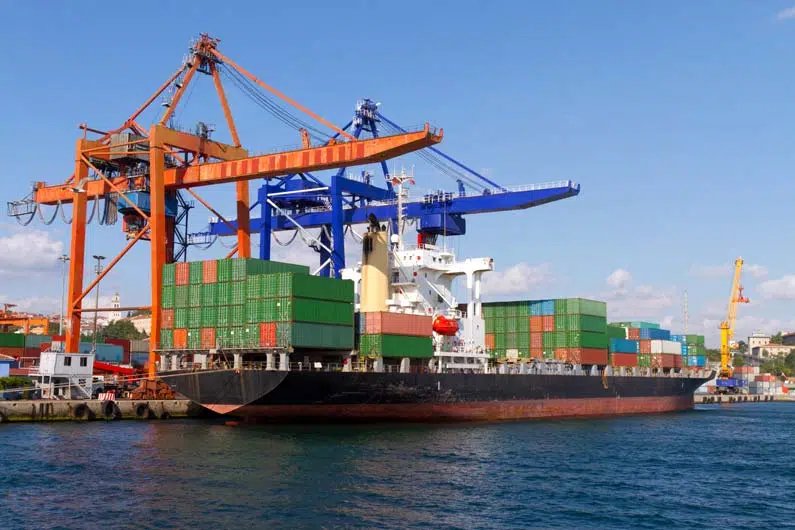
The Kingdom’s location gives it access to Africa, the wider Middle East, and onward routes worldwide, with neighbors including Iraq, Egypt, and the Gulf states, plus nearby markets such as Israel and India.
Can the US Ship to Saudi Arabia?
Yes. The US and Saudi Arabia maintain strong trade ties, with billions of dollars in US goods shipped to the Kingdom each year. Local language and business practices matter at clearance, so a freight forwarder conversant in both helps move cargo without holds.
Saudi Arabia Shipping Requirements
Commercial cargo entering Saudi Arabia must comply with SASO, the Saudi Standards, Metrology and Quality Organization, and be registered on the SABER platform for conformity assessment. Customs and duties are administered by ZATCA, the Zakat, Tax and Customs Authority. We coordinate Certificates of Conformity (CoC) on SABER before loading to prevent holds at Jeddah or Dammam.

Documentation for shipping from the USA to Saudi Arabia includes:
- Commercial invoice
- Permanent label showing country of origin
- Certificate of Origin legalized by a US Chamber of Commerce
- Bill of lading
- Clean Report of Findings
- Insurance documents
- Packing list of items
- Applicable SASO/SABER Certificates of Conformity tied to HS codes for ZATCA clearance
Ocean or Air to Saudi Arabia
You can export to Saudi Arabia from Houston by air or ocean. Air freight runs about 2 to 4 business days and suits urgent, shutdown-critical parts. Ocean freight costs far less per ton and runs about 30 to 45 days from Houston to Jeddah or Dammam depending on routing and transshipment, and it carries the heavy and oversized cargo that air cannot.
Your discharge port follows your final destination. Western projects favor Jeddah, while Eastern Province oil and industrial projects route through Dammam or Jubail, with inland moves to Riyadh Dry Port.

Ocean Freight
Ocean is the mode for heavy consignments. Commercial and multipurpose vessels handle oversized machinery and breakbulk to Jeddah, Dammam, or Jubail, with inland rail or truck to Riyadh Dry Port. It carries construction machinery, oil and gas modules, transformers, cranes, compressors, blowout preventers, and skids at the lowest cost per ton. The trade-off is time, around 30 to 45 days, plus the usual variance from port windows, congestion, inland permits, and weather.
Air Freight

Air freight reaches Saudi gateways in 2 to 4 days with high schedule reliability, which earns its premium for time-sensitive oil, gas, and power-generation parts. The limits are cost, which is weight and volume driven, and aircraft size and weight restrictions that rule out large modules better suited to breakbulk or Ro-Ro.
FCL or LCL
For container shipping to Saudi Arabia, choose between Full Container Load (FCL) and Less than Container Load (LCL). FCL gives you a dedicated container that keeps your goods isolated and secure, and it can rail to Riyadh Dry Port for final distribution. LCL shares container space with other cargo, which lowers cost for smaller loads. Texas International Freight focuses on shipping oil rigs and oil-related heavy equipment by air and sea, backed by a 4.7 rating across 47 Google reviews.
Primary Saudi Ports and Inland Hubs
- Jeddah Islamic Port: main Red Sea gateway for containers and breakbulk to western Saudi Arabia.
- King Abdulaziz Port Dammam: leading Arabian Gulf port for industrial and oil projects.
- Jubail Commercial Port: strategic for petrochemical and heavy industrial cargo.
- Riyadh Dry Port: inland hub for FCL and LCL destined for the capital region.
Eastern Province and the Kuwait Corridor
Projects in the Eastern Province often interlink with Kuwait, where common entry points are Shuwaikh and Shuaiba ports, with delivery into Kuwait City and the Mina Al Ahmadi oil complex. Ocean transit from Houston to Kuwait runs about 30 to 45 days, and import clearance follows the Kuwait Customs Tariff, including age limits on used machinery. For detail, see our Shipping to Kuwait page.
Ship to Saudi Arabia With Texas International Freight
Texas International Freight ships break bulk cargo worldwide, to destinations including the UK, Netherlands, Germany, Russia, Norway, South Africa, Brazil, Colombia, Chile, Peru, China, Singapore, Australia, Vietnam, India, Saudi Arabia, United Arab Emirates, Libya, Syria, Kuwait, Iraq, Oman, Yemen, Egypt, Israel, Turkey, Spain, Algeria, and many other countries. Contact us for a freight quote.
Frequently Asked Questions
Which Saudi port should I ship heavy equipment to?
Jeddah Islamic Port on the Red Sea serves western Saudi Arabia, while King Abdulaziz Port in Dammam and Jubail Commercial Port on the Arabian Gulf serve Eastern Province oil and industrial projects. Inland containers route through Riyadh Dry Port to the capital. We match the port to your final destination.
What are SASO and SABER, and do I need them?
SASO is the Saudi standards body, and SABER is the online platform where regulated goods are registered and issued Certificates of Conformity (CoC). Most commercial cargo needs a CoC tied to its HS code before ZATCA clears it, so we arrange this before loading to prevent holds.
How long does shipping from Houston to Saudi Arabia take?
Ocean freight runs about 30 to 45 days from Houston to Jeddah or Dammam, depending on routing and transshipment. Air freight reaches Saudi gateways in about 2 to 4 days for urgent parts.
Can you ship oversized oilfield equipment to Saudi Arabia?
Yes. Oversized modules, cranes, compressors, blowout preventers, and skids move as breakbulk or Ro-Ro on commercial and multipurpose vessels to Jeddah, Dammam, or Jubail, with heavy-haul inland delivery to the project site.
Who handles customs clearance in Saudi Arabia?
ZATCA administers customs and duties. Your shipment needs a commercial invoice, legalized certificate of origin, bill of lading, and the applicable SASO/SABER Certificate of Conformity. We prepare the documentation and coordinate clearance so cargo moves through Jeddah or Dammam without delay.


