Ocean and Air Freight to Oman from Houston and the Gulf Coast
You need to move construction machinery, oil and gas equipment, or project cargo from Texas to Oman. Where does it land, what duty applies, and which port keeps your cargo clear of the Strait of Hormuz? The answers shape your timeline and your budget.
Texas International Freight books export shipments from Houston to Sohar, Salalah, Duqm, and Muscat. Our team arranges ocean and air capacity, prepares export filings, and coordinates inland delivery to your Omani site. We handle the heavy and oversized cargo standard parcel carriers cannot move.
Sohar, Salalah, and Duqm
Oman runs three working cargo gateways, and the right one depends on your delivery point. Sohar sits in the Gulf of Oman near the industrial free zone and serves the petrochemical and metals belt north of Muscat. Salalah, on the Arabian Sea in the south, is one of the region’s major transshipment hubs and sits on the main east-west shipping lane. Duqm, also on the Arabian Sea, is the new deepwater port and special economic zone built around a refinery and drydock, which makes it the natural gateway for large project cargo.
Salalah and Duqm carry a routing advantage: both lie outside the Arabian Gulf, so cargo reaches them without passing through the Strait of Hormuz. The old Sultan Qaboos Port in Muscat now handles cruise traffic, with its cargo role shifted to Sohar. Which port sits closest to your delivery point?
How Your Equipment Reaches Oman
Cargo leaving Houston routes through the Mediterranean, the Suez Canal, and the Red Sea to the Arabian Sea, or around the Cape of Good Hope when Red Sea conditions require. Because Salalah and Duqm face the open Arabian Sea, they avoid the Strait of Hormuz, which can simplify routing during periods of Gulf tension.
Plan on roughly five to seven weeks of ocean freight from the Gulf Coast when the Suez route is open, and longer on a Cape diversion. Breakbulk moves on a multipurpose or chartered vessel can run longer because of load and discharge windows.
Duty-Free Access Under the US-Oman Free Trade Agreement
Most qualifying US-origin goods enter Oman duty-free under the United States-Oman Free Trade Agreement, in force since 2009. You support the claim with origin documentation, and a US-built machine can clear without customs duty when the paperwork holds. Oman charges 5 percent VAT on the import value, among the lowest rates in the Gulf, plus port fees on some categories.
Your consignee needs the document set in order before arrival, and our destination partners keep your customs clearance moving so the cargo does not sit at the port.
Export Paperwork on the US Side
Shipments valued above 2,500 dollars or carrying a license requirement need Electronic Export Information filed in the Automated Export System before departure, under the right Schedule B classification. Energy and technology equipment can fall under Bureau of Industry and Security export controls, so screening happens before booking.
Your document set covers the commercial invoice, the packing list, the bill of lading or air waybill, and the origin information that supports the FTA claim. Proper export packing and crating protects the machine and satisfies marking rules.
Moving Oversized and Heavy Cargo
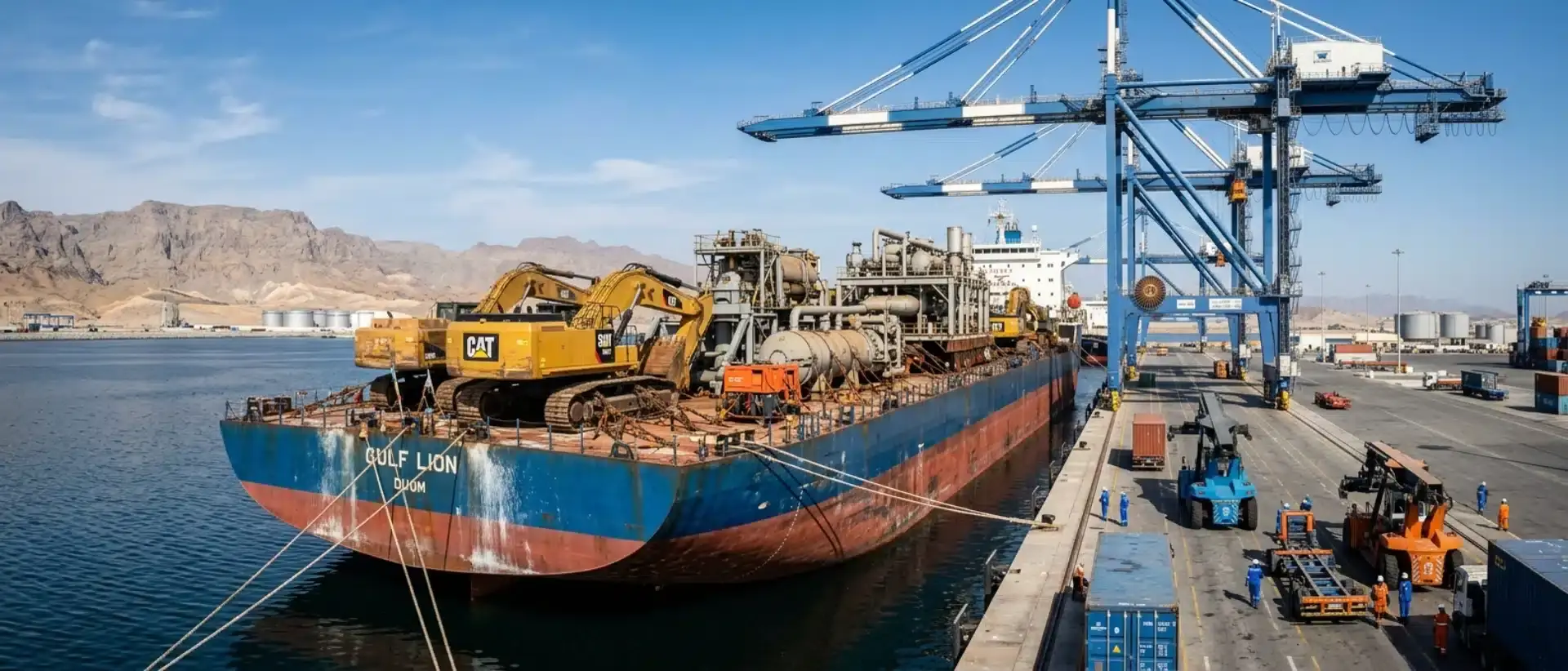
Equipment that exceeds container dimensions ships as breakbulk cargo, on flat rack and open-top units, by roll-on roll-off, or on a chartered vessel for a full project. Drilling packages, transformers, and crushers travel this way, and Duqm’s heavy-lift berths suit large modules. Self-propelled units often roll on and roll off under their own power.
Oil and gas, mining, and industrial projects rarely move one piece at a time. For a multi-unit move, project logistics and vessel charter keep the whole shipment on one plan. The same desk arranges heavy equipment shipped overseas and the domestic heavy haul to the Houston terminal.
Working With a Houston Freight Forwarder
Texas International Freight books vessel and aircraft space, prepares your AES filing and FTA documentation, coordinates with Omani customs agents, and arranges inland trucking from Sohar, Salalah, or Duqm to your site. You work with one team from pickup in Texas to delivery in Oman.
The same desk runs your wider Gulf lanes. We move freight to Saudi Arabia, Bahrain, Qatar, the UAE, and the wider Middle East, and we keep your North American freight moving on the trucking lanes to Mexico and the heavy equipment lanes to Canada. One forwarder, one point of contact, every leg of the move.
Get Your Oman Shipment Booked
Texas International Freight handles machinery, breakbulk cargo, and oversized freight bound for Oman. Send us the dimensions, weight, and delivery point, and we return a routing and a quote.
Contact Information:
- Phone: +1 877-489-9184
- Email: ship@txintlfreight.com
- Address: 11511 Katy Fwy #320, Houston, TX 77079
- Web Form: Request a Quote
Which Omani port should you ship to?
It depends on your delivery point and your cargo. Sohar in the north serves the petrochemical and metals industries near Muscat. Salalah in the south is a major transshipment hub on the main east-west lane. Duqm, also on the Arabian Sea, is the new deepwater port and special economic zone built for large project cargo. Salalah and Duqm sit outside the Arabian Gulf, so cargo reaches them without passing the Strait of Hormuz.
Do US-origin machines pay import duty in Oman?
Most qualifying US-origin goods enter Oman duty-free under the United States-Oman Free Trade Agreement, in force since 2009, when origin documentation supports the claim. You still pay Oman’s 5 percent VAT on the import value, among the lowest rates in the Gulf, plus port fees on some categories. A US-built excavator or generator can clear without customs duty when the paperwork holds.
Does the Strait of Hormuz affect shipping to Oman?
Not for Salalah or Duqm. Both face the open Arabian Sea, so cargo reaches them without transiting the Strait of Hormuz, which can simplify routing during periods of Gulf tension. Sohar sits in the Gulf of Oman near the strait. Cargo from the US Gulf still routes through the Suez and Red Sea, or around the Cape of Good Hope when Red Sea conditions require.
How long does ocean freight from Houston to Oman take?
Plan on roughly five to seven weeks from the Gulf Coast when the Suez and Red Sea route is open, and longer when sailings divert around the Cape of Good Hope. Most services transship through a hub before reaching Salalah or Sohar. Breakbulk and project cargo on a chartered vessel can run longer because of load and discharge windows. Air freight to Muscat moves urgent spares in a few days.
How do you ship an oversized item that will not fit in a container?
Oversized cargo moves as breakbulk, on flat rack and open-top equipment, by roll-on roll-off, or on a chartered multipurpose vessel for full project moves. A drilling package, a transformer, or a self-propelled machine ships on breakbulk berths rather than in a standard box, and Duqm’s heavy-lift berths suit large modules. Our team handles export crating, blocking and bracing, and lashing so the unit arrives intact. For an oil and gas or mining project with several heavy pieces, vessel charter and project logistics keep the whole move on one plan.