Shipping From China to Houston for Industrial Importers
You buy steel, machinery, or equipment from Chinese factories, and you need it in Houston with no customs holds. Texas International Freight books ocean freight from the main Chinese ports, files your import paperwork through our customs broker desk, and trucks your cargo to sites across Texas.
China is one of the most common origins in the quote requests we receive, and most of those shippers are importing industrial goods. Here is how the lane works, from the load port to your gate.
Real Shipments We Quote From China
The requests reaching our Houston desk show what moves on this lane:
A 40 ft high cube full container load from Ningbo to Houston.
30 metric tons of 304 stainless steel plates and bars loading at Tianjin, split across three 20 ft containers.
Six commercial gym machines shipped LCL on CIF terms to the Port of Houston, for a first-time importer.
An importer whose previous broker had left the business and who needed a new one before the next arrival.
About 3 cubic meters of medical devices bought FOB Shenzhen, with cargo insurance added for the ocean leg.
Which one looks like your next order? Each needs a different mix of container type, Incoterm, and customs work, and we quote each one on its own facts.
Main Chinese Ports for Houston-Bound Cargo
Your supplier’s location usually decides the load port. Five ports handle most of the industrial cargo we see:
- Shanghai: the world’s busiest container port, serving the Yangtze River Delta. Read why in our profile of Shanghai as a global export hub.
- Ningbo-Zhoushan: the second busiest container port in the world, close to the machinery and hardware makers of Zhejiang province.
- Shenzhen: the main gateway for factories in the Pearl River Delta.
- Qingdao: a major port in Shandong province on the Yellow Sea.
- Tianjin: the port for Beijing and northern China, and a common load port for steel.
Not sure where your supplier ships from? Our guide to the top Chinese cities exporting to the US maps the main manufacturing hubs.
All-Water Service or West Coast Routing
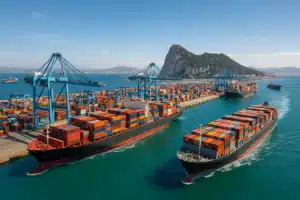
You have two main ways to reach Houston. All-water services sail from Asia through the Panama Canal and call Port Houston directly at the Barbours Cut or Bayport container terminals. The other option lands containers on the US West Coast and moves them to Houston by rail or truck.
Your choice depends on cost, cargo type, and how soon you need the goods. Transit times shift with carrier schedules and canal conditions, so we quote the current routing for each booking instead of a fixed day count.
Customs Clearance for Chinese Imports
Clearing Chinese cargo through CBP comes down to a short checklist our broker runs on every shipment:
✔ Importer Security Filing (ISF, 10+2) submitted no later than 24 hours before your cargo is loaded on the vessel in China
✔ Customs bond in place for commercial shipments over $2,500, or any value for FDA-regulated goods, single entry or continuous
✔ Importer of record confirmed, since that party is liable for duties
✔ Correct HTS code assigned, since it sets your regular duty rate
✔ Section 301 exposure checked, since these duties still apply to many goods of Chinese origin as of October 2026
Rates and exclusions change often, so our broker checks your classification against the current rules before your cargo sails.
Breakbulk and Project Cargo From China
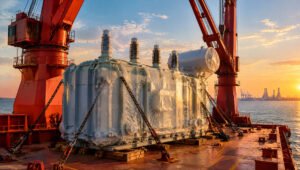
Not everything fits in a box. Chinese manufacturers build heavy machinery, power transformers, steel structures, and mining equipment that ship as breakbulk or on flat racks. We book heavy lift and breakbulk vessel space, plan lifting points and lashing, and arrange discharge at Houston terminals equipped for oversized pieces.
Have a transformer or a press that exceeds container limits? Send us the dimensions, weight, and center of gravity early. Heavy lift space takes more planning than a container booking.
Inland Delivery Across Texas and Beyond
Once your cargo clears, we deliver it from the port to your site. Containers dray to warehouses in Houston, Dallas, San Antonio, and Austin. Oversized pieces move on permitted heavy haul trailers, with escorts where Texas rules require them.
Does your shipment need to continue south? We run trucking to Mexico from Houston, so one team handles the ocean leg, the customs entry, and the cross-border haul.
Ready to Move Your Next Order From China?
Send us the supplier’s port, the Incoterm, the cargo dimensions, and the weight, and our team returns a routing and a price.
Phone: +1 877-489-9184
Email: ship@txintlfreight.com
Address: 11511 Katy Fwy #320, Houston, TX 77079
Frequently Asked Questions About Shipping From China to Houston
Do I need a customs broker to import from China to Houston?
You can file your own entry, but most importers use a licensed customs broker. The broker classifies your goods, files the entry with CBP, and arranges the bond. A first-time importer bringing in Chinese excavators or a set of commercial gym machines avoids costly classification errors by using one from the start.
When must I file the ISF for a container from China?
CBP requires the Importer Security Filing no later than 24 hours before your container is loaded on the vessel at the Chinese port. For a 40 ft high cube of agricultural equipment parts leaving Ningbo, your supplier must send the shipper, manufacturer, and HTS data before that cutoff.
Can you ship heavy machinery and transformers from China as breakbulk?
Yes. Power transformers, crushers for mining, and oil and gas skids that exceed container limits ship as breakbulk or on flat racks. We book heavy lift vessel space, plan the lift and lashing, and arrange discharge and heavy haul delivery from the Port of Houston.
How do Section 301 tariffs affect my imports from China?
Section 301 duties apply on top of regular duty for many Chinese goods, based on the HTS code. As of October 2026 they still cover a wide range of industrial products. Ask our broker to check your exact codes before you place an order for steel plates or construction equipment.
Can you deliver cargo from China beyond Texas, including to Mexico or Canada?
Yes. We clear the cargo in Houston and truck it onward. Mining equipment can continue to sites in northern Mexico, and oil and gas equipment can move north to projects in Canada. One team manages the ocean leg, the US entry, and the cross-border delivery.