Shipping Heavy Machinery to Italy From the United States
Shipping heavy machinery to Italy from the United States requires a clear understanding of logistics, regulatory compliance, and strategic port selection.
Texas International Freight specializes in international machinery transportation, providing expert guidance for heavy equipment shipments to Italy through efficient ocean, air, and multimodal solutions.
Your machinery might support manufacturing operations, industrial food-processing, construction projects, or mining activities. We manage every logistics step to deliver it safely and on time to Italian destinations.
Shipping Heavy Machinery to Italy: Complete Logistics Guide
Equipment Types Commonly Exported from the US to Italy
The United States exports diverse machinery categories to Italy, supporting key industrial sectors:
- Agricultural Machinery – tractors, combines, and harvesters for Italy’s farming industry.
- Construction Equipment – bulldozers, cranes, excavators, and material handling equipment for infrastructure development.
- Manufacturing Equipment – CNC machines, assembly line equipment, and specialized industrial tools for Italy’s renowned manufacturing sector.
- Industrial Machinery – forklifts, textile machinery, pharmaceutical equipment, and industrial food-processing equipment.
- Reverse Trade – Italy exports industrial food-processing machinery, packaging equipment, and specialized manufacturing equipment back to the United States, creating balanced transatlantic commerce.
Ocean Freight: Primary Shipping Method to Italy
Ocean freight represents the most commonly used shipping method, with containers carrying machinery loaded onto cargo ships that traverse the Atlantic.
The Port of Houston serves as a major hub for such international shipping, offering direct sailings to Italian ports with established schedules and competitive rates.
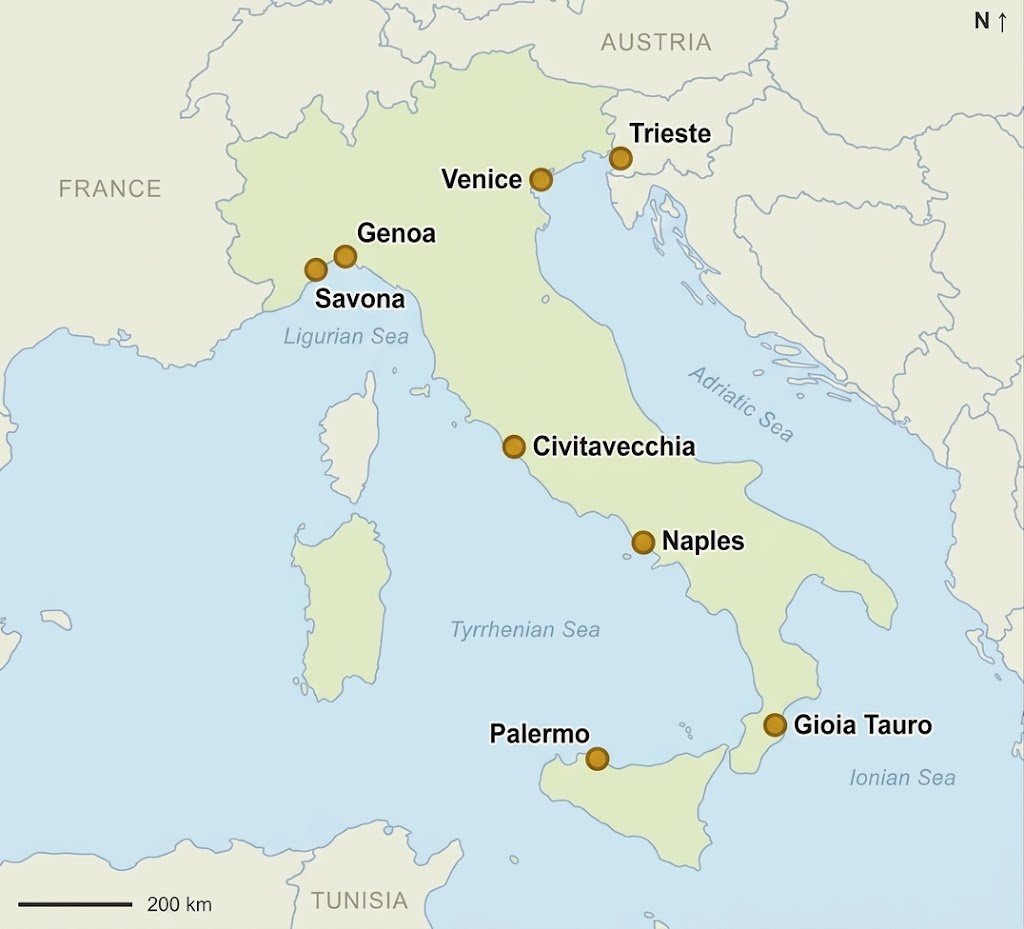
Italian Port Infrastructure and Capabilities
Primary Italian Ports for Heavy Machinery:
- Port of Genoa – located in the northwest, it is Italy’s busiest sea port and an excellent entry point for goods headed to northern Italy and beyond. Genoa specializes in container handling, breakbulk services, and heavy-lift operations, making it ideal for oversized equipment destined to Northern Italy industrial zones including Milan, Turin, and Bologna.
- Port of Venice – specializes in handling heavy and oversized cargo. Located in the Adriatic region, Venice provides excellent connectivity to Central European markets.
- Port of Gioia Tauro – mainly a transshipment port, well connected with other Italian ports. Located in southern Italy on the Tyrrhenian Sea, it serves as a Mediterranean hub for equipment redistribution.
- Port of Trieste – the Adriatic gateway, an alternative routing option based on destination, region and cargo specifications.
- Port of Naples (Napoli) – an alternative routing option based on destination, region and cargo specifications.
- Port of Civitavecchia – an alternative routing option based on destination, region and cargo specifications.
- Port of Savona – an alternative routing option based on destination, region and cargo specifications.
- Port of Palermo – an alternative routing option based on destination, region and cargo specifications.
Each port offers modern container terminals, cargo handling equipment, warehousing facilities, and rail connections linking to Italy’s extensive inland distribution network.
Container Shipping Options: FCL and LCL Services
Texas International Freight offers flexible ocean freight solutions:
- Full Container Load (FCL): Dedicated 20-foot (TEU) or 40-foot (FEU) containers for large machinery shipments requiring maximum security and cost efficiency.
- Less-Than-Container Load (LCL): Consolidated shipping for smaller machinery sharing container space, reducing per-unit costs while maintaining professional handling standards.
- Specialized Container Types: Standard containers, open-top containers for oversized equipment, flat-rack containers for heavy machinery, and high-cube containers accommodate various equipment dimensions and weights.
Typical ocean freight transit times from U.S. Gulf ports to Italian destinations range 10 to 14 days for direct sailings.
Breakbulk and Heavy-Lift Project Cargo
Breakbulk cargo services provide specialized solutions for oversized machinery, industrial equipment, and project cargo that cannot fit within standard containers.
Our team coordinates complex logistics including specialized rigging, heavy-lift planning, protective packaging, and insurance arrangements for high-value equipment.
Italian ports with advanced breakbulk capabilities like Genoa, Venice, and Trieste handle project cargo with specialized cranes and cargo handling equipment.
Air Freight Services for Time-Sensitive Machinery Shipments
Though costlier and limited by cargo size, air freight is the quickest method for shipping heavy machinery to Italy. Air freight is usually reserved for smaller machinery or equipment urgently needed.
Air freight services deliver machinery within 2 to 5 business days, ideal for critical equipment supporting operational continuity.
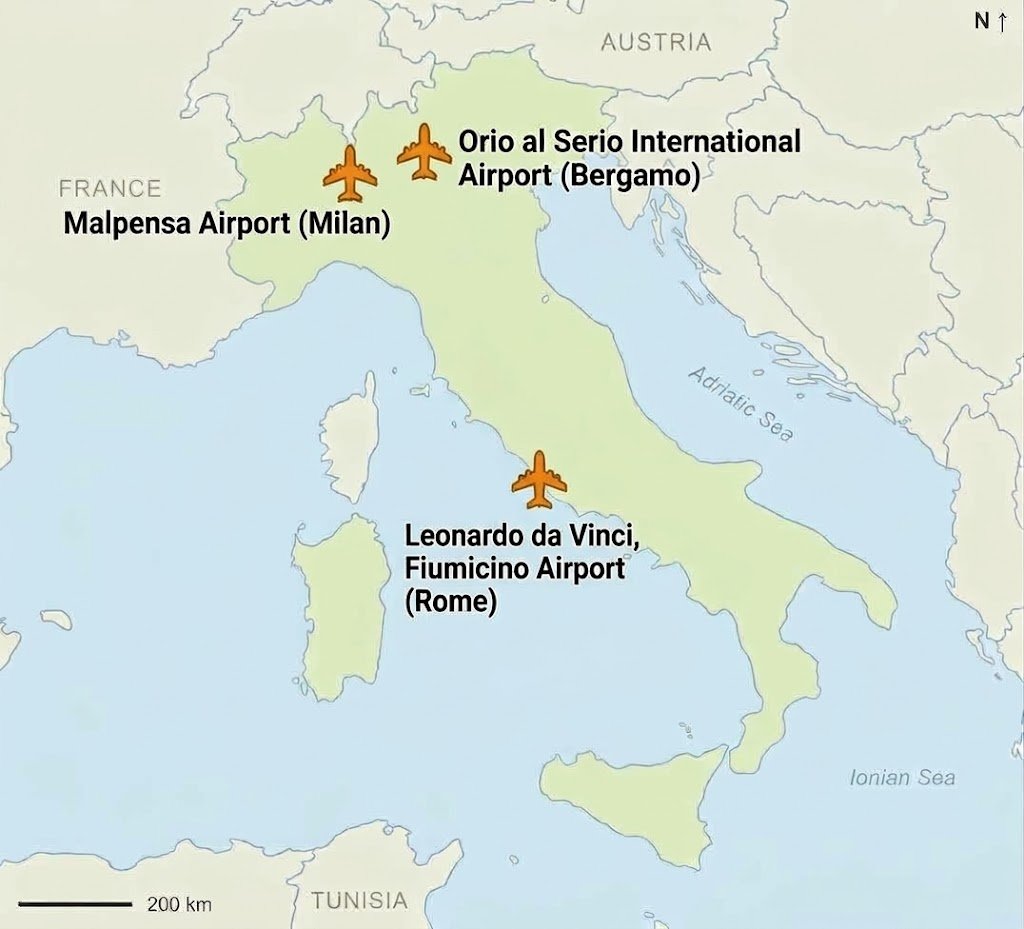
Italian Air Cargo Hubs
- Leonardo da Vinci, Fiumicino Airport (Rome) – the largest and busiest airport, well-equipped to handle heavy machinery.
- Malpensa Airport (Milan) – important for goods intended for the industrial north.
- Orio al Serio International Airport (Bergamo) – specializes in cargo and freight services.
These airports provide cargo handling facilities, customs processing, and connections to Italian distribution networks for door-to-door delivery to final destinations.
Multimodal Transportation: Ocean + Trucking/Rail Within Italy
Once in Europe, road and rail networks may be used for further transit to Italy, especially if the machinery is first shipped to a neighboring country.
Heavy equipment transportation within Italy uses specialized trucking services for final-mile delivery from ports to inland destinations.
The Italian railway system (Trenitalia) connections at major ports enable efficient movement of containerized equipment to Northern Italy industrial zones, central distribution hubs, and southern destinations.
Warehousing and logistics services provide temporary storage, consolidation, and inventory management at strategic Italian locations.
Italian Customs Requirements and Regulatory Compliance
Critical Documentation for Italian Imports
There are strict rules and specific requirements for the documents you need when shipping heavy machinery to Italy. Missing or incorrect paperwork can cause delays and extra expenses. It’s essential to ensure all necessary documentation is accurate and complete.
Essential Documentation Includes:
✔ Commercial invoices with itemized equipment specifications
✔ Packing lists with accurate dimensions and weights
✔ Bills of lading (BOL) for ocean freight or air waybills for air cargo
✔ Certificates of origin confirming U.S. manufacturing
✔ Harmonized System (HS) codes for proper duty classification
✔ CE (Conformité Européenne) certification for EU product safety compliance
✔ Product safety certifications meeting Italian and EU standards
✔ Insurance documentation and cargo coverage details
Our professional customs broker services ensure accurate document preparation, proper duty assessment, and expedited Italian customs clearance.
EU Import Regulations and Environmental Compliance
Shipping heavy machinery to Italy from the US involves adherence to environmental regulations, particularly for older equipment.
Italy, as an EU member state, enforces EU environmental regulations, including strict emissions standards for mechanical equipment.
Machinery must demonstrate compliance with Euro emissions standards and carry CE certification marks confirming adherence to EU product safety directives.
Hazardous Materials Restrictions: Equipment containing hazardous substances, prohibited chemicals, or regulated components requires advance permits and Dangerous Goods Regulations (ADR) compliance.
Incoterms and Trade Responsibility Definitions
Understanding freight forwarder responsibilities and proper Incoterms allocation clarifies cost and risk distribution:
- FOB (Free on Board): Seller bears costs/risks until equipment passes the ship’s rail in U.S. port
- CIF (Cost, Insurance, and Freight): Seller covers all costs including insurance to Italian port
- DDP (Delivered Duty Paid): Seller assumes all costs including Italian duties and taxes
- DAP (Delivered at Place): Seller delivers to specified Italian location
Clear Incoterms alignment prevents disputes and ensures transparent pricing throughout the shipping process.
Italian VAT and Duty Assessment
Italian imports are subject to value-added tax (VAT) at 22% (standard rate) plus applicable import duties based on Harmonized System (HS) code classifications.
Accurate HS code assignment prevents costly delays, duty disputes, and customs issues during clearance processing.
Our customs expertise ensures proper duty calculations and timely VAT assessment, accelerating Italian customs release.
Transit Times, Scheduling, and Logistics Coordination
Given the long transit times, especially with sea freight, timing can be critical for businesses relying on machinery.
Typical Transit Timelines:
- Ocean Freight (FCL/LCL): 10 to 14 days from Houston to Italian ports
- Air Freight: 2 to 5 business days airport-to-airport
- Final-Mile Delivery: 2 to 5 additional days from port/airport to final Italian destination
Total Transit Window: 12 to 19 days for ocean freight with final delivery; 4 to 7 days for air freight with expedited handling.
Seasonal demand, weather conditions, and Italian port congestion may affect specific timelines. We coordinate real-time tracking updates and route optimization for predictable delivery schedules.
Shipping Costs and Cost Optimization Strategies
Shipping heavy machinery to Italy can be quite costly.
Cost Variables:
- Equipment size/weight: Larger machinery requires specialized containers or breakbulk services
- Shipping method: Ocean freight $500, $2,500+ per 20-foot container; air freight $2, $8+ per kilogram
- Port selection: Northern ports (Genoa) vs. southern ports (Gioia Tauro) impact routing efficiency
- Consolidation options: FCL vs. LCL affects per-unit pricing
- Italian customs clearance: Duty, VAT, documentation fees
- Insurance coverage: Full-value protection for high-value equipment
- Final-mile delivery: Trucking/rail from port to inland destinations
Cost Optimization: Consolidation services, strategic port selection, and advance planning reduce overall transportation expenses while maintaining quality service.
Why Partner With Texas International Freight for Italian Shipments
Whether you’re a business owner, logistics coordinator, or freight forwarder, the key lies in meticulous planning and partnering with reliable shipping and handling services. Doing so will mitigate risks and potentially save thousands of dollars and invaluable time.
Texas International Freight brings full expertise in Italian machinery shipments:
- Port Expertise: Deep knowledge of Genoa, Venice, Trieste, Naples, and other Italian ports
- Customs Mastery: Italian customs procedures, EU regulations, and efficient clearance coordination
- Equipment Specialization: Agricultural machinery, construction equipment, CNC machines, industrial equipment
- Multimodal Solutions: Ocean, air, and inland trucking/rail combinations
- Documentation Excellence: Proper HS codes, CE certification, VAT assessment
- Insurance Protection: Comprehensive cargo insurance for damage prevention
- Real-Time Tracking: GPS monitoring and regular status updates throughout transit
- Professional Freight Forwarding: Understanding of core freight forwarder responsibilities ensures reliable service
Request Your Italy Shipping Quote
Ship your heavy machinery to Italy with confidence and expertise. Texas International Freight manages all aspects of international logistics: ocean and air freight, customs clearance, warehousing solutions, and final-mile delivery to your Italian destination. Let us streamline your Italian machinery shipments, ensuring safe, compliant, on-time delivery of your valuable equipment across the Atlantic.
Phone: +1 877-489-9184
Email: ship@txintlfreight.com
Explore our related services:
Breakbulk · Container Shipping · Air Freight · Air Charter
Related European Shipping Services
Texas International Freight ships heavy machinery throughout Europe, including Germany, Belgium, Spain, Denmark, and beyond, providing consistent expertise across Mediterranean and Northern European destinations.
Frequently Asked Questions
How long does it take to ship heavy machinery to Italy?
Ocean freight runs 10 to 14 days from U.S. Gulf ports to Italian ports, plus 2 to 5 days for final delivery. Air freight moves in 2 to 5 business days airport to airport.
Which Italian ports handle heavy machinery?
- Genoa – the busiest, handling breakbulk and heavy-lift cargo for northern Italy
- Venice and Trieste – serve the Adriatic and Central Europe
- Gioia Tauro – acts as a southern transshipment hub
Does machinery need CE certification to enter Italy?
Yes. As an EU member, Italy requires CE marking confirming the equipment meets EU product-safety directives, and older machinery must meet EU emissions standards.
What import taxes apply when shipping to Italy?
Italy charges 22% VAT at the standard rate plus import duty set by the Harmonized System code. Accurate HS classification keeps duty assessment and clearance on track.
Should I ship by FCL, LCL, or breakbulk?
Use FCL for large single shipments, LCL to share container space and lower cost on smaller loads, and breakbulk or flat-rack for oversized machinery that exceeds container dimensions.