
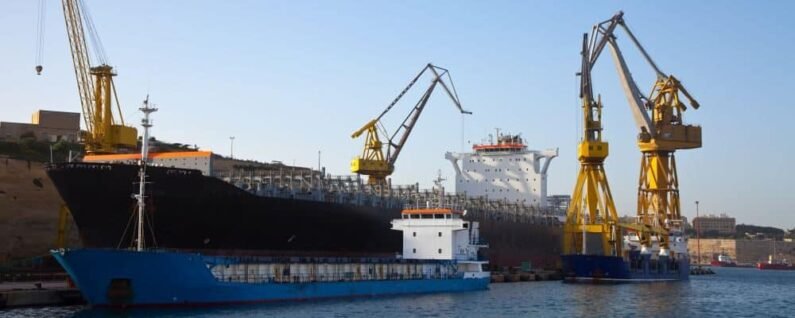
Ship Loading and Unloading Operations at Port Terminals
Your construction equipment arrives at the Port of Houston aboard a cargo vessel from Germany.
Your team watches as massive cranes lift each unit from the ship’s hold to the terminal floor.
Stevedores manage this entire operation.
Their work ensures your machinery moves safely from vessel to dock without delays or damage.
Stevedoring covers every activity related to loading cargo onto vessels and unloading it at port terminals.
Stevedoring crews include trained specialists who operate heavy-lift cranes, forklifts, and rigging systems designed for industrial machinery and project cargo.
Their job goes far beyond physical handling.
They coordinate directly with ship officers, terminal managers, freight forwarders, and trucking teams to keep the operation moving efficiently.
You see this level of coordination when shipping breakbulk cargo or oversized equipment.
These shipments require custom rigging plans, lift diagrams, and well-timed crane operations.
Stevedores position equipment with precision, ensuring your cargo is placed safely on trailers, mafi roll trailers, or storage areas.
Every move reflects their experience with heavy machinery used in construction, mining, and oil and gas.
Stevedoring companies also implement strict safety procedures.
They assess cargo weight distribution, inspect lifting points, verify load integrity, and ensure compliance with port safety standards.
Their oversight minimizes risk during lifts involving excavators, drilling rigs, compressors, generators, and other high-value equipment.
Clear communication is critical throughout the operation.
Stevedores coordinate with your freight forwarder to confirm cargo availability, plan staging areas, and avoid delays related to vessel schedules or terminal congestion.
Their work forms a key link in the global supply chain, ensuring your equipment moves from ship to inland transportation without avoidable handoff issues.
If your project involves oversized machinery, breakbulk shipments, or heavy industrial equipment, understanding the role of stevedores helps you plan terminal operations more effectively.
Their expertise supports safe cargo handling and protects your investment from the moment it reaches the dock.
The Role of Stevedores
Stevedores work with a wide range of cargo types including containers, breakbulk machinery, vehicles, bulk commodities, and project cargo for industrial operations.
Each category demands dedicated handling methods and specialized equipment.
Mining equipment often requires heavy-lift cranes capable of managing multi-ton loads with precision.
Bulk grain moves through conveyor systems designed for continuous flow.
Containers move under gantry cranes that follow strict stacking protocols to maintain terminal efficiency and vessel stability.
Cargo planning guides every movement on the terminal and aboard the vessel.
Load sequences determine which cargo must be accessible at transshipment points or destination ports.
Stevedores prepare detailed loading plans that account for weight distribution, vessel stability, and compatibility between cargo types.
Poor planning creates stability risks, increases fuel consumption, or leaves cargo blocked by other freight during intermediate stops.
Safety oversight anchors every stevedoring operation.
Workers navigate active crane zones, suspended loads, and deep vessel holds.
Stevedoring companies enforce rigorous safety rules, including mandatory protective gear, confined-space entry procedures, and load-securing standards.
These measures protect crews and equipment while keeping vessel operations on schedule.
Proper blocking and bracing reduces movement during marine transit and minimizes the risk of cargo damage or operational delays.
Stevedoring Equipment and Technology
Ship-to-shore gantry cranes dominate container terminal operations, towering over vessel berths and moving thousands of containers during each port call.
These structures extend across the entire beam of a ship, lifting units from vessel holds to trucks, rail platforms, or terminal yards.
Modern gantry cranes handle 40–60 containers per hour.
Computerized positioning systems support precise placement to maintain terminal efficiency and vessel stability during high-volume operations.
Mobile harbor cranes support breakbulk terminals where machinery, steel products, and large project cargo move through port facilities.
Oil field equipment that is too large for containerized shipping requires specialized rigging, lift points, and coordinated crane operations.
Harbor cranes fitted with hooks, spreader bars, slings, or rotating attachments position irregular-shaped cargo safely and with the control required for high-value industrial equipment.
Forklifts, reach stackers, and terminal tractors complete the internal movement of cargo between storage areas, staging zones, and vessel berths.
Coordinated equipment deployment reduces congestion inside the terminal.
Delays in crane cycles, yard handling, or gate operations slow vessel turnaround times and increase overall shipping costs for carriers and shippers.
Many modern terminals use automation to improve performance and safety.
Automated guided vehicles, remotely operated cranes, yard management systems, and digital tracking tools streamline workflows and reduce human error.
Agricultural machinery moving through advanced terminals may be handled by robotic equipment from arrival to outbound dispatch.
Global shipping outcomes vary based on cargo type and terminal capability.
Terminal equipment and handling standards influence transit times, handling charges, and cargo safety for mining machinery, agricultural equipment, and oil and gas components.
The Stevedoring Process
Vessel arrival triggers a coordinated sequence of port activities involving multiple teams and regulatory authorities.
Pilots board the ship outside the harbor and navigate it safely to the assigned berth.
Line handlers on the dock secure mooring lines to stabilize the vessel.
Stevedores position cranes and support equipment while reviewing loading and discharge plans to keep operations aligned.
Customs officers or agricultural inspectors may board the vessel before handling begins, depending on cargo type and regulatory requirements.
Complex industrial shipments often require early coordination with a customs brokerage provider to prevent avoidable delays once operations start.
Discharge procedures follow a structured sequence.
Crews remove hatch covers to open cargo holds.
Cranes lift goods according to planned priorities, ensuring time-sensitive or transshipment cargo moves first.
Checkers monitor each lift, verifying cargo condition, quantities, and documentation against manifests.
Irregularities are recorded immediately to protect the shipper’s and carrier’s interests.
Cargo then moves to terminal storage areas or directly onto trucks and rail cars for inland transport.
Loading operations mirror discharge.
Stevedores stage outbound cargo near vessel berths, organize lifting gear, and coordinate with crane operators to follow the prescribed loading plan.
Each item is placed in the correct location within the hold or on deck to maintain vessel balance and support access at future ports.
Proper lashing and securing prevent movement during the voyage.
Construction equipment often requires reinforced securing using chains, timbers, and blocking materials designed for rough ocean conditions.
Complex moves involving oversized or high-value industrial assets often fall under broader project logistics planning to align routing, timing, and engineering requirements.
Stevedoring Costs and Charges
Terminal handling charges, often referred to as THC, represent fees assessed for loading and unloading cargo at port terminals.
These charges compensate stevedores for crane operations, labor, equipment usage, and coordination required to move cargo between vessels and terminal facilities.
Rates differ by port location, cargo category, and handling complexity.
A standard container may incur costs in the range of $150–$300 per unit because containerized freight benefits from uniform sizes, standardized lifting gear, and established handling procedures.
Oversized machinery or engineered project cargo requires additional equipment, time, and technical supervision, which raises THC.
Drilling equipment weighing 50,000 pounds demands specialized heavy-lift cranes, custom rigging solutions, and detailed planning to execute safely.
These requirements often push stevedoring fees higher.
Charges for these operations commonly fall between $5,000 and $10,000 depending on lift difficulty, vessel configuration, and port conditions.
Port capability also impacts pricing for large industrial shipments.
Review how these variables influence pricing through Houston breakbulk operations.
Delays during cargo operations introduce additional expenses.
When vessel handling runs beyond the allocated berth window, extended port stays can trigger berth rental fees, added labor costs, and schedule disruptions for carriers.
Efficient stevedoring supports faster turnaround times, reduces congestion, and keeps supply chains moving for cargo owners and vessel operators.
Labor Relations in Stevedoring
The International Longshoremen’s Association represents dockworkers across East and Gulf Coast ports, while the International Longshore and Warehouse Union covers labor at major West Coast terminals.
These unions play a central role in U.S. maritime operations.
Collective bargaining agreements define wages, benefits, job classifications, work rules, staffing requirements, overtime rules, and safety procedures.
Labor disputes can interrupt carefully planned supply chains.
Strikes, slowdowns, lockouts, or work-to-rule actions restrict the flow of cargo through terminals.
Ships carrying mining equipment may anchor offshore or sit idle at berth while negotiations continue.
Cargo owners and freight forwarders monitor labor talks closely for time-sensitive industrial shipments.
During uncertainty, shippers may reroute freight to alternative ports to reduce disruption exposure and avoid delay-related costs.
Automation remains a sensitive issue in port labor negotiations.
Terminal operators adopt technology to increase productivity and reduce vessel turnaround times.
Labor unions focus on workforce protections, training standards, and long-term job stability.
Modern agreements often include frameworks for how automation is introduced and how labor impacts are managed.
Stevedoring Liability and Insurance
Stevedores assume responsibility for cargo while it is under their custody during loading, unloading, or temporary terminal storage.
Damage during these phases may trigger stevedore liability depending on circumstances and contract terms.
Liability assessment focuses on custody timing and whether proper handling procedures were followed.
Stevedore service contracts often include liability limitations calculated per event or per ton.
These limits may not reflect the full commercial value of high-value equipment.
To protect full shipment value, separate marine cargo insurance is often essential.
Understanding the difference between carrier liability, stevedore responsibility, and insurance coverage helps reduce financial exposure.
Claims require timely documentation.
Photograph damage as soon as it is discovered at the terminal or during delivery.
Record findings on delivery receipts or terminal interchange documents.
Independent surveyors provide inspection reports that establish technical evidence, estimate repair costs, and support insurance recovery.
International Stevedoring Variations
Stevedoring standards and operational methods differ across regions.
U.S. ports often rely on mechanized systems, strict protocols, and formal safety programs.
Some overseas terminals depend more heavily on manual labor, with varying levels of oversight and equipment availability.
When equipment ships to developing regions, ports may have limited lifting capacity or older machinery, which can affect handling quality and operational speed.
Port infrastructure influences stevedoring performance.
Modern terminals with deep-water berths, high-capacity cranes, and large yards can process vessels faster and handle complex project cargo more reliably.
Older facilities may have shallower drafts, limited berth lengths, and outdated lifting systems, which can restrict vessel size and slow cargo flow.
Customs integration also varies by country.
Some ports support direct ship-to-truck or ship-to-rail moves with minimal terminal dwell time.
Other jurisdictions require controlled terminal processing for inspections, documentation checks, and security screening before release.
Review selection factors for ports for heavy equipment to understand how infrastructure and regulatory models shape cargo movement.
Choosing Ports Based on Stevedoring Capabilities
Port selection affects oversized and specialized cargo movements because terminals do not offer the same stevedoring capabilities.
Oversized mining equipment requires ports with heavy-lift cranes, engineered lifting gear, and stevedores who routinely manage complex project cargo.
Many ports lack lifting capacity, storage space, or technical experience for safe handling, which makes port selection a core part of heavy-equipment planning.
Houston stands out as a major hub for breakbulk and project cargo, with terminals that support heavy-lift operations, large staging yards, and specialized rigging services.
Los Angeles and Long Beach lead in containerized freight with high-throughput terminals designed for standardized container handling.
New Orleans supports breakbulk and bulk commodity movements with inland access through the Mississippi River and extensive waterways.
Stevedore experience with specific cargo types matters.
Oil field equipment often involves center-of-gravity challenges and strict rigging requirements.
Agricultural machinery requires careful handling to protect exposed components and hydraulic systems.
Review how heavy equipment shipping aligns with port capability assessments to match your cargo with terminals suited to its handling requirements.
Working with Freight Forwarders
Texas International Freight works closely with stevedoring companies at major U.S. ports to manage the loading and unloading of machinery, equipment, and breakbulk shipments.
Our team evaluates terminal capabilities, confirms crane requirements, and ensures lifting gear and rigging plans match the cargo profile for construction equipment, mining machinery, and oil field components.
Advance coordination reduces handling risk and supports predictable port operations.
We monitor cargo during stevedoring activity and remain available during discharge and loading to observe lifts, verify documentation, and respond quickly when issues arise.
When damage is suspected, we arrange independent surveys, document findings, and support claims to protect your interests.
Relationships with terminal operators and contractors support faster communication and smoother scheduling.
Whether you are importing equipment from Canada, coordinating cross-border shipments from Mexico, or managing complex industrial freight from overseas markets, our team ensures stevedoring requirements are met at every stage.
These partnerships help reduce delays and support reliable delivery timelines for industrial shippers.
Key Takeaways and Next Steps
Stevedores handle the most risk-sensitive moments at the port, including heavy lifts, vessel discharge, and cargo securing.
Strong planning, correct equipment, and documented procedures reduce damage exposure and keep terminal timelines under control.
If your shipment involves breakbulk cargo, heavy machinery, agricultural equipment, or oil and gas components, align stevedoring requirements early to avoid preventable delays and rehandling costs.
Expert Coordination for Port Cargo Handling
Texas International Freight coordinates stevedoring and terminal operations for heavy equipment and machinery shipments at Houston and other major ports.
Explore our international freight forwarding services for end-to-end logistics support.
Contact Information:
- Phone: +1 877-489-9184
- Email: sh**@***********ht.com
- Address: 11511 Katy Fwy #320, Houston, TX 77079
- Web Form: Request Shipping Assistance
Frequent Questions About Stevedores
How long does stevedoring typically take?
Container vessel operations at major U.S. ports handle 30–60 containers per crane per hour.
A ship carrying 2,000 containers with four cranes operating might complete discharge in 12–18 hours.
Breakbulk cargo moves slower due to irregular shapes and specialized rigging requirements.
Mining equipment shipments involving heavy lifts may take 2–3 days for a full vessel worth of machinery.
Weather can delay stevedoring operations.
High winds can stop crane lifts.
Rain can create unsafe conditions and trigger work stoppages.
Port congestion also extends timeframes during peak seasons and holiday backlogs.
Can I watch stevedoring operations for my cargo?
Terminal access requires authorization for security reasons.
Ports follow Transportation Security Administration requirements that restrict public access to active operational areas.
Arrange observation through your freight forwarder or shipping line.
Some terminals allow cargo owner observation from designated areas for high-value equipment.
Photography restrictions apply at most facilities.
Freight forwarders or surveyors can represent your interests during stevedoring and document cargo condition.
What happens if stevedores damage my cargo?
Note damage on delivery documents immediately.
Write specific descriptions of the damage location and extent before signing receipts.
Photograph all damage thoroughly.
Independent marine survey reports strengthen insurance claims and help establish handling responsibility.
Notify your insurer and freight forwarder within 24 hours when possible.
File formal claims with the stevedoring company based on the applicable liability clauses.
Liability limits make cargo insurance an important safeguard for high-value equipment.
Do stevedoring costs vary between ports?
Yes, terminal handling charges differ by port location, terminal operator, and cargo type.
Houston breakbulk handling may be priced per ton for machinery depending on lift complexity and terminal tariff.
Los Angeles container terminal charges typically apply per container.
New York and New Jersey often price higher than Gulf Coast ports due to labor and operating costs.
Specialized cargo is priced at a premium based on equipment requirements, supervision, and rigging scope.
Are stevedores responsible for customs holds?
No, stevedores move cargo but do not control customs release decisions.
Holds result from documentation gaps, targeting, inspections, or regulatory compliance questions.
Cargo may remain in the terminal awaiting release and incur storage charges or demurrage depending on the move type.
Work with your customs broker to resolve holds quickly.
Texas International Freight coordinates with stevedores, terminal operators, and customs teams to reduce avoidable delays.