Heavy Haul Between Houston and Oklahoma City
You need to move a drilling rig, a compressor package, or an excavator from Houston to Oklahoma City, and the load is too big for a standard flatbed and a same-day plan. Which trailer fits the piece, what permits does the run need across two states, and how do you get it there without damage or a missed start date?
Texas International Freight runs heavy haul on the Houston to Oklahoma City lane for the oil, gas, and construction sectors. We match the trailer to the machine, pull the Texas and Oklahoma permits, plan the route, and track the load from pickup to delivery. Here is how the move works and what to plan for.
What We Haul to Oklahoma City
Oklahoma City anchors a busy energy region, with oil fields, refineries, and distribution yards that run on heavy machinery. We move the equipment that keeps those sites working:
- Drilling rigs and rig packages
- Pumps and gas compressor packages
- Excavators and bulldozers
- Forklifts and construction machinery
Each machine carries its own weight, height, and handling profile. A compressor skid loads differently from a tracked excavator, and the trailer, the tie-down plan, and the route follow from that. When the equipment lands on schedule, the crew works and the project holds its timeline.
Why the Houston to Oklahoma City Lane Matters
Heavy equipment transport links two energy economies. Houston supplies and services much of the oilfield gear that Oklahoma’s fields and plants depend on, and the freight that moves between them supports jobs and keeps the regional energy supply chain steady. Oklahoma backs the lane with public investment: the state’s freight plan maps highway and corridor upgrades that carry oversized loads through 2030.

Permits and Route Planning
An oversized or overweight load needs the right paperwork before it rolls. We handle that part:
- Permits
We secure the oversize and overweight permits for both Texas and Oklahoma, sized to the load. - Route planning
We check bridge limits, road conditions, and height restrictions to set the safest workable route, with escorts where the rules call for them. - Coordination
The same team manages pickup, transit, and delivery, and keeps you updated so the timeline holds no surprises.
We plan for the roadblocks before they reach your delivery date, from a low overpass to a county weight limit, so the machine arrives when the crew needs it.
Preparing Your Equipment for Transport
Preparation keeps a load intact and on schedule. We inspect and document each machine before loading, which sets a baseline for the condition check at delivery. From there:
- Securing parts
Removable components come off or get fixed in place to prevent damage in transit. - Packing and securement
Custom blocking, bracing, and tie-downs match each piece of machinery. - Safety standards
Load securement follows the industry rules for heavy and oversized cargo.
Delivery and After
The job runs past the drop-off. At delivery in Oklahoma City, we run a final inspection against the baseline so the machine arrives in the condition it left Houston. If anything needs attention, we document it and work the claim with you. Your feedback shapes how we run the next move.
Why Texas International Freight
- Energy and construction focus
From oil and gas machinery to earthmoving equipment, we move the gear these sectors run on. - Permits and route handled
We pull the Texas and Oklahoma permits and plan the route, so the oversized load clears without a roadside hold. - One point of contact
The same desk that runs your Oklahoma City lane also arranges heavy equipment shipped overseas and cross-border lanes to Mexico and Canada when the machine travels on.
Book Your Oklahoma City Heavy Haul
Texas International Freight moves drilling rigs, compressors, excavators, and construction machinery between Houston and Oklahoma City. Send us the make, dimensions, weight, and delivery point, and we return a routing and a quote.
Contact Information:
- Phone: +1 877-489-9184
- Email: ship@txintlfreight.com
- Address: 11511 Katy Fwy #320, Houston, TX 77079
- Web Form: Request a Quote
Connect With Us:
How long does heavy equipment transport from Houston to Oklahoma City take?
The drive runs roughly 450 miles and a standard load covers it in a day. An oversized or overweight piece, such as a drilling rig package, takes longer because permit conditions can limit travel to daylight hours and restrict certain routes and weekends. We build the permit window into the schedule and give you a delivery date you can plan a crew around.
Do I need permits to move an oversized load to Oklahoma?
Yes. A load that exceeds standard width, height, length, or weight needs oversize or overweight permits in both Texas and Oklahoma, and some configurations need pilot cars or police escorts. A wide compressor skid or a tall rig component triggers those rules. We pull the permits sized to your load and plan a route that fits the limits, so the move does not stall at a state line.
What kind of trailer carries a drilling rig or compressor package?
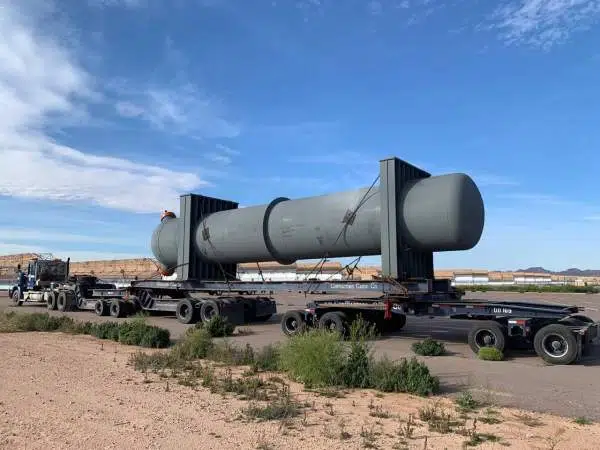
The trailer follows the dimensions and weight. A step deck or flatbed handles many compressors and pumps, while a taller or heavier piece rides on a lowboy or an extendable trailer with added axles to spread the weight. A tracked excavator or a rig package each gets a trailer matched to its profile, along with the blocking and tie-down plan that keeps it secure.
Can you ship equipment that arrives damaged or move it on if a project changes?
We inspect and document every machine before loading and again at delivery, so the condition is on record at both ends. If a piece shows transit damage, we document it and work the claim with you. If a project shifts and the equipment needs to move on, the same team rebooks the next leg, including onward heavy haul or an international move out of Houston.
Do you handle equipment continuing past Oklahoma or across the border?
Yes. The Houston to Oklahoma City lane connects to our wider network. A machine bound for an overseas field can route back through the Port of Houston for ocean freight, and equipment headed for North American job sites moves on our cross-border lanes to Mexico and Canada. One desk plans the whole route rather than handing you off between carriers.