Trucking Heavy Equipment Between Houston and Dallas
Heavy equipment moves for construction, manufacturing, energy, oil and gas, and agriculture all depend on a disciplined trucking plan. From Houston to Dallas and back along the I-45 corridor, the timing, the permits, and the right trailers make the difference.
The run covers roughly 240 miles and stays within Texas, so a single set of TxDOT permits governs an oversized or overweight load rather than a string of state approvals. Below are the steps for heavy equipment trucking between the two metros, from trailer selection and permitting to loading, routing, and delivery.
Why the Houston to Dallas Lane Matters
Economic Activity
Houston’s port and energy cluster connect to the Dallas-Fort Worth distribution and manufacturing hub. Steady lanes for heavy machinery, construction equipment, and bridge components keep projects on schedule across one of the fastest-growing regions in the country. See reverse logistics and Texas oil and gas logistics.
Repair and Distribution
Houston repair yards, fabricators, and OEMs handle major maintenance and rebuilds, while Dallas adds warehousing and regional distribution. Coordinated trucking uses both markets for faster turnarounds.
Skilled Trades and Services
Both metros put specialized riggers, welders, and service techs within reach. Moves for drilling rigs, compressors, generators, and crawlers gain from shared skills and parts availability.
Project Demands
Large sites need gear on precise dates. Cranes, excavators, dozers, and bridge components have to arrive exactly when crews are ready to install them.
Understand the Load
Define the cargo first so routing, permits, and securement match reality.
- Record dimensions, weight, center of gravity, lift points, and fluid status.
- List attachments and removable parts such as buckets, blades, or cabs.
- Confirm special handling for precision tools, generators, or bridge components.
- Verify site constraints at pickup and delivery.
Plan the Move
Build a simple plan that covers permits, routing, paperwork, and contacts.
- Permits: TxDOT oversize and overweight permits, escorts, and curfews when limits are exceeded.
- Route survey: Check low clearances, construction zones, and weekend restrictions along I-45 and the loops.
- Documents: Bill of lading, insurance certificates, and, for any cross-border leg, international coverage.
- Communication: Set pickup and delivery windows and confirm crane or dock availability.
Prepare the Equipment
Protect the load and cut risk before the truck arrives.
- Run a pre-trip inspection with photos and note prior damage.
- Service critical systems and drain fluids where required.
- Disassemble to meet legal dimensions when needed.
- Block, brace, and protect with dunnage, edge guards, and tarps.
Load and Transport
Match the trailer to the load to stay safe and legal.
- Flatbed or step-deck: palletized parts, skids, and smaller machines.
- RGN or lowboy: tall or heavy crawlers and wheeled equipment.
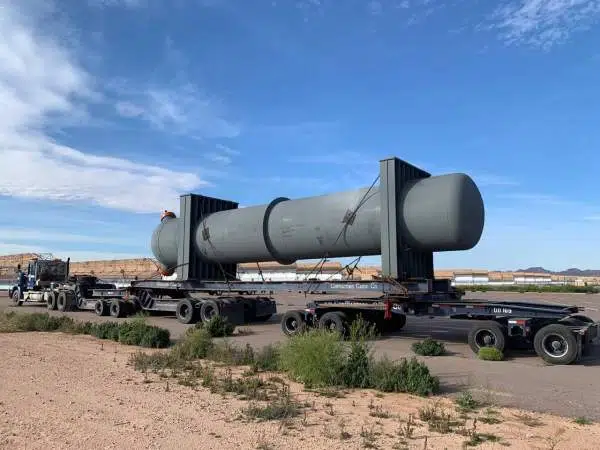
- Multi-axle heavy haul: extreme weights and long wheelbases. See heavy-haul trucking.
Use certified rigging and the required tie-down count, and follow FMCSA securement rules and site safety plans.
Delivery and Aftercare
Close the loop with visibility, inspection, and clear paperwork.
- Live GPS and ETA updates, with re-sequencing when delays appear.
- Final inspection on arrival, documenting any discrepancy and opening claims with cargo insurance support if needed.
- Plan return legs for cores, tooling, and rentals using reverse logistics.
Book Your Houston to Dallas Move
We run the same heavy-haul service on other Texas lanes, including Amarillo, Lubbock, and Waco.
Texas International Freight runs the Houston to Dallas lane with one point of contact from pickup to delivery, handling permits, routing, trucking, heavy machinery logistics, rigging, and insurance. Send us the make, dimensions, weight, and delivery point, and we return a plan and a rate.
Contact Information:
- Phone: +1 877-489-9184
- Email: ship@txintlfreight.com
- Address: 11511 Katy Fwy #320, Houston, TX 77079
- Web Form: Request a Quote
Connect With Us:
Which industries ship most between Houston and Dallas?
Construction, manufacturing, energy and power generation, oil and gas, and agriculture. Typical cargo includes cranes, excavators, dozers, generators, compressors, and bridge components moving to DFW job sites and distribution centers.
What documents do I need?
A bill of lading, insurance certificates, and TxDOT permits for any oversize or overweight load. Some projects also need lift plans and site safety files.
Are there size or weight limits on I-45?
Yes. TxDOT sets axle, gross weight, and dimensional limits. Over-limit loads need permits, escorts, and approved routes handled under heavy haul.
Can multiple machines move on one truck?
Often, if the combined dimensions and weight stay legal and the securement points allow it. When they do not, a step-deck or RGN combination splits the load safely.
How do you protect high-value equipment?
With engineered packing, tarping, shock and tilt indicators, and route-specific securement, backed by all-risk cargo insurance.