How Tracking, AI, and IoT Support Engineering Logistics
Your engineering project runs on equipment that has to arrive intact and on time, a turbine, a transformer, a run of bridge steel. One late or damaged piece stalls a crew and pushes the schedule. So how do you keep eyes on a heavy shipment across an ocean, and how does technology cut the risk of a delay you cannot afford?
Texas International Freight moves materials and oversized equipment for construction, oil and gas, energy, and manufacturing projects. We pair heavy haul and ocean freight with live tracking, route analysis, and sensor monitoring, so you know where your cargo sits and the condition it is in. Here is how the technology earns its place on an engineering move.
Real-Time Tracking for Shipment Visibility
We use GPS and RFID tracking to give you live shipment visibility. You watch cargo location through an online portal, which sharpens planning and removes the guesswork from a delivery window. Real-time data also exposes bottlenecks early, so the team can reroute or rebook before a delay protects nothing but the problem.
The market reflects the shift. According to MarketsandMarkets, the real-time location systems market expanded from roughly 3.2 billion dollars in 2020 to an estimated 8.8 billion dollars by 2025, a measure of how far live tracking has spread across logistics.
AI for Smarter Routing
Artificial intelligence reads large volumes of logistics data to forecast demand, plan routes, and manage inventory. Smarter route planning trims transit time and fuel burn, which cuts cost and emissions at once. A McKinsey study found that AI could lower transportation costs by as much as 15 percent. On an engineering project, that same analysis flags risk early and keeps a complex supply chain on schedule.
IoT Sensors for Sensitive Cargo
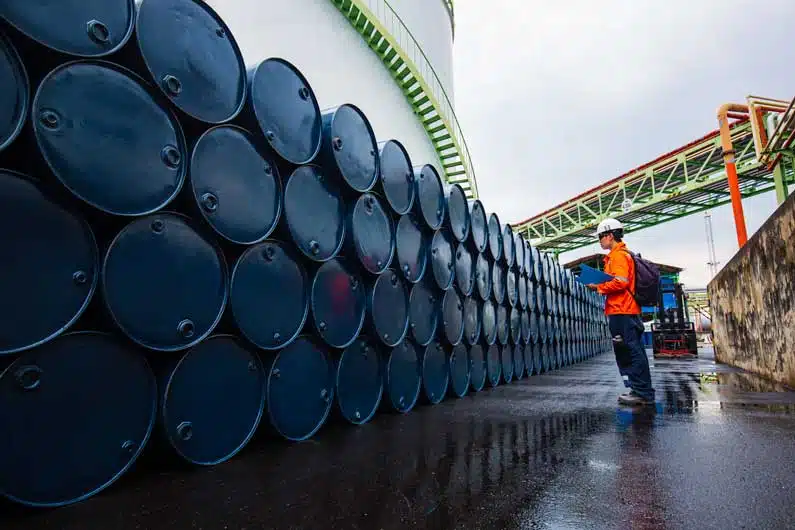
Sensors track temperature, vibration, and humidity through the journey. A turbine, a run of oilfield equipment, or a set of bridge components stays monitored from origin to site. When a reading drifts out of range, an alert triggers corrective action, which lowers the risk of damage and keeps the cargo inside the handling rules.
Moving Engineering Cargo Through Major Ports
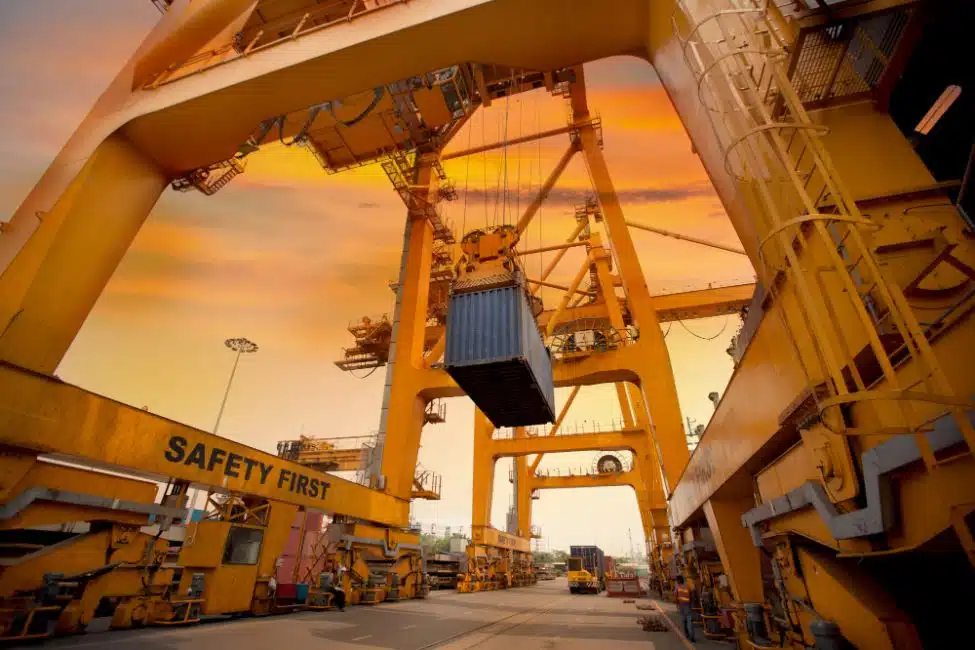
We manage global shipping for heavy equipment and project cargo through the world’s main gateways, coordinating customs clearance, breakbulk handling, and last-mile delivery. Key hubs include:
- Port of Shanghai, China
The busiest container port in the world, central to China and U.S. trade. - Port of Singapore
A transshipment hub that connects shipping routes across Asia. - Port of Rotterdam, Netherlands
The largest port in Europe and a core node for EU trade. - Port of Los Angeles, USA
A primary U.S. gateway for Pacific trade and imported equipment. - Port of Dubai, UAE
A Middle East hub linking Europe, Africa, and Asia.
Project Cargo We Support
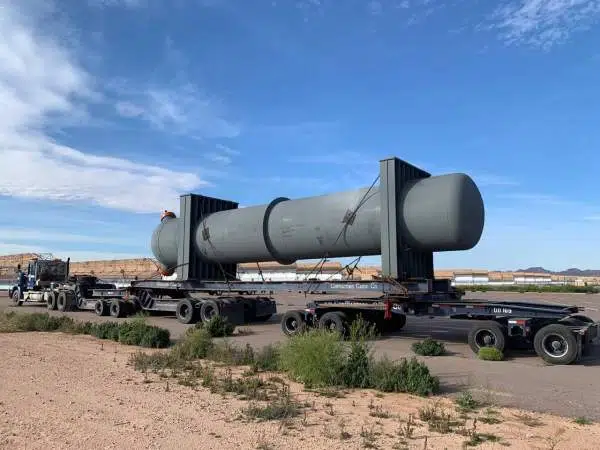
Engineering projects rarely move one piece at a time. New bridge work calls for bridge components such as steel beams and precast panels delivered to remote sites, where a delay runs up cost fast. Oil and gas work demands complex moves for oversized drilling rigs and refinery modules. Our oversized freight shipping and heavy machinery logistics match the cargo to the right mode and equipment, and the same desk runs cross-border lanes to Mexico and Canada when a project spans North America.
Why Texas International Freight
- Technology with the freight
Live tracking, route analysis, and sensor monitoring ride with every heavy and project move, not as an add-on. - Heavy and oversized focus
From turbines and oil rigs to bridge components, we handle the cargo standard carriers cannot. - One point of contact
The same team plans the route, files customs, and tracks the unit from plant to site across construction, energy, oil and gas, and manufacturing projects.
Plan Your Engineering Logistics Move
Texas International Freight moves turbines, rigs, transformers, and oversized project cargo worldwide, with the tracking and monitoring to keep your schedule intact. Send us the dimensions, weight, and delivery point, and we return a routing and a quote.
Contact Information:
- Phone: +1 877-489-9184
- Email: ship@txintlfreight.com
- Address: 11511 Katy Fwy #320, Houston, TX 77079
- Web Form: Request a Quote
Connect With Us:
What is engineering logistics in practice?
Planning, moving, and delivering materials and oversized equipment for projects in construction, mining, oil and gas, and energy. It covers carrier selection, permits, packing, customs, and last-mile delivery for items like turbines, oil rigs, bridge components, and factory machinery.
Which cargoes count as oversized or breakbulk?
Loads that do not fit standard containers, such as excavators, cranes, transformers, bridge components, generators, agricultural equipment, and refinery modules. These usually ship as breakbulk, on flat racks, or by RoRo and heavy-haul trucking.
How do you protect high-value machinery in transit?
Use export packing and crating, moisture barriers, shock indicators, and certified blocking and bracing. Add cargo insurance aligned to cargo value and route risk for heavy equipment, oilfield tools, and precision instruments.
What transport modes work best for project cargo?
Heavy-haul trucking for plant-to-port moves, ocean freight for long legs, and air cargo for urgent spares and smaller high-value parts. Route selection depends on weight, dimensions, deadlines, permits, and port capabilities.
How do tracking, AI, and IoT improve delivery?
Real-time GPS and RFID show location and ETA for turbines, cranes, and bridge components. AI cuts transit time with smarter routing, while IoT sensors flag shock, tilt, humidity, and temperature so teams act before damage or delays grow.
What documents and permits are usually required?
Commercial invoice, packing list, HS codes, certificates of origin, export filings, and oversized permits or escorts for heavy-haul moves. Port handling plans and lifting plans support heavy machinery logistics and oversized freight shipping.