How Importing Heavy Equipment Into the United States Works
Texas International Freight imported a Liebherr crane from Germany to the United States and ran the customs clearance for the shipment. A machine like that is a custom order, months or years in production, and a damaged unit sets the whole project back. So what does a clean import actually require?
Five things: the ocean or air leg, an agent in the exporting country, port and terminal handling, US customs entry, and the final haul to your site. Texas International Freight runs all five as one job.
The Customs Entry
Every heavy equipment import clears US Customs and Border Protection, no exceptions. Ocean shipments start before the cargo even loads: the Importer Security Filing, the 10+2, must reach CBP before the container or breakbulk piece goes on the vessel. The entry itself rides on a customs bond, single-entry for a one-off machine or continuous for regular importers. Our customs brokerage desk files the ISF, posts the bond, and lodges the entry so the machine moves off the dock instead of into storage.
EPA and DOT Forms
Machinery with an engine answers to more than CBP. Nonroad diesel equipment, excavators, cranes, loaders, declares its emissions status on EPA Form 3520-21, and self-propelled vehicles add the DOT HS-7 declaration. A machine built to a foreign emissions standard can be refused entry, so the engine paperwork gets checked before the deposit is paid, not after the vessel sails. Used equipment also arrives clean: soil on tracks and tires draws agricultural inspection holds.
Duties and Classification
The duty bill follows the HTS classification and the country of origin. Many machinery lines carry low or zero base rates, but origin-based additional tariffs can change the math entirely, so the classification work happens at quote time. The commercial invoice, packing list, bill of lading, and certificate of origin make up the document set CBP sees, and the values on them need to match the purchase.
How the Machinery Ships
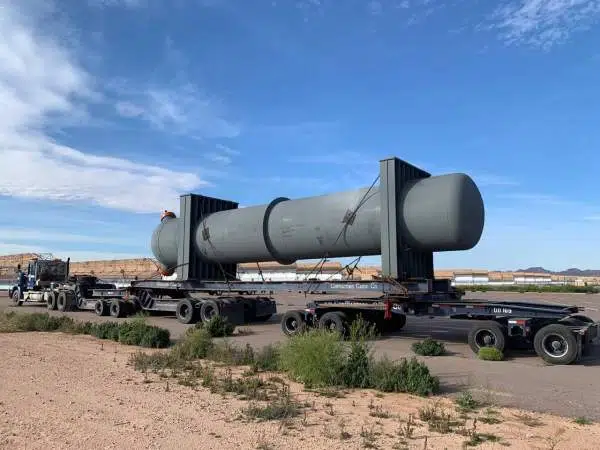
Self-propelled machines roll on and roll off RoRo carriers under their own power. Larger or non-rolling pieces ship on general cargo vessels as break bulk, and mid-sized units ride flat-racks on container ships. Air freight covers urgent components. We consult on the option that fits the machine, because moving machinery internationally is the core of our book, in both directions: the same desk handles the export lanes to the UK and Europe that these imports travel in reverse.
From the Port to Your Site
The Liebherr crane did not end its journey at the terminal. Discharge, terminal handling, and the heavy haul to the end destination ran on the same schedule as the ocean leg, with permits and escorts arranged before the vessel arrived. Oilfield skids, cranes, excavators, and forklifts follow the same path: one plan from the foreign factory gate to your yard.
Working With an Import Freight Forwarder
Heavy lift cargo is expensive, slow to replace, and unforgiving of handling mistakes. A dependable forwarder watches the points where imports go wrong: the ISF deadline, the engine declaration, the classification, and the transfer from ship to truck. We guide you through the process and the documents, and we flag the pitfalls before they cost storage days. If it can be legally imported, we can move it. For the export direction, our guide to shipping heavy machinery overseas covers the same ground in reverse.
Import Your Heavy Equipment
Texas International Freight imports cranes, excavators, oilfield equipment, and machinery into the United States, with the ISF, customs bond, EPA and DOT declarations, and the final heavy haul handled on one desk. Send us the machine details and origin, and we return a routing and a quote.
Contact Information:
- Phone: +1 877-489-9184
- Email: ship@txintlfreight.com
- Address: 11511 Katy Fwy #320, Houston, TX 77079
- Web Form: Request a Quote
Connect With Us:
What documents does importing heavy equipment require?
The commercial invoice, packing list, bill of lading, and certificate of origin, plus the Importer Security Filing before an ocean shipment loads, a customs bond for the entry, EPA Form 3520-21 for nonroad engines, and the DOT HS-7 for self-propelled vehicles.
Does imported machinery pay US import duty?
Rates follow the HTS classification and the country of origin. Many machinery lines carry low or zero base rates, but origin-based additional tariffs can apply, so classification gets confirmed at quote time, not at the port.
Can used heavy equipment be imported into the United States?
Yes, if the engine meets EPA requirements and the machine arrives clean. Foreign-spec engines can be refused entry, and soil on tracks or tires triggers agricultural inspection holds, so both get checked before shipment.
How does heavy equipment physically ship to the US?
Self-propelled machines roll onto RoRo carriers, larger pieces ship as break bulk on general cargo vessels, mid-sized units ride flat-racks on container ships, and urgent components fly.
Who handles the equipment after the port?
The same forwarder, ideally. We schedule the discharge, terminal handling, and the permitted heavy haul to your site alongside the ocean leg, so the machine moves off the dock without storage days.