Shipping Dangerous Goods by Sea Under the IMDG Code
You need to move oilfield chemicals, lithium batteries, paints, or compressed gases by sea, and one wrong line on a declaration holds the whole container at the terminal. Which class does your cargo fall under, what paperwork does the carrier need, and how do you keep a hazardous shipment compliant from the plant to the port of discharge?
Texas International Freight books and documents hazardous ocean shipments out of Houston for the energy, mining, and industrial sectors. We classify the cargo, prepare the dangerous goods paperwork, match the packing to the rules, and book stowage the carrier accepts. Get the detail right at origin and your shipment sails on schedule.
What Counts as Dangerous Goods
The IMDG Code sorts hazardous cargo into nine classes by the risk it carries:
- Class 1, Explosives
Blasting agents and detonators used in mining and demolition. - Class 2, Gases
Compressed, liquefied, or dissolved gases such as nitrogen and refrigerant cylinders. - Class 3, Flammable liquids
Paints, solvents, and many oilfield fluids. - Class 4, Flammable solids
Materials prone to spontaneous combustion or reaction with water. - Class 5, Oxidizers and organic peroxides
Substances that feed a fire or react on contact. - Class 6, Toxic and infectious substances
Pesticides and certain industrial chemicals. - Class 7, Radioactive material
Sources used in inspection and energy work. - Class 8, Corrosives
Acids, alkalis, and battery electrolyte. - Class 9, Miscellaneous
Lithium and sodium-ion batteries, dry ice, and environmentally hazardous substances.
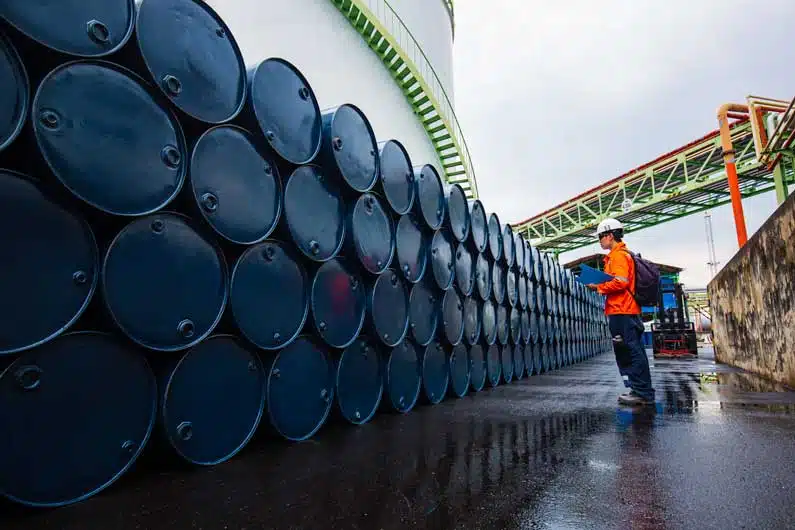
Most cargo we move for oil and gas, mining, and manufacturing lands in classes 2, 3, 5, 8, and 9. A drum of drilling fluid, a pallet of coatings, or a crate of battery packs each carries its own UN number and handling rules.
The IMDG Code and Amendment 42-24
The International Maritime Dangerous Goods Code sets the worldwide standard for carrying hazardous cargo by sea, and the IMO updates it every two years. The current mandatory edition, Amendment 42-24, took effect for all international voyages on 1 January 2026 and replaced Amendment 41-22.
The update matters for anyone shipping batteries. Amendment 42-24 added UN 3551 and UN 3552 for sodium-ion batteries, tightened stowage categories, and raised the documentation bar for lithium cells. Cargo prepared to the old edition risks rejection at the port.

The Dangerous Goods Declaration
The carrier will not load hazardous cargo without a correct Dangerous Goods Declaration. The DGD states the UN number, the Proper Shipping Name, the class, the packing group, and the quantity. Trade names do not belong on it. “Rust remover” means nothing to a port inspector, while “UN 1789, Hydrochloric acid, Class 8, Packing Group II” does.
Your document set also covers the container packing certificate, a safety data sheet for each substance, and the standard export papers. The legal responsibility for accurate classification sits with you as the shipper, even when a forwarder files the paperwork. We check the safety data sheet against the entry before anything moves, so a misdeclaration does not surface at the terminal gate. Our customs clearance desk keeps the export filing aligned with the declaration.
Packing, Marking, and Labeling
Hazardous goods travel in UN-certified packaging rated for the class and packing group. The outer pack carries the class label, the UN number, and the Proper Shipping Name, plus the marine pollutant mark where it applies. Export packing and crating built to the rule keeps the cargo intact and clears the marking checks at both ends.
Segregation and Stowage
Some cargo cannot ride next to other cargo. The IMDG segregation table sets how far apart incompatible substances must sit, fixes on-deck or below-deck stowage, and keeps certain goods clear of heat and crew quarters. An oxidizer kept away from a flammable liquid, a corrosive separated from a gas cylinder, all of it planned before the box is packed. Container shipping for compatible items can share an LCL load, while reactive cargo books its own space.
Cargo We Move
We handle oilfield chemicals and drilling fluids, lithium and sodium-ion battery packs for equipment, industrial paints and coatings, compressed gas cylinders, and corrosive cleaning agents for the mining and energy sectors. We route this cargo to ports worldwide, from Indonesia and Singapore to domestic moves that connect with our Oklahoma City heavy haul lane. The same desk arranges the ocean freight for heavy machinery that often travels alongside.
Incident data shows why the detail matters. A study of hazardous transport accidents in China, one of the largest exporters of chemical cargo, recorded steady casualties across four years, with many traced to handling and documentation failures rather than the cargo itself.

Why Texas International Freight
- Classification and paperwork first
We confirm the UN number, class, and packing group against the safety data sheet before the cargo moves, so a hazardous shipment clears without holds. - One point of contact
The same team handles packing, booking, segregation, and customs from pickup in Texas to delivery at the destination port. - Energy and industrial focus
From oilfield chemicals to battery packs, your cargo ships with the documentation, labeling, and stowage the rules require.

Book Your HAZMAT Ocean Shipment
Texas International Freight handles classified dangerous goods for the energy, mining, and industrial sectors out of Houston. Send us the safety data sheet, quantity, and destination, and we return the classification, the routing, and a quote.
Contact Information:
- Phone: +1 877-489-9184
- Email: ship@txintlfreight.com
- Address: 11511 Katy Fwy #320, Houston, TX 77079
- Web Form: Request a Quote
Connect With Us:
What documents does a hazardous ocean shipment need?
Every hazardous move needs a Dangerous Goods Declaration listing the UN number, Proper Shipping Name, class, packing group, and quantity, plus a container packing certificate and a safety data sheet for each substance. The standard export set, the commercial invoice, packing list, and bill of lading, rides alongside. A drum of Class 3 solvent and a pallet of Class 8 acid each get their own line on the declaration. We prepare the declaration from your safety data sheets so the entries match the cargo.
Can dangerous goods share an LCL container with other cargo?
Yes, when the items are compatible under the IMDG segregation table. Two Class 3 flammable liquids may travel together, while an oxidizer and a flammable liquid stay apart. Reactive or high-hazard cargo often books its own space rather than an LCL load. We plan the segregation before the box is packed, so incompatible drums never ride side by side.
How do you ship lithium or sodium-ion batteries by sea?
Batteries fall under Class 9, with UN numbers set by the chemistry and by how the cells travel, alone, packed with equipment, or installed in it. Amendment 42-24 added UN 3551 and UN 3552 for sodium-ion cells and tightened stowage for lithium. State of charge, packaging, and marking all follow the code. A crate of battery packs for ground support or mining equipment ships with the right UN number and stowage category, checked before booking.
Who is responsible if a dangerous goods declaration is wrong?
The shipper holds the legal responsibility for correct classification, even when a freight forwarder files the paperwork. A wrong entry, a trade name in place of the Proper Shipping Name, or a missing packing group can bring shipment rejection, fines, and liability. We verify the classification against your safety data sheet first, which keeps the responsibility you carry from turning into a penalty at the port.
Can you handle oilfield chemicals and corrosives for export?
Yes. Drilling fluids, acids, coatings, and cleaning agents move regularly for the oil, gas, and mining sectors as Class 3, Class 5, and Class 8 cargo. We classify each product, match it to UN-certified packaging, and book stowage that keeps incompatible items apart. A shipment of corrosive treatment chemicals bound for an overseas field clears with the declaration, labeling, and segregation the carrier requires.