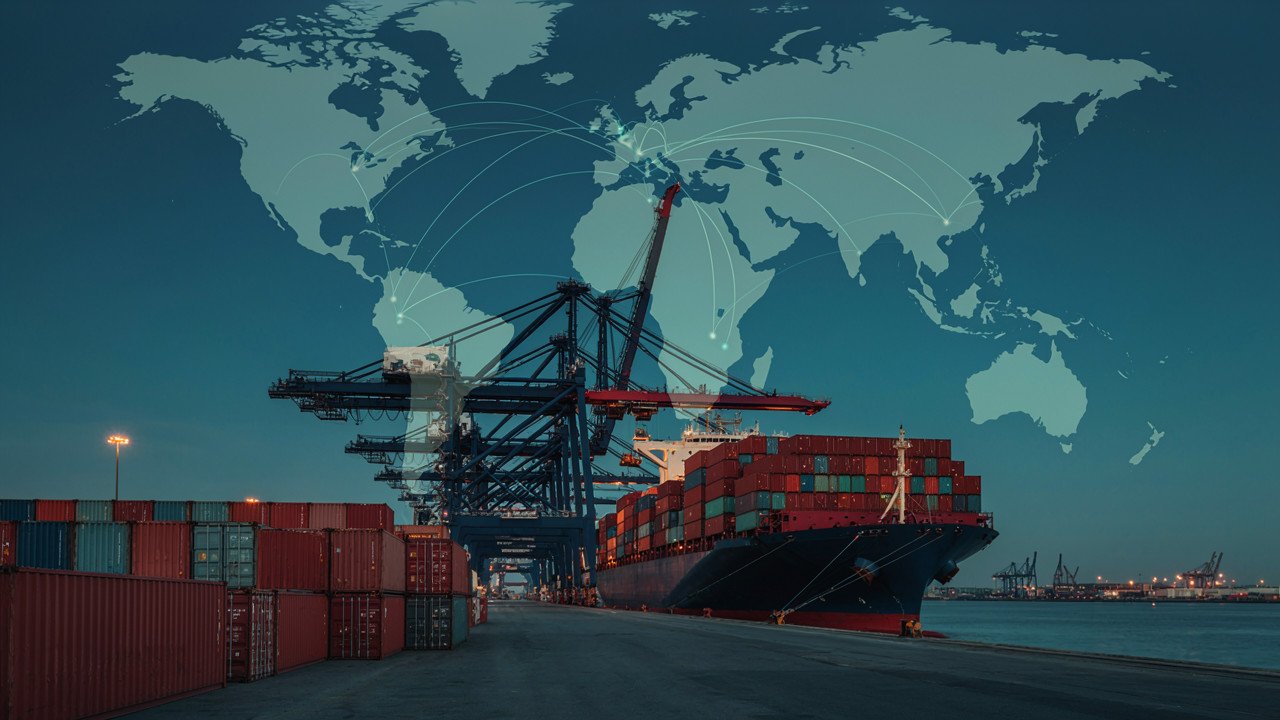
Global shipping once moved to the rhythm of supply and demand. In 2026, it moves to the rhythm of policy. Tariff deadlines, new port fees, canal restrictions, and security threats now swing freight rates and transit times faster than any peak-season rush. For companies importing machinery, steel, or project cargo, the cost and timing of a shipment can shift between the quote and the sailing. This guide breaks down the geopolitical forces reshaping trade lanes right now, and the practical steps that keep your freight predictable when the map keeps changing.
How geopolitical events move your freight costs
For most of the past decade, ocean and air rates tracked familiar market signals: peak seasons, fuel prices, and vessel capacity. Today, government action is the dominant variable. A single tariff announcement can pull months of demand forward as importers rush to beat a deadline, spiking rates, then flatten it when the deadline is paused. Carriers respond by cancelling sailings, known as ‘blank sailings’, to defend pricing, which tightens capacity in ways that are hard to predict. The calendar of policy decisions now matters as much as the balance of ships and containers. Below are the five forces doing the most to reshape global shipping in 2026.
1. Tariffs and trade policy: the single biggest force
Trade policy is the loudest signal in the market. When new duties are announced, importers front-load orders to bring goods in before the rate rises; when a deadline is postponed, demand drops just as quickly. That whipsaw is the defining pattern of transpacific pricing this year. It also changes the math of a shipment: on many lanes the duty owed now dwarfs the ocean freight itself, so total landed cost, not the rate on the booking, is what deserves your attention. Some shippers are re-examining where goods are made or consolidated to change their country-of-origin exposure, which reroutes volumes through Southeast Asia and Mexico. If you import steel and metal products or other tariff-sensitive goods, duty planning with a customs specialist is now as important as the freight booking.
2. New U.S. port fees on Chinese-built ships
Under a Section 301 action, the U.S. announced service fees on Chinese-built and Chinese-operated vessels calling at American ports, charged per net ton or per container, with amounts scheduled to rise year over year. Because carriers deploy the same ships across many customers, those costs would most likely reach shippers as surcharges on ocean freight. As of this writing the fees are suspended: following a U.S.-China agreement in November 2025, both countries paused their reciprocal port fees for one year, through November 9, 2026. Nothing accrues during the suspension, but the schedule still exists on paper, so it belongs on every importer’s watch list as that date approaches. Confirm the current status before budgeting, because this is an active policy file.
3. The Red Sea and the long way around Africa
Security risk in the Red Sea continues to reshape East-West routing. The Suez Canal remains open, but attacks on commercial vessels near the Bab el-Mandeb strait have pushed most major carriers to route around the Cape of Good Hope instead. Suez transit volumes are down sharply from pre-2024 levels, and the Cape detour has become the default for a large share of Asia-Europe traffic. The practical effect for shippers is longer transit, often on the order of ten days to two weeks added to a rotation, plus higher rates and war-risk premiums. Most of the industry expects some level of diversion to persist, so if your cargo touches lanes through or near the Middle East or Europe, build the longer routing into your lead times rather than treating it as an exception.
4. The Panama Canal: when climate becomes a trade constraint
Not every disruption is political, but water levels have become a trade issue of their own. Low rainfall in the watershed of the canal has repeatedly forced the Panama Canal Authority to limit how deep (draft) and how many vessels can transit each day. In 2026 the authority held the Neopanamax maximum draft at 48 feet and deferred a planned reduction after reviewing lake levels, while capping daily transit slots. Dry years are becoming more frequent, which makes the canal a recurring variable rather than a one-off. For Gulf Coast shippers moving cargo between Asia and the Port of Houston, canal constraints can mean rerouting, draft limits on heavier loads, or added cost, worth confirming at booking on any Asia-U.S. Gulf move.
5. Nearshoring and the shift toward Mexico
One response to tariff and routing risk is to shorten the supply chain. Under the USMCA framework, qualifying goods from Mexico can enter the U.S. duty-free, and a truck from Monterrey reaches Texas in days rather than the weeks an ocean move from Asia requires. That advantage has kept nearshoring momentum strong, with more shippers consolidating and transloading near the border. It is not friction-free: rules of origin and a scheduled 2026 USMCA review could tighten qualification. But for many product lines the combination of duty-free access and short cross-border trucking transit is reshaping where goods are made and how they move. China-origin lanes such as Shanghai remain essential, but they now sit alongside a growing North American option.
What this means for heavy equipment and project cargo
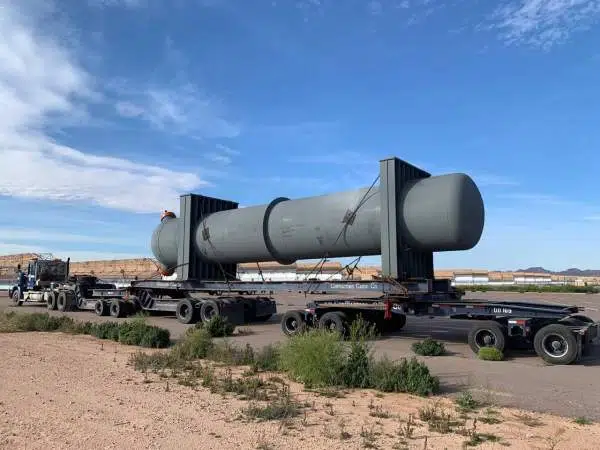
Oversized and breakbulk shipments feel geopolitical swings more acutely than a standard container. Specialized vessel space and heavy-lift capacity are limited, so when routings lengthen or capacity tightens, breakbulk and out-of-gauge cargo can wait longer for a sailing and pay more for it. Longer Cape or canal-restricted routings also raise the stakes on scheduling, since a missed heavy-lift window can push a delivery by weeks. For anyone shipping heavy equipment, the practical answers are to book earlier, confirm vessel and route options at quote time, and plan tariff classification and duties on machinery before the cargo ships, not after it lands.
Five ways to protect your supply chain
- Plan around known dates. Tariff deadlines, the port-fee suspension expiry, and the USMCA review are on the calendar, so schedule and budget against them.
- Think in landed cost, not freight rate. Duties often outweigh the freight, so model the full cost before you commit.
- Diversify routing and origin. Alternate lanes, transshipment points, and nearshore options reduce single-point exposure.
- Book earlier and hold buffer. Longer routings and capacity swings reward lead time, and thin buffers get eaten first.
- Lean on a forwarder who tracks the changes. Real-time routing, customs expertise, and capacity relationships turn volatility into a managed variable.
Geopolitics will keep rewriting the map, but disruption is manageable with the right planning and the right partner. Texas International Freight helps importers and exporters move machinery, breakbulk, and project cargo through exactly these conditions. Contact our team or request a freight quote to plan your next shipment with current routing and duty guidance.
How do tariffs affect shipping costs?
Tariffs change shipping in two ways. First, importers front-load orders to beat new duty deadlines, which spikes demand and freight rates, then rates fall when deadlines are paused. Second, on many lanes the duty owed now exceeds the ocean freight itself, so total landed cost matters more than the rate on the booking.
Is the Suez Canal open in 2026?
Yes, the Suez Canal remains open, but most major carriers route around the Cape of Good Hope to avoid security risk in the Red Sea. That adds roughly ten days to two weeks to affected rotations and raises rates and war-risk premiums. Confirm current routing at booking, as the situation shifts.
What are the U.S. port fees on Chinese-built ships?
They are Section 301 service fees on Chinese-built and Chinese-operated vessels calling at U.S. ports, charged per net ton or per container. Following a U.S.-China agreement, the fees were suspended for one year through November 9, 2026, with reciprocal Chinese fees paused as well. Verify the current status before budgeting.
Why does the Panama Canal restrict transits?
Low rainfall in the canal watershed reduces the freshwater lake levels the locks depend on, so the Panama Canal Authority periodically limits vessel draft and the number of daily transits. These constraints can add cost or rerouting on Asia to U.S. Gulf and East Coast lanes.
How can I protect my supply chain from geopolitical disruption?
Plan around known policy dates, model landed cost rather than freight rate alone, diversify routing and sourcing, book earlier with buffer time, and work with a freight forwarder who tracks routing and customs changes in real time.
Last updated: September 2026. Trade policy, sanctions, and routing conditions change frequently; the figures above reflect the situation as of this date and should be confirmed for current shipments.