Trucking Heavy Equipment Between Houston and Corpus Christi
You need to move a drilling package, a refinery component, or oversized industrial machinery from Houston down to Corpus Christi, and the load runs past a standard flatbed. Which trailer fits the piece, what permits does the run need, and how do you tie it into the export port at the other end? Here is how the lane works.
The route covers roughly 210 miles on US-59 and US-77 and stays inside Texas, so a single set of TxDOT permits governs an oversized or overweight load rather than a string of state approvals. Texas International Freight runs this lane for the energy, petrochemical, construction, and agriculture sectors, matching the trailer to the machine, pulling the permits, planning the route, and tracking the load from pickup to delivery.
What Drives the Houston to Corpus Christi Lane
Corpus Christi anchors one of the busiest energy export gateways in the country, with a deepwater port that moves a large share of US crude oil exports, along with LNG terminals, refineries, and a petrochemical base. Oilfield activity in the surrounding region, a growing wind-energy sector, and the agriculture of the Coastal Bend round out the demand. That mix keeps the lane busy with oil and gas machinery, refinery and process equipment, and the cargo that feeds the port.
What We Haul on the Lane
We move the equipment these sectors run on, including drilling and oilfield machinery, compressors and heat exchangers for refineries and plants, heavy machinery and cranes for construction and port work, and agricultural equipment for the surrounding region. Each machine carries its own weight, height, and handling profile, so the trailer and the tie-down plan follow from the cargo.
Plan the Move
A clear plan covers permits, routing, paperwork, and contacts.
- Permits: TxDOT oversize and overweight permits, with escorts and curfews when the load exceeds legal limits.
- Route survey: Check low clearances, construction zones, and restrictions along the US-59 and US-77 corridors into the Coastal Bend.
- Documents: Bill of lading, cargo insurance, and any export or customs paperwork when cargo continues through the port.
- Communication: Set pickup and delivery windows and confirm crane or dock availability.
Prepare the Equipment
Protect the load and cut risk before the truck arrives.
- Run a pre-trip inspection with photos and note any prior damage.
- Service the machine so it travels in good condition.
- Remove detachable parts and accessories to meet legal dimensions when needed.
- Secure and protect the unit with crates, padding, and blocking, then confirm nothing can shift.
Load and Transport
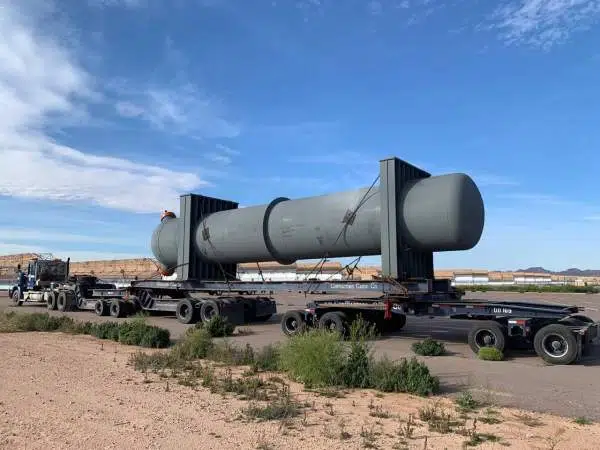
Match the trailer to the load to stay safe and legal. A flatbed or step-deck carries smaller machines and skids, a lowboy or RGN handles tall or heavy equipment, and a specialized multi-axle carrier takes extreme weights and long wheelbases. Use proper lifting and rigging, follow FMCSA securement rules, and track the load by GPS with regular updates, backed by heavy-haul trucking for the over-limit pieces.
Delivery and Onward Shipping
On arrival in Corpus Christi, the crew inspects the equipment against the documents, records any variance, and completes the sign-off paperwork. Because the port is a major export gateway, cargo can transfer to ocean freight for an overseas leg, and we plan the truck leg and the onward leg as one move with oil and gas logistics support.
Book Your Houston to Corpus Christi Move
Texas International Freight moves oilfield machinery, refinery equipment, and oversized cargo between Houston and Corpus Christi, and onward through the port by ocean. Send us the make, dimensions, weight, and delivery point, and we return a plan and a rate.
Contact Information:
- Phone: +1 877-489-9184
- Email: ship@txintlfreight.com
- Address: 11511 Katy Fwy #320, Houston, TX 77079
- Web Form: Request a Quote
Connect With Us:
How long does trucking from Houston to Corpus Christi take?
The run covers about 210 miles and a standard load makes it in a single day. An oversized or overweight piece, such as a wide refinery vessel, takes longer because permit conditions can limit travel to daylight hours and set the route. We build that window into the delivery date.
Do I need permits for the Houston to Corpus Christi lane?
A load within legal size and weight does not. Anything that exceeds TxDOT limits needs an oversize or overweight permit, and some loads need escorts. Because the lane stays inside Texas, one TxDOT permit covers the move rather than several state approvals.
What equipment moves most on this lane?
Oilfield and drilling machinery, refinery and petrochemical process equipment such as compressors and heat exchangers, construction machinery and cranes for port work, and agricultural equipment. If it is heavy or oversized and bound for the Coastal Bend, we have a trailer and a route for it.
Can cargo continue overseas through the Port of Corpus Christi?
Yes. Corpus Christi is a major energy export port, so a machine can transfer from the truck to ocean freight for an overseas destination. We plan the inland haul and the export leg together so the cargo moves on one schedule.
How do you protect high-value equipment in transit?
With a documented pre-trip inspection, engineered packing and securement, GPS tracking, and a final inspection at delivery, backed by cargo insurance if a claim is ever needed.