
Why Source Playground Equipment from China
China leads global production of commercial play structures with strong clusters in Wenzhou, Yiwu, Guangzhou, and the Yangtze River Delta. Manufacturers offer a wide range of indoor and outdoor sets—including soft play structures, trampoline park equipment, climbing walls, ball pits, and interactive play panels—at competitive factory prices.
U.S. buyers serving family entertainment centers, shopping malls, daycare centers, and recreation facilities can secure custom designs and project-specific kits while meeting ASTM F1487 and CPSC safety standards.
For a deeper look at layouts, cargo profiles, and risk management, review our guide on shipping indoor playground equipment.
- Lower unit cost and scalable production for multi-site rollouts and franchise operations.
- Broad catalogs: modular indoor parks, outdoor sets, slides, swings, climbing frames, soft play, ninja warrior obstacles, and sensory play equipment.
- Supplier experience with export projects and clear packing lists for U.S. entry.
Key Chinese Manufacturing Cities for Playground Equipment
Understanding supplier location helps you plan logistics and consolidation. You can also align your sourcing with the top Chinese cities exporting to the US to match long term import strategies.
- Wenzhou: Metal hardware, climbing frames, and outdoor structures. Ships via Ningbo port.
- Yiwu: World’s largest small commodities hub with hundreds of playground accessory suppliers. Routes through Ningbo (180km away).
- Guangzhou: Large-scale commercial playground manufacturers specializing in indoor soft play and trampoline park equipment. Direct service via Nansha port.
- Shanghai/Ningbo region: Comprehensive suppliers with frequent sailings to Houston.
- Shenzhen: Technology-integrated play equipment and interactive panels.
Factory location affects pickup costs and inland transit—typically adding 2–5 days to your shipping schedule.
Understanding Incoterms for Your Purchase
Your purchase agreement’s Incoterm determines who handles shipping, insurance, and customs clearance:
- FOB (Free on Board): Most common. Supplier delivers to Chinese port; you arrange ocean freight, insurance, and U.S. import. Gives you control over carrier selection and timing.
- CIF (Cost, Insurance, Freight): Supplier arranges ocean freight and basic insurance to Houston. You handle U.S. customs and delivery. Convenient but less carrier control.
- EXW (Ex Works): You handle everything from factory pickup onward. Maximum cost control but requires Chinese logistics coordination.
- DDP (Delivered Duty Paid): Supplier handles everything including U.S. duties. Rare for playground equipment but simplifies your logistics.
Not sure which term applies? Send us your proforma invoice and we’ll explain what’s included and what you need to arrange.
End-to-End Import Workflow (EXW to Delivery in Houston)
Supplier Packaging and Export Crating
Protect the freight against compression, vibration, and moisture on a long ocean leg. Different equipment types require specific packaging approaches:
- Soft play structures: Foam-covered components need compression-resistant crating. Typically 8–15 packages per structure.
- Trampoline equipment: Individual trampolines, foam pit blocks, and safety padding require careful stacking to maximize container space.
- Ball pits: Balls ship compressed in bulk bags; pit structures on separate pallets.
- Interactive panels: Electronics require protective crating and may need additional cargo insurance.
Use ISPM-15 lumber for wood packaging and confirm load plans for odd shapes. Get packing photos before pickup. See our Export Packing capabilities.
Booking and Mode Selection
Pick the mode based on volume, dimensions, and deadline:
- 20-ft containers: Smaller playground sets, partial shipments, or mixed cargo (holds ~8–12 CBM of playground equipment).
- 40-ft containers: Standard choice for complete indoor playground installations (holds ~25–30 CBM).
- 40-ft high-cube: Best for high-volume, low-density items like foam padding and soft play (extra foot of height = 12% more capacity).
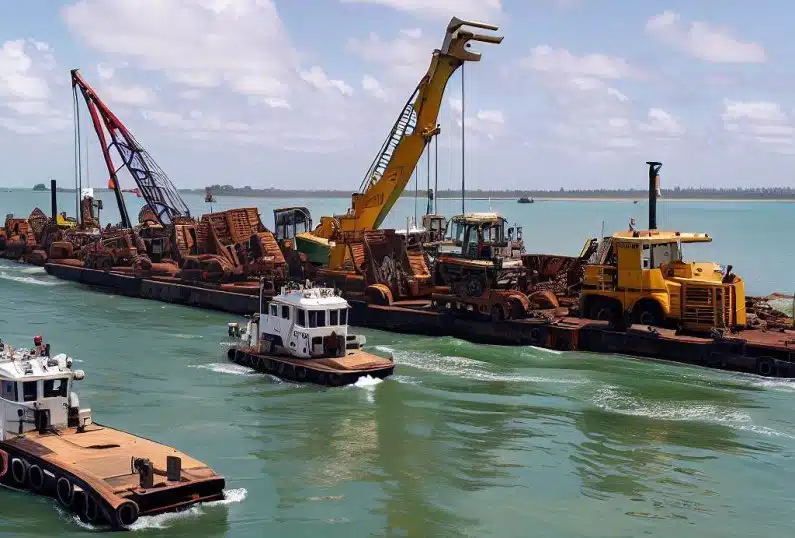
- Flat-racks or breakbulk: Oversize frames, long beams, or pre-assembled climbing structures that exceed container dimensions.
Compare options here: Container Shipping and Breakbulk.
China Port Options and Carrier Selection
Shanghai, Ningbo, and Shenzhen offer frequent sailings to the U.S. Gulf. Major carriers on China-Houston routes include:
- CMA CGM: Direct service, 28–30 day transit, weekly sailings.
- MSC: Transshipment via Panama, 32–35 days, cost-effective rates.
- Maersk: Premium reliability, 26–28 days, higher rates.
- COSCO: Direct and transship options, 28–32 days, competitive pricing.
Mind factory readiness, CY cutoffs, and documentation release. We evaluate carriers based on your timeline, budget, and special requirements. You can learn more about Shanghai’s role in global trade in our Shanghai export hub overview.
Ocean Leg to Texas
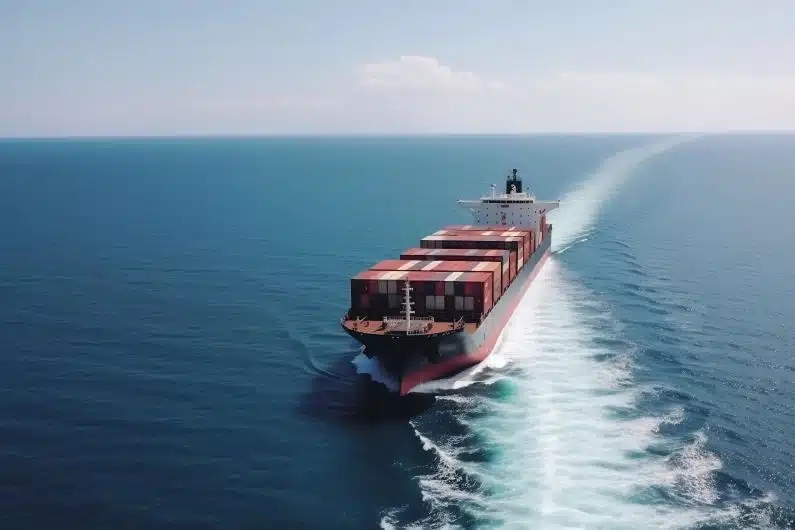
Typical ocean transits run 25–35 days depending on carrier routing. Track milestones from origin gate-in to discharge at Port of Houston terminals (Barbours Cut or Bayport). Learn about the destination terminal at the Port of Houston.
ISF Filing and U.S. Customs Entry
U.S. Customs requires specific documentation before and after vessel arrival:
Before Vessel Departure (ISF Filing):
ISF (Importer Security Filing) must be filed at least 24 hours before the vessel leaves China. Late filing results in $5,000 penalties. We file ISF on your behalf and confirm:
- Manufacturer name and address
- Consignee and ship-to information
- Harmonized Tariff codes
- Container stuffing location
At Arrival (Entry Documents):
CBP Form 7501 (Entry Summary) filed within 15 days declares value, classification, and applicable duties. Prepare complete commercial documents and submit entries on time.
Plan drayage and final-mile delivery to your warehouse or installation site. Get filing support via our Customs Broker page.
Final Delivery Options
After customs clearance, choose your delivery method:
- Drayage to local warehouse: $200–$400 per container for Houston-area delivery.
- Direct container delivery: Container delivered to your site if you have dock or forklift access. Most economical.
- LTL delivery: We deconsolidate and ship via less-than-truckload carriers. Best for distances over 100 miles. 5–7 business days to most Texas locations.
- White-glove service: Inside delivery, unpacking, debris removal, and installation crew coordination. Popular for shopping mall and entertainment center installations.
U.S. Safety Standards and Certifications
Playground equipment from China must meet specific U.S. safety requirements before customs clearance:
ASTM F1487 Compliance
The primary U.S. safety standard for playground equipment. Your supplier must provide test reports from an accredited lab showing compliance with spacing, entrapment, structural integrity, and material requirements. This applies to both indoor and outdoor playground structures.
CPSIA and Lead Testing
All components accessible to children under 12 require lead content testing (must not exceed 100 ppm). This includes painted surfaces, plastic components, and metal hardware. CPSC (Consumer Product Safety Commission) guidelines govern all children’s products entering the U.S.
Children’s Product Certificate (CPC)
Children’s Product Certificate issued from valid lab tests is required for customs clearance. This certificate references your ASTM F1487 test reports and lead testing results. We can help coordinate CPC preparation if your supplier doesn’t provide one.
Phthalates Testing
Soft play components and plastic parts require phthalates testing. Six specific phthalates are restricted in products for children under 12.
Missing or incomplete certificates can result in:
- Customs holds (5–15 day delays)
- Additional inspection fees ($500–$2,000)
- Potential shipment rejection
We review all safety documentation before shipping to prevent customs issues. Keep test results and certificates on file. Permanently affixed tracking labels must be applied where required.
Import Duties and Tariff Classifications
Understanding customs duties helps you calculate accurate landed costs. For a wider perspective on compliance and cost, see our guide on importing goods to the USA.
HTS Classification and Standard Rates
- HS 9506.91: Articles and equipment for general physical exercise, gymnastics, or athletics – 4.6% duty (most playground structures)
- HS 9503.00.00: Toys (if primarily for amusement) – 0% duty
- HS 9506.99: Other sports equipment – 4.0% duty
Classification depends on equipment’s primary function. Plush, LLDPE plastic, galvanized steel, and electronic items can sit in different tariff groups.
Section 301 Additional Tariffs
Most playground equipment from China faces an additional 25% Section 301 tariff on top of standard HTS rates. Total duty on most playground equipment: 4.6% (standard) + 25% (Section 301) = 29.6% of customs value.
Example Calculation:
- Equipment value: $50,000
- Ocean freight: $8,000
- Insurance: $500
- Customs value (CIF): $58,500
- Total duty: $58,500 × 29.6% = $17,316
- MPF (Merchandise Processing Fee): $203
- Harbor Maintenance Fee: $10
We provide detailed landed cost estimates including all duties and fees in our quotes. See FAQ on HTS Codes.
Industries We Serve
We specialize in playground equipment logistics for diverse commercial applications:
- Family Entertainment Centers (FECs): Multi-attraction venues with 3–8 containers of mixed equipment. We coordinate phased deliveries to match construction schedules.
- Trampoline Parks: High-volume cargo including 60–120 trampolines, foam pit blocks, safety padding. Specialized container optimization for weight-intensive equipment.
- Shopping Malls: Indoor play areas (1,500–5,000 sq ft) with tight delivery windows. After-hours delivery available for mall access restrictions.
- Daycare Centers & Preschools: Age-appropriate equipment for 6 months to 5 years. LCL shipments available for smaller installations.
- Recreation Centers: Municipal and community facilities. Experience with public bid requirements and government procurement rules.
- Indoor Play Cafes: Compact equipment for 800–1,500 sq ft spaces. Fast turnaround for seasonal openings.
- Franchise Operations: National brands with standardized equipment packages. Volume discounts for multi-unit developers.
If your play concepts extend into Canada or Mexico, we also coordinate cross-border movements from Houston through our shipping to Canada and shipping to Mexico services.
Timing Your Shipment: Seasonal Considerations
Plan around Chinese manufacturing holidays and peak shipping seasons to avoid delays and cost increases:
Chinese New Year (Late January/February)
Chinese factories close 2–3 weeks for Spring Festival. Orders placed in December may not ship until late February. Production delays can extend 4–6 weeks during this period. Container availability is tight in the 2 weeks before CNY.
Golden Week (October 1–7)
One-week national holiday causes factory closures and port congestion.
Peak Shipping Season (August–October)
Container rates increase 30–50% due to back-to-school retail demand. Equipment availability tighter. Book space 3–4 weeks in advance versus 1–2 weeks normally.
Optimal Booking Windows:
- Spring openings (March–May): Order by November for off-peak rates and factory capacity.
- Summer openings (June–August): Order by January. Plan for peak season rates.
- Fall openings (September–November): Order by May to avoid peak shipping costs.
Mall and FEC installations: Work backward from lease commencement. Allow 6–8 weeks ocean transit + customs + 4–6 weeks installation = order 14–16 weeks before opening.
Cost Framework and Budgeting
Build a complete landed-cost model before you order. Include purchase price, export packing, ocean freight, destination charges, duties (standard + Section 301), MPF, harbor fees, and final delivery.
Review common charge lines and seasonal trends on Shipping Costs.
- Container size and weight: 20-ft vs 40-ft vs high-cube. Density affects stowage and overweight fees.
- Seasonality: Peak season surcharges and equipment availability can move rates.
- Mode selection: FCL for volume and security; breakbulk for out-of-gauge sets.
- Risk controls: Add Cargo Insurance and inspection services to protect margins.
Documentation Checklist
Accurate paperwork shortens release times and avoids holds. Include full product descriptions, materials, and HS classifications.
- Commercial Invoice with Incoterms and currency. Must detail each item with HS code, unit prices, total value, and country of manufacture.
- Packing List with package counts, weights, and dimensions. Box-by-box breakdown critical for container unloading.
- Bill of Lading (house and master when applicable). See FAQ on Combined Transport B/L.
- Certificate of Origin. See FAQ on Certificate of Origin.
- Children’s Product Certificate (CPC) referencing safety test reports. Must be available for CBP review.
- HTS Codes aligned with product makeup. See FAQ on HTS Codes.
- Country of Origin Markings: All equipment must be marked “Made in China” in a conspicuous, permanent manner. Remarking costs $1,000+ if CBP flags it.
Common documentation mistakes causing delays:
- Missing or incomplete CPC certificates (5–10 day delay)
- Incorrect HS codes triggering CBP review (3–7 day delay)
- Value discrepancies between invoice and entry (review hold)
- Generic product descriptions instead of specific item types
We review all documentation before filing to catch errors early.
Common Pitfalls and Risk Controls
- Port delays and exams: Build time buffers and keep documents error-free. CBP exams add 3–7 days.
- Packaging failures: Use engineered crates, ISPM-15 lumber, and moisture barriers. See Export Packing.
- Quality issues: Book factory audits and pre-shipment inspections before container loading.
- Mode mismatch: Recheck dimensions early. Oversized climbing walls or ninja warrior obstacles may need flat-racks instead of containers.
- Missing safety certificates: Verify ASTM F1487, CPSIA, and phthalates testing before factory ships.
When Air Makes Sense
Air works for urgent mall openings, warranty parts, and replacement components. For large kits with tight deadlines, consider a partial air uplift while the bulk moves by ocean. Explore options on Air Freight.
Work With a Houston-Based Freight Forwarder
Local experience improves schedule control and communication during U.S. entry. Texas International Freight manages ocean, customs, insurance, and delivery through one team.
Full-Service Logistics vs. Port-to-Port Forwarders:
Many freight forwarders only handle ocean transport, leaving you to arrange factory pickup, customs brokerage, drayage, final delivery, and insurance separately. We provide complete door-to-door service with single-point accountability for your entire shipment.
Read more about our city base: Houston Freight Forwarder and our core Ocean Freight services.
Get a Freight Quote for Playground Equipment Imports
Get detailed landed cost pricing for 20-ft and 40-ft containers, high-cube options, out-of-gauge assemblies, and final delivery to your installation site. We provide transparent quotes including ocean freight, duties (standard + Section 301), ISF filing, customs brokerage, and delivery—no surprise charges.
We tailor schedules to installation dates, mall opening deadlines, and school calendars. Start your plan here: Contact Us.
FAQs
How long does China-to-Houston transit take?
Typical ocean transits run 25–35 days depending on carrier routing and cutoffs. Direct sailings via CMA CGM or Maersk take 26–30 days; transshipment routes via MSC take 32–35 days. Add time for origin drayage, terminal handling, customs clearance, and final delivery. Total door-to-door timeline: 35–45 days.
What does customs clearance cost and who files entries?
Costs vary by HS code, shipment value, and whether CBP selects your container for physical exam. Typical customs brokerage fees run $150–$300 per entry. Import duties average 29.6% (4.6% standard + 25% Section 301) for most playground equipment from China, plus MPF (0.3464%) and Harbor Maintenance Fee (0.125%). A licensed broker files CBP Form 7501 entries and coordinates releases. See our Customs Broker page.
What safety certifications do I need for playground equipment?
You need ASTM F1487 test reports from an accredited lab, CPSIA compliance (lead testing showing <100 ppm), phthalates testing for soft play components, and a Children’s Product Certificate (CPC) referencing all safety tests. Missing certificates cause 5–15 day customs holds and potential $500–$2,000 inspection fees. We review all safety documentation before your shipment leaves China.
Can I import custom indoor play structures via FCL or breakbulk?
Yes. Standard modules fit 40-ft containers (including high-cube for volume optimization). Large frames, long beams, climbing walls, or pre-assembled sections often move on Breakbulk or flat-rack containers. We assess dimensions early to recommend the most cost-effective mode.
Do I need cargo insurance?
Yes. Ocean moves involve handling and weather exposure. Ocean carriers limit liability to just $500 per package—often $2,000–$5,000 for an entire container worth $50,000–$100,000. Our all-risk marine cargo insurance covers 110% of CIF value (equipment + freight + premium) for 0.3–0.6% of insured value. Protect your investment with Cargo Insurance.
How much do import duties cost on playground equipment from China?
Most playground equipment from China is classified under HS Code 9506.91 with a 4.6% standard tariff rate plus 25% Section 301 additional tariff = 29.6% total duty on customs value (CIF). For a $50,000 shipment with $8,000 freight, expect approximately $17,316 in duties plus $203 MPF and $10 Harbor Maintenance Fee. We provide exact calculations in our landed cost quotes.
What’s the difference between FOB and CIF pricing?
FOB (Free on Board) means your supplier delivers to Chinese port and you arrange ocean freight, insurance, and U.S. import—giving you control over carriers and timing. CIF (Cost, Insurance, Freight) means your supplier arranges ocean freight and basic insurance to Houston and you handle U.S. customs and delivery. FOB typically offers better cost visibility and carrier choice. We can work with either Incoterm.
Can Texas International Freight act as Importer of Record?
We can arrange compliant solutions for firms without U.S. importing presence. Start the conversation via Contact Us.
How do I avoid Chinese New Year shipping delays?
Place orders by November for January shipment to avoid the 2–3 week factory closure in late January/February. Orders placed in December often don’t ship until late February due to 4–6 week production backlogs. Container space is extremely tight in the 2 weeks before Chinese New Year. We help clients plan around CNY and Golden Week (October 1–7) to maintain delivery schedules.