Heavy Equipment and Oil Machinery Shipping to Senegal
You need to move construction machinery or oilfield equipment from Houston to Senegal, a West African hub whose offshore oil and gas sector has just come online. Which port takes your cargo, how does the country’s role as a gateway to landlocked Mali affect your route, and what does the crossing take? Get the port and the paperwork right and the move runs clean.
Senegal is building infrastructure and standing up a new energy sector, and both pull machinery from the Gulf Coast. Texas International Freight moves oil and gas machinery and heavy equipment from Houston to Senegal, handling the ocean leg, the customs filings, and the inland delivery as one job.
What Ships to Senegal
Demand runs to the equipment that builds infrastructure and supports energy: excavators, loaders, and bulldozers for transport networks and buildings, and drilling rigs, production equipment, and refining gear for the offshore sector. Each unit’s size and weight set the vessel and the handling, so the plan starts with the cargo.
The Port of Dakar and the Gateway to Mali
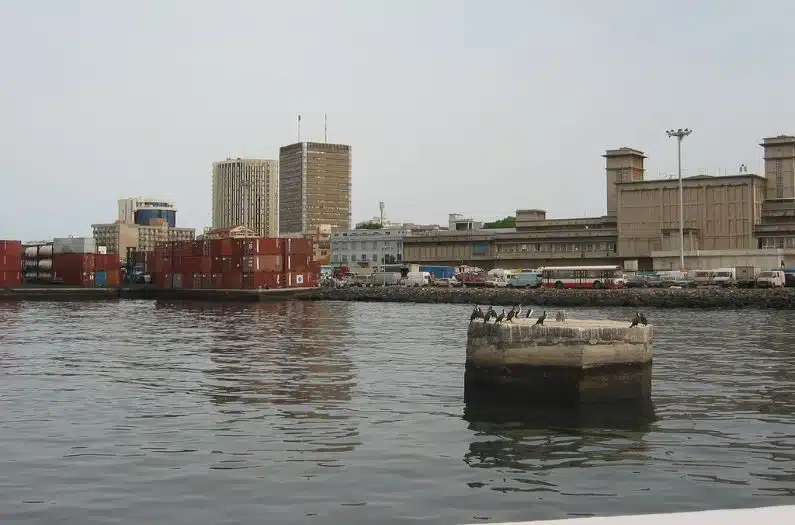
Dakar is Senegal’s main deep-water port and one of the busiest on the West African coast, sitting at the continent’s westernmost point. Beyond serving Senegal, it is a primary maritime gateway for landlocked Mali, with a long-running corridor carrying transit cargo inland to Bamako, which makes Dakar a regional hub rather than just a national port. A new deep-water port is under development at Ndayane, south of the city, to add capacity over time. Senegal is a French-speaking nation, so French-language documentation often smooths the customs process.
Senegal’s Offshore Oil and Gas
Senegal recently joined the ranks of oil and gas producers. The Sangomar offshore oilfield began production in 2024, and the Grand Tortue Ahmeyim (GTA) gas project, shared with neighboring Mauritania, came online around the same period. That activity drives steady demand for drilling equipment, supply-base gear, and project cargo, much of it routed through Dakar and supporting bases along the coast.
How Your Cargo Reaches Senegal
Cargo leaves the Houston area by truck or rail to the port, loads onto a vessel sized for the equipment, and crosses the Atlantic to Dakar. Because Dakar sits at the closest point of West Africa to the Americas, transit is relatively short, often roughly three to five weeks depending on a direct service or transshipment through a hub. Standard machinery moves in containers, oversized units ship as breakbulk on flat rack or open-top equipment, and wheeled units roll on and roll off. From Dakar, the equipment moves to its final site, or onward toward Mali, by road or rail.
Customs and Documentation
Exporting from Houston and importing into Senegal takes an accurate document set: the commercial invoice, packing list, bill of lading, and certificate of origin, prepared so the cargo clears without a hold. Some West African routes require a cargo-tracking note arranged before departure, so a customs broker familiar with Senegal confirms what applies to your shipment and keeps the paperwork aligned. Carrying cargo insurance protects the equipment against damage, loss, or theft in transit.
Working With Texas International Freight
Texas International Freight books vessel space, prepares the export filing, coordinates Senegalese customs, and arranges inland delivery from Dakar, including onward transit toward Mali. The same desk handles heavy equipment hauling and the wider West Africa region, including lanes to Nigeria and Ghana, so a multi-country project sits with one team. Tell us the cargo and the destination, and we map the move.
Ship Your Equipment to Senegal
Texas International Freight moves oilfield machinery, heavy equipment, and breakbulk cargo from Houston to Dakar, with export filing, customs, and inland delivery handled in house. Send us the equipment, dimensions, and delivery point, and we return a plan and a quote.
Contact Information:
- Phone: +1 877-489-9184
- Email: ship@txintlfreight.com
- Address: 11511 Katy Fwy #320, Houston, TX 77079
- Web Form: Request a Quote
Connect With Us:
Which port should I ship heavy equipment to in Senegal?
Dakar, Senegal’s main deep-water port and one of the busiest in West Africa, takes most heavy and oversized cargo. It also serves as the gateway for landlocked Mali, so cargo can route onward to Bamako from there by road or rail.
How long does shipping from Houston to Senegal take?
Dakar sits at the closest point of West Africa to the Americas, so transit is relatively short, often roughly three to five weeks depending on a direct service or transshipment. Export filing, customs clearance, and inland delivery add to the timeline.
Can you ship equipment for Senegal’s offshore oil and gas sector?
Yes. With the Sangomar oilfield and the GTA gas project now producing, demand for drilling and production equipment is steady. We move that gear as breakbulk or project cargo, coordinating it through Dakar and the coastal supply bases.
What documents are required to import into Senegal?
The core set is the commercial invoice, packing list, bill of lading, and certificate of origin. As a French-speaking country, Senegal often clears faster with French-language documentation, and some routes require a cargo-tracking note arranged before departure, which a broker confirms.
Can you deliver beyond Dakar, including to Mali?
Yes. We coordinate inland transport from Dakar to the final site, and onward along the established corridor to landlocked Mali, planning the ocean leg and the inland legs as one move on a single schedule.