Moving a Thermal Oxidizer by Barge From Tulsa to Louisiana
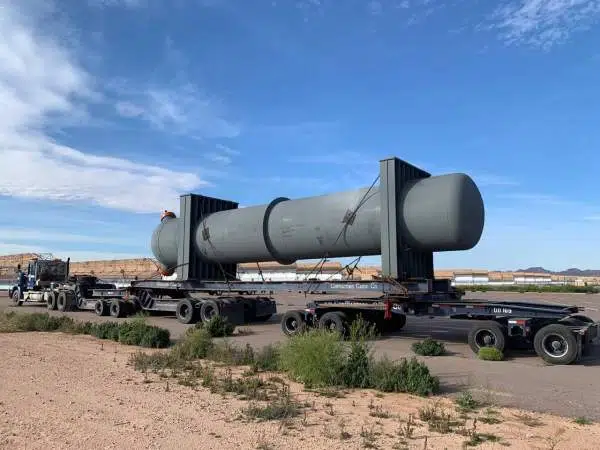
How do you move an 80-foot thermal oxidizer most of the way across the country when it is too big to truck the whole distance? You put it on the water. In the first installment of this series, we covered collecting the thermal oxidizer and hauling it to the starting barge terminal in Tulsa.
The first leg covered the upstream logistics our team handles every day, smoothing out the edges of what looked like a simple truck ride across Tulsa but was anything but. After that, we left the thermal oxidizer safely on our truck at the barge terminal, ready for another early start the next day.
On the Waterfront
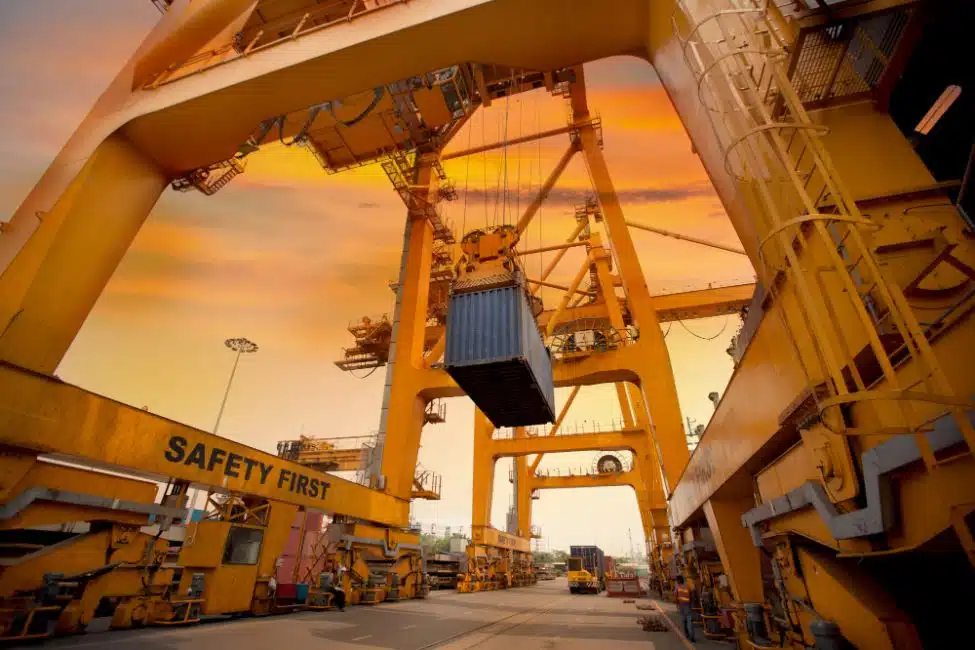
The day started at 6 am at the terminal. Before anything else, we held our standard safety meeting, where we set out the schedule, assigned each team member’s responsibilities, checked everyone wore the correct safety gear, and went over what to do in an emergency. The gantry crane for lifting the thermal oxidizer had been positioned over the hopper barge since the previous evening, ready to go to work.
Our first task was to prepare the barge for the cargo, which meant removing the hatches over the hold with a tracked crane. Next our truck reversed into position under the gantry crane so it could pick up the cargo from the truck bed. The truck pulled away, and the crane moved the machinery steadily over the barge and lowered it into the hold.
The lift needs attention to detail on its own, but one of the hidden pieces of work is keeping the lifting lugs and the limits of the destination terminal in Southern Louisiana in mind. We had to load the cargo as close as possible to the aft end of the barge so we could unload it at the other end.
Positioning cargo at one end of a barge raises weight distribution, and in some cases we add a counterweight to balance it. Here the cargo was light enough for a barge of this size, so no counterweight was needed.
Once aboard, we secured it and made it ready for transport. A day or so later, the barge set off as part of a tow of barges on the 806-mile river journey, down the Verdigris River, the Arkansas River, and finally the Mississippi, reaching Port Allen Lock just south of Baton Rouge, Louisiana, 18 days later.
Moving it as part of a tow keeps costs down, and the trade-off is that the project follows an external schedule. Along the way the barges crossed a number of locks and stopped at Rosedale, where the Arkansas River meets the Mississippi.
The Last Stretch
The barge arrived at Port Allen Lock without incident, and its fleet services met us and guided the barge into our terminal at the lock. Loading the cargo at the stern mattered for a reason: the marine travel lift at the facility could only reach 80 feet from the shore. The oxidizer measured 80 feet, and the barge itself ran 200 feet long. Placing the cargo at the barge’s midpoint would have put the lifting lugs out of the travel lift’s reach.


Back on Dry Land
The lift off the barge was another pre-dawn start. On big projects like this we start early because we are not sure exactly how much time we will need, and we build in margin for fixing any issues that come up, such as broken or missing parts. By remote control, the travel lift moved over the cargo, the spreader bars took hold, and the oxidizer came up out of the barge. Our truck, which had driven down to wait in Louisiana, reversed under the cargo and took it onto the bed.
The final leg ran to a plant just 10 miles down the road that removes harmful gases from the atmosphere, where the thermal oxidizer was installed. That stretch was straightforward, a few hours from Port Allen to the plant, thanks to the short distance and far less infrastructure to work around than back in Tulsa.
Project Cargo by Barge, Completed

Plan Your Project Cargo Move
Texas International Freight moves oversized project cargo by barge, road, and ocean, from thermal oxidizers and pressure vessels to rigs and refinery modules. Send us the dimensions, weight, and route, and we return a plan and a quote.
Contact Information:
- Phone: +1 877-489-9184
- Email: ship@txintlfreight.com
- Address: 11511 Katy Fwy #320, Houston, TX 77079
- Web Form: Request a Quote
Connect With Us:
When does barge transport make sense for project cargo?
Barge works well for heavy or oversized pieces that are awkward or costly to truck over long distances, such as a thermal oxidizer, a pressure vessel, or a refinery module. Inland rivers like the Arkansas and the Mississippi reach many industrial sites, and a barge carries weight and bulk that would need multiple permits and escorts by road.
How long does an inland barge move take?
It depends on the route, the locks, and whether the cargo travels in a tow. The 806-mile run from Tulsa to Port Allen took 18 days as part of a tow, which keeps cost down but ties the move to an external schedule. A dedicated charter moves faster but costs more.
Why does cargo position on the barge matter?
Position drives both balance and unloading. We loaded the oxidizer near the stern because the destination travel lift reached only 80 feet from shore, and a midpoint load would have put the lifting lugs out of reach. Weight distribution also decides whether a counterweight is needed.
How do you combine barge, truck, and lifting on one move?
The legs connect through careful planning. A truck brings the unit to the barge terminal, a gantry or tracked crane loads it, the barge runs the river leg, and a travel lift and truck handle the final stretch. We coordinate heavy haul, lifting, and the river move as one plan rather than separate handoffs.
Do you handle the road legs into Louisiana and beyond?
Yes. We run the heavy-haul lanes that feed and follow a barge move, including delivery routes around Baton Rouge and across the Gulf Coast. One team plans the truck, barge, and lift legs so the cargo arrives without gaps in the chain.